SED Task 3 Genetics, Rett’s and aggression
Learning goals
1. Laws of Mendel and exceptions (X-linked diseases)
2. Rett’s syndrome and prevalence in women
3. Why is Rett’s more severe in men?
4. Environmental influence on gene expression (aggression)
5. Effect of mutation MAO-A on aggression
1. Laws of Mendel and exceptions (X-linked diseases)
Plomin
Allele: particular form of a gene
DNA: basic hereditary molecule, packaged as 23 pairs of chromosomes
Sequencing of the human genome: identifying ach of the more than 3 billion steps in the DNA
spiral staircase
Genotype: an individual’s combination of alleles
Phenotype: observed traits
First law of heredity: segregation
By studying peas, he found that there are 2 hereditary alleles for each trait in each individual
and these two alleles separate during reproduction. Offspring receive one of the two from
each parent. Furthermore, one of the alleles can dominate the other, so you only need one
dominant allele to display the trait. A recessive allele is only expressed if both are recessive.
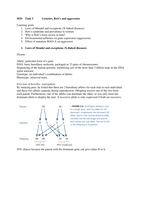
50% chance because the parent with the dominant gene can give either H or h.
Learning goals
1. Laws of Mendel and exceptions (X-linked diseases)
2. Rett’s syndrome and prevalence in women
3. Why is Rett’s more severe in men?
4. Environmental influence on gene expression (aggression)
5. Effect of mutation MAO-A on aggression
1. Laws of Mendel and exceptions (X-linked diseases)
Plomin
Allele: particular form of a gene
DNA: basic hereditary molecule, packaged as 23 pairs of chromosomes
Sequencing of the human genome: identifying ach of the more than 3 billion steps in the DNA
spiral staircase
Genotype: an individual’s combination of alleles
Phenotype: observed traits
First law of heredity: segregation
By studying peas, he found that there are 2 hereditary alleles for each trait in each individual
and these two alleles separate during reproduction. Offspring receive one of the two from
each parent. Furthermore, one of the alleles can dominate the other, so you only need one
dominant allele to display the trait. A recessive allele is only expressed if both are recessive.
50% chance because the parent with the dominant gene can give either H or h.