ES20013 – intermediate macro
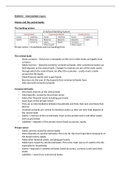
Money and the central banks
The banking system
Private sector = households and non-banking firms
The central bank
- Issues currency – they have a monopoly on this as no other body can legally issue
currency
- Holds reserves – deposits owned by commercial banks. Only commercial banks can
hold deposits at the central bank. Changes in reserves are one of the main routes
through which the central bank can affect the economy – pretty much a bank
account for the banks
- Holds financial assets such as gov bonds
- Reserves are the sum of the deposits that commercial banks have
- Only deal with commercial banks
Commercial banks
- Own bank reserves at the central bank
- Hold deposits, owned by the private sector
- Hold other financial assets including gov bonds
- Issue loans to the private sector
- They act as intermediaries between households and firms that save and those that
borrow
- Commercial banks are central to monetary policy as they can only hold deposits at
the central bank
- Assets = reserves at the central bank, loans to the private sector and other assets
such as gov bonds
- Liabilities = deposits of the private sector (bank accounts), equity
Private sector
- Holds currency issued by central banks
- Owns deposits at commercial banks. This is by far the most important component of
the broad money supply
- Holds other financial assets, including gov bonds
- Holds loans issued by commercial banks. This is the main source of credit in the UK,
especially for households
- Assets = deposits in commercial banks (bank accounts), currency (cash) and other
assets
- Liabilities = loans from commercial banks
, Currency
- (cash) growing close to obsolete
- Used to be central to economic transactions.
- This has weakened the direct link between the central bank and the private sector
- Central bank digital currencies may re-establish this link
- Currency is relatively small and stable
- Reserves held at commercial banks are larger and more volatile
- Over the last 15 years, changes in the reserves are closely associated with QE
- Deposits held at commercial banks are in turn larger than reserves
- Deposits are currently close to £2.2 trillion (over double)
- These are less closely linked with quantitative easing
Money and the central banks
The banking system
Private sector = households and non-banking firms
The central bank
- Issues currency – they have a monopoly on this as no other body can legally issue
currency
- Holds reserves – deposits owned by commercial banks. Only commercial banks can
hold deposits at the central bank. Changes in reserves are one of the main routes
through which the central bank can affect the economy – pretty much a bank
account for the banks
- Holds financial assets such as gov bonds
- Reserves are the sum of the deposits that commercial banks have
- Only deal with commercial banks
Commercial banks
- Own bank reserves at the central bank
- Hold deposits, owned by the private sector
- Hold other financial assets including gov bonds
- Issue loans to the private sector
- They act as intermediaries between households and firms that save and those that
borrow
- Commercial banks are central to monetary policy as they can only hold deposits at
the central bank
- Assets = reserves at the central bank, loans to the private sector and other assets
such as gov bonds
- Liabilities = deposits of the private sector (bank accounts), equity
Private sector
- Holds currency issued by central banks
- Owns deposits at commercial banks. This is by far the most important component of
the broad money supply
- Holds other financial assets, including gov bonds
- Holds loans issued by commercial banks. This is the main source of credit in the UK,
especially for households
- Assets = deposits in commercial banks (bank accounts), currency (cash) and other
assets
- Liabilities = loans from commercial banks
, Currency
- (cash) growing close to obsolete
- Used to be central to economic transactions.
- This has weakened the direct link between the central bank and the private sector
- Central bank digital currencies may re-establish this link
- Currency is relatively small and stable
- Reserves held at commercial banks are larger and more volatile
- Over the last 15 years, changes in the reserves are closely associated with QE
- Deposits held at commercial banks are in turn larger than reserves
- Deposits are currently close to £2.2 trillion (over double)
- These are less closely linked with quantitative easing