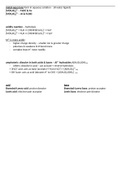
metal-aqua ions form in aqueous solution – all water ligands
[M(H2O)6]2+ – Fe(II) & Cu
[M(H2O)6]3+ – Al & Fe(III)
acidity reaction – hydrolysis
[M(H2O)6]2+ + H2O ⇌ [M(OH)(H2O)5]+ + H3O+
[M(H2O)6]3+ + H2O ⇌ [M(OH)(H2O)5]2+ + H3O+
M3+ is more acidic:
- higher charge density – smaller ion & greater charge
- polarises & weakens O-H bond more
- complex loses H+ more readily
amphoteric: dissolve in both acids & bases – Al 3+ hydroxides Al(H2O)3(OH)3(s)
- others: dissolve in acid – act as base = reverse hydrolysis
+ 3H3O+ acid: acts as base (accepts H+ from H3O+) = [Al(H2O)6]3+(aq)
+ OH- base: acts as acid (donates H+ to OH-) = [Al(H2O)2(OH)4]- (aq)
acid base
Brønsted-Lowry acid: proton donator Brønsted-Lowry base: proton acceptor
Lewis acid: electron pair acceptor Lewis base: electron pair donator
[M(H2O)6]2+ – Fe(II) & Cu
[M(H2O)6]3+ – Al & Fe(III)
acidity reaction – hydrolysis
[M(H2O)6]2+ + H2O ⇌ [M(OH)(H2O)5]+ + H3O+
[M(H2O)6]3+ + H2O ⇌ [M(OH)(H2O)5]2+ + H3O+
M3+ is more acidic:
- higher charge density – smaller ion & greater charge
- polarises & weakens O-H bond more
- complex loses H+ more readily
amphoteric: dissolve in both acids & bases – Al 3+ hydroxides Al(H2O)3(OH)3(s)
- others: dissolve in acid – act as base = reverse hydrolysis
+ 3H3O+ acid: acts as base (accepts H+ from H3O+) = [Al(H2O)6]3+(aq)
+ OH- base: acts as acid (donates H+ to OH-) = [Al(H2O)2(OH)4]- (aq)
acid base
Brønsted-Lowry acid: proton donator Brønsted-Lowry base: proton acceptor
Lewis acid: electron pair acceptor Lewis base: electron pair donator