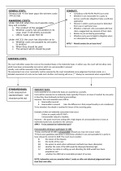
GENERAL COSTS: CONDUCT:
General rule the loser pays the winners costs Compliance with PD/PD-PACP/Court order
-r44.2(2)(a). Whether it was reasonable for a party to
pursue a particular allegation/make a particular
AWARDING COSTS: application
Under r44.2(4) when the court awards costs Manner in which a party pursued or defended
they will consider: their case or particular issue
a. The conduct of the parties Whether a claimant, who succeeded with their
b. Whether a party has succeeded on its claim, exaggerated any element of their claim
case, even if not wholly successful Relates to pre and during proceedings
c. Offers made under Part 36
Whether party went straight to litigation when
o/s attempted to negotiate.
Under r44.2(1) the court has discretion as to:
a. Whether costs are payable by one party
to another APPLY – Would conduct be an issue here?
b. When they should be paid
c. The amount which should be paid.
ASSESSING COSTS:
The court will either assess the costs on the standard basis or the indemnity basis. In either way, the court will not allow costs
which have been unreasonably incurred or which are unreasonable in amount
Usually, costs will be assessed on the standard basis.
The assessment can occur ‘summarily’ and be assessed by the court immediately once judgement has been made, or a
detailed assessment of costs can be made and a further cost hearing will occur (** Always an assessment when unspecified)
STANDARD BASIS: INDEMNITY BASIS:
Costs assessed on Costs awarded on an indemnity basis are awarded as a penalty.
standard basis – see Costs will be assessed on an indemnity basis typically if there is an issue of conduct by one party
in how they have behaved pre/during proceedings.
structure print out However, the costs awarded must still be:
a. Reasonably incurred
b. Reasonable in amount (aka: the difference is that proportionality is not considered)
To be awarded. Any doubt is resolved in favour of the receiving party.
Example of when an indemnity assessment may occur:
- Failure to comply with PD-PAP’s
- Unreasonable refusal to mediate.
However – the party must have acting with a high degree of unreasonableness to have an
indemnity-based cost awarded to the claimant.
APPLY – To be assessed on indemnity basis?
Unreasonably refusing to participate in ADR:
*Halsey and Dunett (if ADR is unreasonably refused you may not recover costs).
there were guidelines laid down to determine whether it was unreasonable for a party to
have refused to commit to ADR: The court must consider:
(i) the nature of the dispute;
(ii) the merits of the case;
(iii) the extent to which other settlement methods have been attempted;
(iv) whether the costs of the ADR would be disproportionately high;
(v) whether any delay in setting up and attending the ADR would have been
prejudicial; and
(vi) whether the ADR had a reasonable prospect of success.
NOTE: Indemnity costs are awarded when C made an offer and obtained judgement better
than their own offer.
, COST MANAGEMENT
COST BUDGETS: BUDGET DISCUSSION REPORT:
The court will attempt to control the amount of costs each parties is After filing the budget, a report must be
incurring and is to incur during the case. This is done with a view to the produced commenting on the figures
overriding objective and to keep costs proportionate and reasonable. agreed for each phase, figures not agreed
Parties will therefore have to provide budgets detailing their future costs for each phase and a summary on the
and costs up to date. disputed areas.
NOTE: Cost management – limited to multi-track cases of claims less than It must be filed no later than 7 days before
£10 mil. the CMC.
NOTE: For claims less than £50,000 – file budget when directions Q is filed
NOTE: For all other claims – file budget 21 days before CMC.
NOTE: The cost for prepping the budget – PD 3E para 2.2: the recoverable
costs if completing precedent H cannot exceed £1,000 or 1% of the
approved budget and costs management process cannot exceed 2% of the
approved budget.
FAILING TO FILE BUDGET:
R3.14 if a party fails to file their budget will be treated as having filed a budget containing only court fees. This means
that if a party was awarded costs, they would only recover incurred court fees.
A party could obtain relief from this sanction.
MAKING CHANGES TO THE BUDGET:
If the budget has not been approved by the court (fine to change?)
If the budget has been approved by the court court will be very reluctant to allow amendments to the budget.
HOWEVER…
Under r3.15A a party must amend their budget, upwards of downwards, if there is a significant development in the
litigation.
Significant – would the development result in a huge increase/decrease?
Amendments must use a precedent T and must be served on the o/s for agreement (PD 3E para B3). It then must be served
to the court and contain an explanation if the o/s did not agree to the budget.
When making the revision, the starting point is the last approved budget and the court will determine if this budget already
satisfies the amendments which would be made.
The court can:
Approve the budget
Vary the budget
Disallow the budget
Once this new budget is approved:
The party must re-serve it and attach the order approving the new budget.
If a party wants to dispute a budget – first should contact the party – then could apply to
court for a CMO.
General rule the loser pays the winners costs Compliance with PD/PD-PACP/Court order
-r44.2(2)(a). Whether it was reasonable for a party to
pursue a particular allegation/make a particular
AWARDING COSTS: application
Under r44.2(4) when the court awards costs Manner in which a party pursued or defended
they will consider: their case or particular issue
a. The conduct of the parties Whether a claimant, who succeeded with their
b. Whether a party has succeeded on its claim, exaggerated any element of their claim
case, even if not wholly successful Relates to pre and during proceedings
c. Offers made under Part 36
Whether party went straight to litigation when
o/s attempted to negotiate.
Under r44.2(1) the court has discretion as to:
a. Whether costs are payable by one party
to another APPLY – Would conduct be an issue here?
b. When they should be paid
c. The amount which should be paid.
ASSESSING COSTS:
The court will either assess the costs on the standard basis or the indemnity basis. In either way, the court will not allow costs
which have been unreasonably incurred or which are unreasonable in amount
Usually, costs will be assessed on the standard basis.
The assessment can occur ‘summarily’ and be assessed by the court immediately once judgement has been made, or a
detailed assessment of costs can be made and a further cost hearing will occur (** Always an assessment when unspecified)
STANDARD BASIS: INDEMNITY BASIS:
Costs assessed on Costs awarded on an indemnity basis are awarded as a penalty.
standard basis – see Costs will be assessed on an indemnity basis typically if there is an issue of conduct by one party
in how they have behaved pre/during proceedings.
structure print out However, the costs awarded must still be:
a. Reasonably incurred
b. Reasonable in amount (aka: the difference is that proportionality is not considered)
To be awarded. Any doubt is resolved in favour of the receiving party.
Example of when an indemnity assessment may occur:
- Failure to comply with PD-PAP’s
- Unreasonable refusal to mediate.
However – the party must have acting with a high degree of unreasonableness to have an
indemnity-based cost awarded to the claimant.
APPLY – To be assessed on indemnity basis?
Unreasonably refusing to participate in ADR:
*Halsey and Dunett (if ADR is unreasonably refused you may not recover costs).
there were guidelines laid down to determine whether it was unreasonable for a party to
have refused to commit to ADR: The court must consider:
(i) the nature of the dispute;
(ii) the merits of the case;
(iii) the extent to which other settlement methods have been attempted;
(iv) whether the costs of the ADR would be disproportionately high;
(v) whether any delay in setting up and attending the ADR would have been
prejudicial; and
(vi) whether the ADR had a reasonable prospect of success.
NOTE: Indemnity costs are awarded when C made an offer and obtained judgement better
than their own offer.
, COST MANAGEMENT
COST BUDGETS: BUDGET DISCUSSION REPORT:
The court will attempt to control the amount of costs each parties is After filing the budget, a report must be
incurring and is to incur during the case. This is done with a view to the produced commenting on the figures
overriding objective and to keep costs proportionate and reasonable. agreed for each phase, figures not agreed
Parties will therefore have to provide budgets detailing their future costs for each phase and a summary on the
and costs up to date. disputed areas.
NOTE: Cost management – limited to multi-track cases of claims less than It must be filed no later than 7 days before
£10 mil. the CMC.
NOTE: For claims less than £50,000 – file budget when directions Q is filed
NOTE: For all other claims – file budget 21 days before CMC.
NOTE: The cost for prepping the budget – PD 3E para 2.2: the recoverable
costs if completing precedent H cannot exceed £1,000 or 1% of the
approved budget and costs management process cannot exceed 2% of the
approved budget.
FAILING TO FILE BUDGET:
R3.14 if a party fails to file their budget will be treated as having filed a budget containing only court fees. This means
that if a party was awarded costs, they would only recover incurred court fees.
A party could obtain relief from this sanction.
MAKING CHANGES TO THE BUDGET:
If the budget has not been approved by the court (fine to change?)
If the budget has been approved by the court court will be very reluctant to allow amendments to the budget.
HOWEVER…
Under r3.15A a party must amend their budget, upwards of downwards, if there is a significant development in the
litigation.
Significant – would the development result in a huge increase/decrease?
Amendments must use a precedent T and must be served on the o/s for agreement (PD 3E para B3). It then must be served
to the court and contain an explanation if the o/s did not agree to the budget.
When making the revision, the starting point is the last approved budget and the court will determine if this budget already
satisfies the amendments which would be made.
The court can:
Approve the budget
Vary the budget
Disallow the budget
Once this new budget is approved:
The party must re-serve it and attach the order approving the new budget.
If a party wants to dispute a budget – first should contact the party – then could apply to
court for a CMO.