SANCTIONS
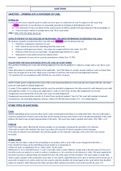
SANCTION – STRIKING OUT A STATEMENT OF CASE:
Striking out:
R 3.4(2) give the court a specific power to strike out all or part of a statement of case if it appears to the court that:
a) The statement of case discloses no reasonable grounds for bringing or defending the claim, or
b) The statement of case is an abuse of the courts process or likely to obstruct the just disposal of the proceedings, or
c) There has been a failure to comply with a rule, PD or court order
APPLY: Why it the SOC being struck out:
(A)THE STATEMENT OF CASE DISCLOSES NO REASONABLE GROUNDS FOR BRINGING OR DEFENDING THE CLAIM:
PD 3A gives examples of statement which may fall under r3.4(2)(a) and risk being struck out:
Defective / inadequate statement of case
PofC’s which set out no facts indicating what the claim is for
Defences which give bare denial – thus does not comply with the rules under 16.5 CPR
Defences which set out no reasonable / recognisable legal defence to a claim
Statements of case which set out no coherent facts
However – statements of case can be cured by amendments (Under Part 17 CPR).
(C)SANCTIONS FOR NON-COMPLIANCE WITH A PD, RULE OR COURT ORDER:
The sanction of striking out a case and entering judgement can also be applied if ‘x’ failed to comply with a rule, PD or court
order.
Other alternatives to sanctions are likely to be applicable – but if the failure to comply caused a delay or such an impact that
there can no longer be a fair trial = likely to be a sanction to have the case struck out and judgement entered.
*for sanctions for non-compliance with PD-PACP see ‘pre-action’ structure.
NOTE: If either party is ordered by the court to file a new statement/defence or the party did not comply with this, the other
party (y) could apply for default judgement.
If a party (Y) has applied for judgement and the court has provided a judgement, the other party (x) could attempt to set aside
this judgement under r3.5 so long as the application is made no more than 14 days after judgement was served.
If judgement was entered into incorrectly court must set aside judgement
If judgement was entered into correctly r3.9 (relief from sanctions) applies (? See 9.4) The court will consider all relevant
circumstances, the overriding objective, fairness, Article 6 ECHR and factors under r3.9 – It is a balancing act.
OTHER TYPES OF SANCTIONS:
Costs
Require defaulting party to pay the other party’s costs occasioned by the delay on an indemnity basis. The court will make a
summary assessment of those costs at the time of the hearing and may order those costs to be paid immediately. If the court
believes the fault is due to legal representative of the party - the court may make a wasted costs order. (SCA 1981, s 51).
Interest
Court may make orders affecting the interest payable on any damages subsequently awarded to the claimant.
If the party at fault is the claimant, the court may reduce the amount of interest payable on their damages.
If the party in default is the defendant, the interest payable on the claimant’s damages at the end of the case may be
increased.
Unless order
If a party has not taken a step in the proceedings in accordance with a court order (case management direction...)
Party should first chase up the defaulting party promptly in correspondence.
If does not work: an application for an ‘unless order’ can be made.
PD28 paras 5.1 & 5.2 and PD29 paras 7.1 and 7.2 provide: where a party failed to comply with a direction given by the court
the other party can apply for an order to enforce compliance or, for a sanction to be imposed or, both. The party applying for
the order must do so without delay, but should first warn the other party of their intention. The court makes an order that
unless a party complies with a particular court order or rule within a specified time, their claim or defence will be struck out. A
party who is subject to an unless order but who cannot make the deadline set should apply to the court before that deadline
expires to extend it. Why? Because the strike out takes effect without any further court order (see PD 3A, para 1.9).
SANCTION – STRIKING OUT A STATEMENT OF CASE:
Striking out:
R 3.4(2) give the court a specific power to strike out all or part of a statement of case if it appears to the court that:
a) The statement of case discloses no reasonable grounds for bringing or defending the claim, or
b) The statement of case is an abuse of the courts process or likely to obstruct the just disposal of the proceedings, or
c) There has been a failure to comply with a rule, PD or court order
APPLY: Why it the SOC being struck out:
(A)THE STATEMENT OF CASE DISCLOSES NO REASONABLE GROUNDS FOR BRINGING OR DEFENDING THE CLAIM:
PD 3A gives examples of statement which may fall under r3.4(2)(a) and risk being struck out:
Defective / inadequate statement of case
PofC’s which set out no facts indicating what the claim is for
Defences which give bare denial – thus does not comply with the rules under 16.5 CPR
Defences which set out no reasonable / recognisable legal defence to a claim
Statements of case which set out no coherent facts
However – statements of case can be cured by amendments (Under Part 17 CPR).
(C)SANCTIONS FOR NON-COMPLIANCE WITH A PD, RULE OR COURT ORDER:
The sanction of striking out a case and entering judgement can also be applied if ‘x’ failed to comply with a rule, PD or court
order.
Other alternatives to sanctions are likely to be applicable – but if the failure to comply caused a delay or such an impact that
there can no longer be a fair trial = likely to be a sanction to have the case struck out and judgement entered.
*for sanctions for non-compliance with PD-PACP see ‘pre-action’ structure.
NOTE: If either party is ordered by the court to file a new statement/defence or the party did not comply with this, the other
party (y) could apply for default judgement.
If a party (Y) has applied for judgement and the court has provided a judgement, the other party (x) could attempt to set aside
this judgement under r3.5 so long as the application is made no more than 14 days after judgement was served.
If judgement was entered into incorrectly court must set aside judgement
If judgement was entered into correctly r3.9 (relief from sanctions) applies (? See 9.4) The court will consider all relevant
circumstances, the overriding objective, fairness, Article 6 ECHR and factors under r3.9 – It is a balancing act.
OTHER TYPES OF SANCTIONS:
Costs
Require defaulting party to pay the other party’s costs occasioned by the delay on an indemnity basis. The court will make a
summary assessment of those costs at the time of the hearing and may order those costs to be paid immediately. If the court
believes the fault is due to legal representative of the party - the court may make a wasted costs order. (SCA 1981, s 51).
Interest
Court may make orders affecting the interest payable on any damages subsequently awarded to the claimant.
If the party at fault is the claimant, the court may reduce the amount of interest payable on their damages.
If the party in default is the defendant, the interest payable on the claimant’s damages at the end of the case may be
increased.
Unless order
If a party has not taken a step in the proceedings in accordance with a court order (case management direction...)
Party should first chase up the defaulting party promptly in correspondence.
If does not work: an application for an ‘unless order’ can be made.
PD28 paras 5.1 & 5.2 and PD29 paras 7.1 and 7.2 provide: where a party failed to comply with a direction given by the court
the other party can apply for an order to enforce compliance or, for a sanction to be imposed or, both. The party applying for
the order must do so without delay, but should first warn the other party of their intention. The court makes an order that
unless a party complies with a particular court order or rule within a specified time, their claim or defence will be struck out. A
party who is subject to an unless order but who cannot make the deadline set should apply to the court before that deadline
expires to extend it. Why? Because the strike out takes effect without any further court order (see PD 3A, para 1.9).