CRYSTALINDIGO +27766268187
ICT1513 BLOG: Chapters 1-3
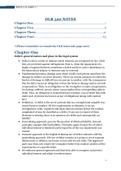
Chapter 1: Introduction to the Internet and Web Design
Internet is the largest network in wolrd and having access to it has made our lives more easier, as we
have Billions of webpages providng us iformation on any subject we can think of. The Internet is
the infrastructure, or the physical networks of computers. People use the internet to search for
information, communication and intertainment and mostly learning. The Internet was developed in
the 1960s by the Department of Defense Advanced Research Projects Agency (ARPA). The World
Wide Web is the service that provides access to information stored on web servers, the high-
capacity, high-performance computers that power the web. The web consists of a collection of
linked files known as webpages. Universities have their own websites where students and lecturers
use, communicate and interact. This is all made possible by the use of Hypertext Markup Language
(HTML) and Cascading Style Sheets (CSS), and of course a web browser. Chapter 1 introduces the
guide lines and uses of text editors to create webpages.
The basic layout for the code to create a basic webpage is this:
<!DOCTYPE html>
<html lang="en">
<head>
<meta charset="UTF-8">
<meta http-equiv="X-UA-Compatible" content="IE=edge">
<meta name="viewport" content="width=device-width, initial-
scale=1.0">
<title>CrystalIndigo Solutions</title>
</head>
<body>
</body>
</html>
which is saved an html file so that when it get opened in the browser it displays the webpage. The
code contains html elements and tags. Since a webpage is file that contains content and html tags it
is saved as an html document with the extension .html. Elements of an html document can be
enhanced using attributes which define additional characteristics, or properties, of the elements. The
web programming languages such as JavaScript and PHP are used to add interactivity and
functionality.
And a text editor to use is notepad++ or visual basic code to just name the few.
Websites need to be planned for the users to navigate easily around the web, web designers when
they are creating websites they begin planning activities by meeting with key business personnel to
ask several important questions to understand the purpose of the website and the goals
of the business. Every website has a URL (Uniform Resource Locator) which is a link that you can
type or paste on any web browser to access the website as long your computer is connect to the
Internet.
ICT1513 BLOG: Chapters 1-3
Chapter 1: Introduction to the Internet and Web Design
Internet is the largest network in wolrd and having access to it has made our lives more easier, as we
have Billions of webpages providng us iformation on any subject we can think of. The Internet is
the infrastructure, or the physical networks of computers. People use the internet to search for
information, communication and intertainment and mostly learning. The Internet was developed in
the 1960s by the Department of Defense Advanced Research Projects Agency (ARPA). The World
Wide Web is the service that provides access to information stored on web servers, the high-
capacity, high-performance computers that power the web. The web consists of a collection of
linked files known as webpages. Universities have their own websites where students and lecturers
use, communicate and interact. This is all made possible by the use of Hypertext Markup Language
(HTML) and Cascading Style Sheets (CSS), and of course a web browser. Chapter 1 introduces the
guide lines and uses of text editors to create webpages.
The basic layout for the code to create a basic webpage is this:
<!DOCTYPE html>
<html lang="en">
<head>
<meta charset="UTF-8">
<meta http-equiv="X-UA-Compatible" content="IE=edge">
<meta name="viewport" content="width=device-width, initial-
scale=1.0">
<title>CrystalIndigo Solutions</title>
</head>
<body>
</body>
</html>
which is saved an html file so that when it get opened in the browser it displays the webpage. The
code contains html elements and tags. Since a webpage is file that contains content and html tags it
is saved as an html document with the extension .html. Elements of an html document can be
enhanced using attributes which define additional characteristics, or properties, of the elements. The
web programming languages such as JavaScript and PHP are used to add interactivity and
functionality.
And a text editor to use is notepad++ or visual basic code to just name the few.
Websites need to be planned for the users to navigate easily around the web, web designers when
they are creating websites they begin planning activities by meeting with key business personnel to
ask several important questions to understand the purpose of the website and the goals
of the business. Every website has a URL (Uniform Resource Locator) which is a link that you can
type or paste on any web browser to access the website as long your computer is connect to the
Internet.