FOUR QUANTUM NUMBERS
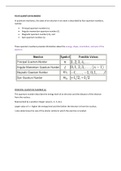
In quantum mechanics, the state of an electron in an atom is described by four quantum numbers,
namely:
• Principal quantum number (n),
• Angular momentum quantum number (l),
• Magnetic quantum number (m), and
• Spin quantum number (s).
These quantum numbers provide information about the energy, shape, orientation, and spin of the
electron.
PRINCIPAL QUANTUM NUMBER (n)
This quantum number describes the energy level of an electron and the distance of the electron
from the nucleus.
Represented by a positive integer value (1, 2, 3, etc.).
Larger value of n = higher the energy level and the farther the electron is from the nucleus.
n also determines the size of the atomic orbital in which the electron is located.
,FOR EXAMPLE
An electron in the 2nd energy level (n=2) is located farther from the nucleus than an electron in the
1st energy level (n=1).
ANGULAR MOMENTUM QUANTUM NUMBER (l)
Describes the shape of the atomic orbital in which the electron is located.
It is represented by an integer value from 0 to (n-1).
Value of l determines the orbital angular momentum of the electron and the shape of the electron
cloud.
Different values of l correspond to different types of atomic orbitals, such as s, p, d, and f orbitals.
• A value of the angular momentum quantum number can indicate either an s, p, d, or f
subshell which vary in shape. This value depends on (and is capped by) the value of the
principal quantum number, i.e. the value of the angular momentum quantum number ranges
between 0 and (n-1).
• For example, if n =3, the azimuthal quantum number can take on the following values – 0,1,
and 2. When l=0, the resulting subshell is an ‘s’ subshell. Similarly, when l=1 and l=2, the
resulting subshells are ‘p’ and ‘d’ subshells (respectively). Therefore, when n=3, the three
possible subshells are 3s, 3p, and 3d.
• In another example where the value of n is 5, the possible values of l are 0, 1, 2, 3, and 4. If l
= 3, then there are a total of three angular nodes in the atom.
, FOR EXAMPLE
An electron in an s orbital has l=0, while an electron in a p orbital has l=1.
MAGNETIC QUANTUM NUMBER (m)
Describes the orientation of the atomic orbital in space.
Represented by an integer value from -l to +l.
The value of m determines the number of possible orientations of the atomic orbital in space. F
For example, an s orbital has only one possible orientation, so m=0.
A p orbital has three possible orientations, so m can be -1, 0, or +1.
The value of the magnetic quantum number is dependent on the value of the azimuthal (or orbital
angular momentum) quantum number. For a given value of l, the value of m l ranges between the
interval -l to +l. Therefore, it indirectly depends on the value of n.
For example, if n = 4 and l = 3 in an atom, the possible values of the magnetic quantum number are -
3, -2, -1, 0, +1, +2, and +3.
In quantum mechanics, the state of an electron in an atom is described by four quantum numbers,
namely:
• Principal quantum number (n),
• Angular momentum quantum number (l),
• Magnetic quantum number (m), and
• Spin quantum number (s).
These quantum numbers provide information about the energy, shape, orientation, and spin of the
electron.
PRINCIPAL QUANTUM NUMBER (n)
This quantum number describes the energy level of an electron and the distance of the electron
from the nucleus.
Represented by a positive integer value (1, 2, 3, etc.).
Larger value of n = higher the energy level and the farther the electron is from the nucleus.
n also determines the size of the atomic orbital in which the electron is located.
,FOR EXAMPLE
An electron in the 2nd energy level (n=2) is located farther from the nucleus than an electron in the
1st energy level (n=1).
ANGULAR MOMENTUM QUANTUM NUMBER (l)
Describes the shape of the atomic orbital in which the electron is located.
It is represented by an integer value from 0 to (n-1).
Value of l determines the orbital angular momentum of the electron and the shape of the electron
cloud.
Different values of l correspond to different types of atomic orbitals, such as s, p, d, and f orbitals.
• A value of the angular momentum quantum number can indicate either an s, p, d, or f
subshell which vary in shape. This value depends on (and is capped by) the value of the
principal quantum number, i.e. the value of the angular momentum quantum number ranges
between 0 and (n-1).
• For example, if n =3, the azimuthal quantum number can take on the following values – 0,1,
and 2. When l=0, the resulting subshell is an ‘s’ subshell. Similarly, when l=1 and l=2, the
resulting subshells are ‘p’ and ‘d’ subshells (respectively). Therefore, when n=3, the three
possible subshells are 3s, 3p, and 3d.
• In another example where the value of n is 5, the possible values of l are 0, 1, 2, 3, and 4. If l
= 3, then there are a total of three angular nodes in the atom.
, FOR EXAMPLE
An electron in an s orbital has l=0, while an electron in a p orbital has l=1.
MAGNETIC QUANTUM NUMBER (m)
Describes the orientation of the atomic orbital in space.
Represented by an integer value from -l to +l.
The value of m determines the number of possible orientations of the atomic orbital in space. F
For example, an s orbital has only one possible orientation, so m=0.
A p orbital has three possible orientations, so m can be -1, 0, or +1.
The value of the magnetic quantum number is dependent on the value of the azimuthal (or orbital
angular momentum) quantum number. For a given value of l, the value of m l ranges between the
interval -l to +l. Therefore, it indirectly depends on the value of n.
For example, if n = 4 and l = 3 in an atom, the possible values of the magnetic quantum number are -
3, -2, -1, 0, +1, +2, and +3.