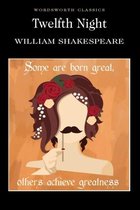
Twelfth Night
Paper 3 Drama (Open Text) – 45 min; 25% of total grade
Candidates answer one question from a choice of two. Both questions carry equal marks (25
marks each).
Relevant passages are printed on the question paper.
Mark scheme for Paper 3: Drama
Sustains a perceptive, convincing and relevant personal response
• shows a clear critical understanding of the text
• responds sensitively and in detail to the way the writer achieves his/her effects
• integrates much well-selected reference to the text insight, sensitivity, individuality and flair.
They show sustained engagement with both text and task.
Key: (_._._) e.g. (1.5.12) = Act 1, Scene 5, Line 12
● Create mind maps pg184
○ Write the key topic in the centre.
■ Main points (P) along branches.
■ Add evidence (E) e.g. quotations to support points.
■ Analysis (A) e.g. possible audience reactions, Shakespeare’s
intentions & your personal response
■ Draw links between ideas
■ Use this PEA structure for essays
○ Write characters in the centre
■ Traits and famous quotations
■ Role/importance in the play
● Cut up scenes and acts place side by side in sequence on the wall
○ See how the acts relate to each other
○ Annotate comments/observations/questions
○ Highlight recurrence of words/images/metaphors
○ Follow a particular character’s progress through the play
Themes
go through sparknotes quotes based on themes
● Desire and love
○ Orsino & Olivia self-centered love transformed to genuine love by Viola’s
constancy & integrity
○ Sir Toby & Maria find love of some sort
○ Sir Andrew & Malvolio learn that playing at love & self-love is not enough
○ Love as a result of suffering
■ Orsino depicts love as an “appetite” he wants to satisfy but cannot
(1.1.3) & calls his desires “fell and cruel hounds” (1.1.22)
■ Olivia describes love as a “plague” from which she suffers terribly
(1.5.265)
■ Viola “My state is desperate for my master’s love” (II.ii.35)
○ Love clouds logical thinking for Orsino, Olivia & maybe even Viola
, ○ Orsino & Olivia refer to love as curing an illness & an illness itself
○ Is exclusionary: not all end up romantically happy i.e. Malvolio & Antonio
● Appearance vs reality / Deception and disguise
○ In Shakespeare’s time, a boy would be pretending to be a woman pretending
to be a boy
○ Viola’s disguise as Cesario
■ “I am not what I am” (3.1.)
■ Olivia falls for Viola-Cesario thinking he is a young gentleman
○ “One face, one voice, one habit, and two persons!” (5.1.)
○ Malvolio’s self-delusion that Olivia loves him
■ mistakes the forged letter as a true declaration of Olivia’s love for him
○ VIola & Sir Andrew tricked into thinking the other is a great swordsman
○ Antonio defends Viola, thinking she is Sebastian
■ Becomes bitter when Viola denies knowing him & doesn’t return his
money
○ Sebastian's appearance causes everyone to mistake him for Cesario
○ Orsino turns against Viola-Cesario when he mistakenly thinks he has
betrayed him by marrying Olivia
○ Characters hide their true feelings and keep their private & public self
separate (except Feste?)
○ Viola's masculine disguise lets her speak her mind much more freely
■ Since women were expected to follow strict rules of social decorum
■ e.g. when Orsion & Viola argue about how men & women behave in
love: “In faith, they are as true of heart as we” (2.4. 102)
● Comedy & Fun
○ Trickery
■ ‘Gulling’ of Malvolio
● “Jove, I thank thee. I will smile; I will do everything that thou
wilt have me” (146-7)
○ Contrast with tragedy; light relief
○ As a result of excess: excess alcohol, mischief & deception create humour &
pathos (feelings of sympathy & pity)
○ Wordplay
■ Puns & jokes by Feste, Sir Toby
■ Irony
● As a result of the emphasis on disguise
■ Acerbic and sarcastic comments
● Criticism
● Wise fool
● Madness & melancholy
○ Tormenting of Malvolio
■ Reflects Elizabethan belief that the insane were possessed by devils
& should be confined in dark places
○ Orsino threatens to kill both Olivia & Viola→ momentarily mentally unbalanced
○ Olivia is told that Malvolio is ‘tainted in’s wits’
○ As Olivia waits for Cesario to arrive: “I am as mad as he/ If sad and merry
madness equal be” (3.4.14-15)
Paper 3 Drama (Open Text) – 45 min; 25% of total grade
Candidates answer one question from a choice of two. Both questions carry equal marks (25
marks each).
Relevant passages are printed on the question paper.
Mark scheme for Paper 3: Drama
Sustains a perceptive, convincing and relevant personal response
• shows a clear critical understanding of the text
• responds sensitively and in detail to the way the writer achieves his/her effects
• integrates much well-selected reference to the text insight, sensitivity, individuality and flair.
They show sustained engagement with both text and task.
Key: (_._._) e.g. (1.5.12) = Act 1, Scene 5, Line 12
● Create mind maps pg184
○ Write the key topic in the centre.
■ Main points (P) along branches.
■ Add evidence (E) e.g. quotations to support points.
■ Analysis (A) e.g. possible audience reactions, Shakespeare’s
intentions & your personal response
■ Draw links between ideas
■ Use this PEA structure for essays
○ Write characters in the centre
■ Traits and famous quotations
■ Role/importance in the play
● Cut up scenes and acts place side by side in sequence on the wall
○ See how the acts relate to each other
○ Annotate comments/observations/questions
○ Highlight recurrence of words/images/metaphors
○ Follow a particular character’s progress through the play
Themes
go through sparknotes quotes based on themes
● Desire and love
○ Orsino & Olivia self-centered love transformed to genuine love by Viola’s
constancy & integrity
○ Sir Toby & Maria find love of some sort
○ Sir Andrew & Malvolio learn that playing at love & self-love is not enough
○ Love as a result of suffering
■ Orsino depicts love as an “appetite” he wants to satisfy but cannot
(1.1.3) & calls his desires “fell and cruel hounds” (1.1.22)
■ Olivia describes love as a “plague” from which she suffers terribly
(1.5.265)
■ Viola “My state is desperate for my master’s love” (II.ii.35)
○ Love clouds logical thinking for Orsino, Olivia & maybe even Viola
, ○ Orsino & Olivia refer to love as curing an illness & an illness itself
○ Is exclusionary: not all end up romantically happy i.e. Malvolio & Antonio
● Appearance vs reality / Deception and disguise
○ In Shakespeare’s time, a boy would be pretending to be a woman pretending
to be a boy
○ Viola’s disguise as Cesario
■ “I am not what I am” (3.1.)
■ Olivia falls for Viola-Cesario thinking he is a young gentleman
○ “One face, one voice, one habit, and two persons!” (5.1.)
○ Malvolio’s self-delusion that Olivia loves him
■ mistakes the forged letter as a true declaration of Olivia’s love for him
○ VIola & Sir Andrew tricked into thinking the other is a great swordsman
○ Antonio defends Viola, thinking she is Sebastian
■ Becomes bitter when Viola denies knowing him & doesn’t return his
money
○ Sebastian's appearance causes everyone to mistake him for Cesario
○ Orsino turns against Viola-Cesario when he mistakenly thinks he has
betrayed him by marrying Olivia
○ Characters hide their true feelings and keep their private & public self
separate (except Feste?)
○ Viola's masculine disguise lets her speak her mind much more freely
■ Since women were expected to follow strict rules of social decorum
■ e.g. when Orsion & Viola argue about how men & women behave in
love: “In faith, they are as true of heart as we” (2.4. 102)
● Comedy & Fun
○ Trickery
■ ‘Gulling’ of Malvolio
● “Jove, I thank thee. I will smile; I will do everything that thou
wilt have me” (146-7)
○ Contrast with tragedy; light relief
○ As a result of excess: excess alcohol, mischief & deception create humour &
pathos (feelings of sympathy & pity)
○ Wordplay
■ Puns & jokes by Feste, Sir Toby
■ Irony
● As a result of the emphasis on disguise
■ Acerbic and sarcastic comments
● Criticism
● Wise fool
● Madness & melancholy
○ Tormenting of Malvolio
■ Reflects Elizabethan belief that the insane were possessed by devils
& should be confined in dark places
○ Orsino threatens to kill both Olivia & Viola→ momentarily mentally unbalanced
○ Olivia is told that Malvolio is ‘tainted in’s wits’
○ As Olivia waits for Cesario to arrive: “I am as mad as he/ If sad and merry
madness equal be” (3.4.14-15)