M12_SFTY409_Final_Exam_Key
SFTY 409, Final Exam Note to Instructors: The answers provided are overkill answers. For the student to do well on a question the need to demonstrate overall knowledge and some details. The do not need to demonstrate detailed knowledge of every element. Key points in the answer are Bolded. Consider how well a student provides justifies their answers or defends their argument. Question 1. What are the air carriers' responsibilities for safety? How does FAA judge if an air carrier is unable to carry its duties? ANSWER: Section 601(b) of the FA Act specifies, in part, that when prescribing standards and regulations and when issuing certificates, the FAA shall give full consideration "to the duty resting upon air carriers to perform their services with the highest possible degree of safety in the public interest . . ." The FA Act charges the FAA with the responsibility for promulgating and enforcing adequate standards and regulations. At the same time, the FA Act recognizes that the holders of air carrier certificates have a direct responsibility for providing air transportation with the highest-possible degree of safety. The meaning of Section 601(b) of the FA Act should be clearly understood. It means that this responsibility rests directly with the air carrier, irrespective of any action taken or not taken by the FAA. Conditions or situations that indicate that an air carrier's management is unable or unwilling to carry out its duties set forth by the FA Act are: Repetitive noncompliance with minimum standards and regulations Insufficient training programs and guidance Lack of concern or enthusiasm on the part of air carrier management for compliance with the FA Act and the FARs Lack of operational control of aircraft Lack of ensuring the airworthiness of aircraft Inaccurate record-keeping procedures Question 2. What was the purpose of the Commuter Safety Initiative of 1995, and what were some of the operational requirements imposed on commuter air carriers operating aircraft with 10 or more passenger seats? ANSWER: As of December 14, 1995, all airplanes with 10 or more passenger seats and all turbojets operated in scheduled passenger service must operate This study source was downloaded by from CourseH on :26:03 GMT -05:00 under FAR Part 121. Commuter operations with nine or fewer seats and ondemand air taxi airplanes with 30 or fewer seats and all rotor-craft still operate under FAR Part 135. Operations under Part 121 have to meet additional standards involving operational and airplane certification and equipment and performance upgrades. The Commuter Safer Initiative requires the 10-or-more-seat aircraft to comply with all FAR Part 121 operational requirements, which include: Dispatch requirements and certificated dispatchers. Retirement at age 60 for pilots. New Flight and duty times. Manuals and procedures for both flight and ground personnel. All cabin safety and flight attendant requirements for 20- to 30-seat airplanes (19 or fewer seats, no flight attendant required). Maintenance duty limits. A new training rule increases training requirements for all pilots of scheduled passenger operations in airplanes with 10 seats or more. Also issued with the Commuter Rule was FAR Part 119, which consolidates air carrier certification procedures, provides new definitions, and requires new management and safety officer positions for Part 121 operators. Question 3. Explain why the Aviation Safety Reporting System (ASRS) is most useful in dealing with human factors issues. What are the strengths and weaknesses of the system? ANSWER: Any incident reporting system must have the following characteristics: Trust Independence Ease of Reporting
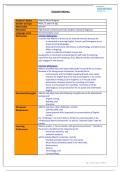
Written for
- Institution
-
Embry-Riddle Aeronautical University
- Course
-
SFTY 409
Document information
- Uploaded on
- March 18, 2023
- Number of pages
- 7
- Written in
- 2022/2023
- Type
- Exam (elaborations)
- Contains
- Unknown