ATI TEAS SCIENCE REVIEW- CHEMISTRY STUDY GUIDE
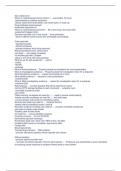
ATI TEAS SCIENCE REVIEW- CHEMISTRY ATI TEAS SCIENCE – CHEMISTRY Questions related to chemistry test your knowledge of chemical properties and processes. You may be asked questions about states of matter, properties of matter, phase changes, chemical bonds, chemical solutions, chemical reactions, and acids and bases. You may be asked to balance chemical equations. Let’s get started in understanding how chemistry is important on the ATI TEAS. COVERED AREAS Understanding States of Matter. Understanding Changes in States of Matter. Understanding Properties of Matter Understanding Chemical Bonds. Understanding Chemical Solutions. Understanding Chemical Reactions. Understanding Acid Base Balance. Understanding Balancing Chemical Equations. UNDERSTANDING STATES OF MATTER Matter is made up of microscopic particles that move different speeds depending on the energy they are exposed to. We measure this energy as temperature. The molecules can move either quickly and randomly or hardly at all. When the energy is high, matter take the form of a gas, in which molecules are moving about quickly and are far apart. Gases have no fixed form. Molecules are free to move at random past each other, and they tend to fill any container that holds them. If a gas is not contained, its molecules will disperse. Lower temperatures result in a liquid, in which molecules cohere but are fluid. Coherence means that the molecules remain close together, but they can change position by sliding over one another. In liquids, molecules move less freely than in a gaseous state, sliding past one another. They have a fixed volume but will flow freely unless they fill a portion of a container. When the temperature is low, matter takes the form of a solid, in which molecules are packed closely together and retain their positions. Solid matter is rigid, and molecules retain a uniform spacing. A solid has a defined form, which is brittle. It can be broken into pieces but tends to stay together. A somewhat unusual state of matter is plasma, which is like a gas in many of its properties but carries an electric charge. The TEAS focus on solids, liquids, and gases. UNDERSTANDING CHANGES IN STATE OF MATTER The state of matter depends on temperature and pressure. Higher temperatures cause molecules to energize and move farther apart. Increasing pressure forces molecules closer together. Melting is the phase change from solid to liquid and boiling is the phase change from liquid to gas. There is also a direct change from solid to gas known as sublimation. The phase change from gas to liquid is condensation and the change from liquid to solid is freezing. A direct change from gas to solid is deposition. All types of matter can be described in terms of the physical and chemical properties each substance has. Physical properties are observable and there is an extensive list of physical properties that one could observe about a substance. A few examples are density, the temperatures at which the substance undergoes phase changes, malleability, conductivity, specific heat capacity, mass, volume, color, and many other properties. Physical properties are further divided into intensive and extensive properties. An intensive property does not depend on the size or amount of matter in the object, while an extensive property does depend on the amount of matter in the object. For example, mass is extensive because the measurement would change the size of the sample. Boiling point is intensive because the temperature at which the object boils is not dependent on its volume. UNDERSTANDING PROPERTIES OF MATTER- WATER Water is a polar inorganic compound that is transparent and nearly colorless. H2O is a covalent compound because oxygen and hydrogen are nonmetals. It has 8 total valence electrons (6 from oxygen and 1 from each hydrogen). Breaking the bonds requires a lot of energy, so water has a very high specific heat and heat of vaporization. The molar mass of water is 18.02 g/mol. It commonly exists as solid, liquid, and gas. The polarity of water allows it to exhibit both cohesive and adhesive properties. Cohesiveness allows water to travel through tiny capillaries and creates surface tension on the surface of a body of water. Adhesiveness allows water to stick to other molecules and dissolve them, making it known as the “universal solvent.” Water also has a unique property called osmosis, which is a specific type of diffusion. Diffusion is a term used to describe the process of a substance moving from an area of high concentration to an area of low concentration. Osmosis is a type of diffusion in which water moves passively through a semi-permeable membrane to equalize water concentration on both sides of the membrane. This is how water moves through cell walls in the body. UNDERSTANDING CHEMICAL BONDS A chemical compound is created when two or more atoms join to form a chemical bond that leaves the atoms in a less excited state than they were in before the bond. Such bonds form in two ways. A covalent bond occurs when atoms share electrons between them. This type of bond is common between two atoms of the same element, as in hydrogen (H2) or in similar elements. When a molecule shares a pair of electrons in a stable state, it has formed a covalent bond. Alkanes, for example, share a single bond. In some compounds, one atom takes the shared electron for more time, due to its structure, forming a polar covalent bond. This molecule is partly negatively charged and partly positively charged. Some molecules form a double bond, sharing four electrons as opposed to two. These bonds are commonly represented in the alkenes, hydrocarbons with twice as many hydrogen molecules as carbon molecules. It is possible to form triple bonds as seen in a group of hydrocarbons called alkynes. An ionic bond is created between atoms when one atom gives an electron to the other. These bonds typically take place between metals and nonmetals due to the unique electron configuration of metals, with the metal giving an electron to the nonmetal. This transfer creates a positive charge and a negative charge at the ends of the compound. The positive charge, or cation, is created by the giver of an electron. The negative charge, or anion, is located at the receiving end of the electron. The net charge of the compounds remains balanced at zero. UNDERSTANDING CHEMICAL SOLUTIONS A chemical solution is a group of chemical compounds evenly distributed in a state of matter. The solution is a homogenous mixture where one chemical compound is completely dissolved in the others. This is most easily achieved in a liquid state. There are mixtures that are not solutions. A heterogeneous mixture maintains separation between two substances, like oil and water. The solute is the compound dissolved in the solvent. Liquids make excellent solvents. The solubility of a solvent depends on the nature of the liquid as well as external factors like temperature. The concentration of the solution is the amount of solute in the solution. The mole is the unit of measurement for chemical reactions and refers to a compound’s molecular mass. UNDERSTANDING CHEMICAL REACTIONS To create a new chemical compound from other elements and compounds, a chemical reaction is needed. Two or more reactants are added together, often with an input of energy, creating one or more products and by-products. Photosynthesis occurs, for instance, when a plant cell combines carbon dioxide and water. The sun’s rays provide the energy. The chemical reaction produces sugar and oxygen. Chemical reactions are shown with equations and have a basic pattern: reactants go on the left and products go on the right, with the reaction sign (an arrow) showing the direction of the reaction in the middle. Here is an example showing the direction of the reaction in the middle. Here is an example showing the formation of water molecules: 2H2 + O2 → 2H2O Equations for chemical reactions must be balanced; there must be the same number of atoms of each element on both sides of the reaction. Notice in the equation above that there are four hydrogen atoms and two oxygen atoms on each side. Only their arrangement is changed. There are five basic types of chemical reactions: • Synthesis: two separate things joining together to form 1 compound • Decomposition: 1 compound breaks down into 2 or more compounds • Combustion: The use of fuel (combustible material) with oxygen to form carbon dioxide and water • Single replacement: 1 element or compound replaces another element or compound in a compound For example: A + BC ⟹AC + B • Double replacement: 2 ionic compounds create two more iconic compounds For example: AB + CD ⟹AD + CB Reaction rates depend on the likelihood of collision between particles. The reaction rate can be altered by changi
Written for
- Institution
- ATI TEAS SCIENCE
- Course
- ATI TEAS SCIENCE
Document information
- Uploaded on
- March 13, 2023
- Number of pages
- 14
- Written in
- 2022/2023
- Type
- Exam (elaborations)
- Contains
- Questions & answers
Subjects
- ati teas science review
-
ati teas science review chemistry
-
ati teas science review chemistry study guide

Also available in package deal