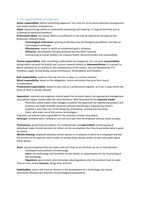
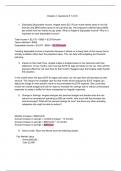
Facilitation and ICC lecture notes
Week 1/lecture 1
Facilitation= the action of facilitating something
ICC facilitation domain: knowledge build to competences & skills in intercultural communication
consulting to:
1. Help organisations adopt transcultural org. structures and systems
2. Facilitate intercultural teams collaboration and managing conflicts
3. Develop intercultural communication strategies and facilitate intercultural communication
(verbal and non-verbal)
Types of cultural integration in typical organisations
- Cultural pluralism:
- Cultural blending: when there’s not 1 organisational culture, but a blend
- Cultural takeover: there is a clear policy about what the organisational culture should be
- Cultural resistance: there is no policy or culture set and resistance can occur with dominant
and non-dominant cultures which might have some differences
Intercultural communication and organisation change
- Culture plays a very important part int the organisational set-up of a company
- Organisational change implies a shift in the culture of the organisation, a dynamic
transactional culture
Intercultural communication and facilitation
Intercultural business consulting
- important support in the organisational change process
Intercultural communication consultancy the business context
- Business strategy
- Intercultural strategy
- Communication strategy
Complex context of intercultural consulting
Difference between intercultural communication and intercultural business communication is more
than the business context:
- Intercultural business communication->
The business strategies, goals, objectives and practices
The integrated communication strategy
The intercultural strategy
a new context given by the synergy of culture (sub-cultures), communication
and business
any change in the framework causes a new intercultural/transcultural business communication
approach
The complex context of intercultural consulting: The synergy of culture (sub-
cultures)
Levels of cultures
national culture
, business culture (the professional side and traits of the culture and nationality of
employees)
organizational culture & occupational culture
week 2/lecture 2
IC model of communication
Only messages can be sent and received, meanings cannot be transmitted. The meaning is formed in
the receivers minds.
When the receiver belongs to a culture, there is an extra layer of complexity.
- Environmental context
- Micro cultural context
- Cultural context ( includes organisational cultures and how they are set in different national
cultures)
Communication: why how who where and when
The context of the intercultural communication is relevant
- WHY the purpose of factors of communication (intention/impact in TOPOI)
- HOW to reach the purpose: how messages are organized and encoded (tongue and order in
TOPOI) e.g. when you’re talking to talk to someone who is native in a language you’re not,
they tend to slow down because they feel like otherwise you won’t understand them. Also
includes the power distance in the conversation in general.
- WHO is the appropriate person to receive or to send the message? (persons, organization in
TOPOI) hierarchy in a company, the gender of people interacting, the age etc everything that
belongs to the subcultures.
- WHERE channels of communication and type e.g. written and oral (tongue and organization
in TOPOI)
- WHEN time or timing of communication (order in TOPOI)
Communication HOW : organizing routine messages
Direct plan is favoured by results-oriented, direct, low context cultures:
1. Avoid ambiguity, emphasise on clarity and conciseness
2. Directness in content and approach
3. Main message in the opening sentence
4. Linear, chronological sequences
5. Background comes after the main message
Risks for high context, indirect relationship oriented:
1. Perceived as unfriendly
2. Offending request
3. Blunt and inconsiderate
Indirect plan is favoured by relationship oriented, indirect, high context cultures:
1. Intent ambiguity, emphasise background, protect face
2. Indirectness in content and approach
3. Main message after the context/background
4. Circular interlinked messages.
Risks for low-context, direct, goal oriented
Week 1/lecture 1
Facilitation= the action of facilitating something
ICC facilitation domain: knowledge build to competences & skills in intercultural communication
consulting to:
1. Help organisations adopt transcultural org. structures and systems
2. Facilitate intercultural teams collaboration and managing conflicts
3. Develop intercultural communication strategies and facilitate intercultural communication
(verbal and non-verbal)
Types of cultural integration in typical organisations
- Cultural pluralism:
- Cultural blending: when there’s not 1 organisational culture, but a blend
- Cultural takeover: there is a clear policy about what the organisational culture should be
- Cultural resistance: there is no policy or culture set and resistance can occur with dominant
and non-dominant cultures which might have some differences
Intercultural communication and organisation change
- Culture plays a very important part int the organisational set-up of a company
- Organisational change implies a shift in the culture of the organisation, a dynamic
transactional culture
Intercultural communication and facilitation
Intercultural business consulting
- important support in the organisational change process
Intercultural communication consultancy the business context
- Business strategy
- Intercultural strategy
- Communication strategy
Complex context of intercultural consulting
Difference between intercultural communication and intercultural business communication is more
than the business context:
- Intercultural business communication->
The business strategies, goals, objectives and practices
The integrated communication strategy
The intercultural strategy
a new context given by the synergy of culture (sub-cultures), communication
and business
any change in the framework causes a new intercultural/transcultural business communication
approach
The complex context of intercultural consulting: The synergy of culture (sub-
cultures)
Levels of cultures
national culture
, business culture (the professional side and traits of the culture and nationality of
employees)
organizational culture & occupational culture
week 2/lecture 2
IC model of communication
Only messages can be sent and received, meanings cannot be transmitted. The meaning is formed in
the receivers minds.
When the receiver belongs to a culture, there is an extra layer of complexity.
- Environmental context
- Micro cultural context
- Cultural context ( includes organisational cultures and how they are set in different national
cultures)
Communication: why how who where and when
The context of the intercultural communication is relevant
- WHY the purpose of factors of communication (intention/impact in TOPOI)
- HOW to reach the purpose: how messages are organized and encoded (tongue and order in
TOPOI) e.g. when you’re talking to talk to someone who is native in a language you’re not,
they tend to slow down because they feel like otherwise you won’t understand them. Also
includes the power distance in the conversation in general.
- WHO is the appropriate person to receive or to send the message? (persons, organization in
TOPOI) hierarchy in a company, the gender of people interacting, the age etc everything that
belongs to the subcultures.
- WHERE channels of communication and type e.g. written and oral (tongue and organization
in TOPOI)
- WHEN time or timing of communication (order in TOPOI)
Communication HOW : organizing routine messages
Direct plan is favoured by results-oriented, direct, low context cultures:
1. Avoid ambiguity, emphasise on clarity and conciseness
2. Directness in content and approach
3. Main message in the opening sentence
4. Linear, chronological sequences
5. Background comes after the main message
Risks for high context, indirect relationship oriented:
1. Perceived as unfriendly
2. Offending request
3. Blunt and inconsiderate
Indirect plan is favoured by relationship oriented, indirect, high context cultures:
1. Intent ambiguity, emphasise background, protect face
2. Indirectness in content and approach
3. Main message after the context/background
4. Circular interlinked messages.
Risks for low-context, direct, goal oriented