Acute Pancreatitis Exam with Answers
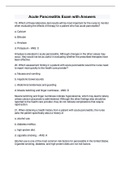
19. Which of these laboratory test results will be most important for the nurse to monitor when evaluating the effects of therapy for a patient who has acute pancreatitis? a. Calcium b. Bilirubin c. Amylase d. Potassium - ANS: C Amylase is elevated in acute pancreatitis. Although changes in the other values may occur, they would not be as useful in evaluating whether the prescribed therapies have been effective. 20. Which assessment finding in a patient with acute pancreatitis would the nurse need to report most quickly to the health care provider? a. Nausea and vomiting b. Hypotonic bowel sounds c. Abdominal tenderness and guarding d. Muscle twitching and finger numbness - ANS: D Muscle twitching and finger numbness indicate hypocalcemia, which may lead to tetany unless calcium gluconate is administered. Although the other findings also should be reported to the health care provider, they do not indicate complications that require rapid action. 21. When obtaining a health history from a patient with acute pancreatitis, the nurse asks the patient specifically about a history of a. alcohol use. b. diabetes mellitus. c. high-protein diet. d. cigarette smoking. - ANS: A Alcohol use is one of the most common risk factors for pancreatitis in the United States. Cigarette smoking, diabetes, and high-protein diets are not risk factors.22. When educating a patient with chronic pancreatitis about the prescribed pancrelipase (Viokase), the nurse will teach the patient to take the medication a. at bedtime. b. with every meal. c. upon arising in the morning. d. as soon as abdominal pain occurs. - ANS: B Pancreatic enzymes are used to help with digestion of nutrients and should be taken with every meal. 27. When taking the BP of a patient with severe acute pancreatitis, the nurse notices carpal spasm of the patients hand. Which action should the nurse take next? a. Ask the patient about any arm pain. b. Retake the patients blood pressure. c. Check the calcium level on the chart. d. Notify the health care provider immediately. - ANS: C The patient with acute pancreatitis is at risk for hypocalcemia, and the assessment data indicate a positive Trousseaus sign. The health care provider should be notified after the nurse checks the patients calcium level. There is no indication that the patient needs to have the BP rechecked or that there is any arm pain.
Written for
- Institution
-
Unitek
- Course
-
ATI MEDSURG
Document information
- Uploaded on
- March 10, 2023
- Number of pages
- 3
- Written in
- 2022/2023
- Type
- Exam (elaborations)
- Contains
- Questions & answers
Subjects
-
acute pancreatitis exam with answers
-
19 which of these laboratory test results will be most important for the nurse to monitor when evaluating the effects of therapy for a patient who has acute pancr

Also available in package deal