Leasehold covenant questions:
Leasehold covenant question – old leases: tenant as client
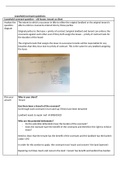
Analyse the The extent to which a successor in title to either the original landlord or the original tenant is
question- able to enforce covenants entered into by those parties
diagram
Original parties to the lease = privity of contract (original landlord and tenant can enforce the
covenants against each other even if they both assign the leases – privity of contract lasts for
the duration of the lease)
The original tenant that assigns the lease to successive tenants will be responsible for any
breaches that they incur due to privity of contract. This is the same for any landlord assigning
the lease
Plan your Who is your client?
answer Tenant
Has there been a breach of the covenant?
Go through each covenant in turn and say if they have been breached
Landlord needs to repair roof BREACHED
Who are the potential defendants?
- Do the potential defendants have the burden of the covenant?
- Does the claimant have the benefit of the covenants and therefore the right to enforce
them?
Need to show that the tenant has the benefit of the covenant and the landlord has the burden
under s142
In order for this section to apply, the covenant must ‘touch and concern’ the land (spencer)
Repairing roof does touch and concern the land = tenant has benefit and landlord has burden
, S142 landlord covenant (if tenants can enforce the landlord’s covenants) – SPENCER
obligations under any covenant entered into by the landlord ‘with reference to the subject
matter of the lease’ are similarly annexed to the reversionary estate. These obligations will be
binding on L1 and subsequent owners of the reversion.
Benefit – tenant (claimant) (because the landlord is promising to do something)
Burden - landlord (defendant)
Spencer’s Case (1583) 5 Co Rep 16a (77 ER 72) the covenant in breach needs to ‘touch and
concern the land’ in order to be enforceable
What are Breach of other covenants
the Damages
appropriate If a party fails to fulfil an obligation, the other party may bring a claim seeking damages
remedies?
applies where a claimant seeks damages for breach of a contract. That rule says that the
damages are limited to:
(a) such as may fairly and reasonably be considered either arising naturally, ie according to the
usual course of things, from such breach of contract itself; or
(b) such as may reasonably be supposed to have been in the contemplation of both parties at
the time they made the contract, as the probable result of the breach of it
Hadley v Baxendale (1854) 9 Ex 341
Specific performance/injunction
Specific performance = discretionary equitable remedy that will be granted only where an
award of damages is considered to be inadequate as a means of compensating C for loss
Self-help
Forfeiture
The landlord will have a right to forfeit where:
(a) the lease contains a provision for the landlord to re-enter the property for a breach of
covenant by the tenant (a forfeiture clause); or
(b) the lease is granted subject to a condition that the landlord may forfeit it on the happening
of some event.
If the lease contains a forfeiture clause and the tenant is in breach of a covenant, the lease does
not end automatically. The landlord must decide whether to forfeit the lease or to treat it as
still continuing
Indemnity
• Express indemnity covenant (old & new leases) – can claim money back through this
• Moule v Garrett (old & new leases) – implied indemnity
• Statutory indemnity s77 LPA 1925 (unreg) or Sched 12 para 20 LRA 2002 (reg) – Old
leases ONLY
• Under Moule v Garrett, where one person discharges the liability of another, that
person may seek to recover the amount he has paid from the person whose liability he
has discharged Moule v Garrett (1872) LR 7 Ex 101
Leasehold covenant question – old leases: tenant as client
Analyse the The extent to which a successor in title to either the original landlord or the original tenant is
question- able to enforce covenants entered into by those parties
diagram
Original parties to the lease = privity of contract (original landlord and tenant can enforce the
covenants against each other even if they both assign the leases – privity of contract lasts for
the duration of the lease)
The original tenant that assigns the lease to successive tenants will be responsible for any
breaches that they incur due to privity of contract. This is the same for any landlord assigning
the lease
Plan your Who is your client?
answer Tenant
Has there been a breach of the covenant?
Go through each covenant in turn and say if they have been breached
Landlord needs to repair roof BREACHED
Who are the potential defendants?
- Do the potential defendants have the burden of the covenant?
- Does the claimant have the benefit of the covenants and therefore the right to enforce
them?
Need to show that the tenant has the benefit of the covenant and the landlord has the burden
under s142
In order for this section to apply, the covenant must ‘touch and concern’ the land (spencer)
Repairing roof does touch and concern the land = tenant has benefit and landlord has burden
, S142 landlord covenant (if tenants can enforce the landlord’s covenants) – SPENCER
obligations under any covenant entered into by the landlord ‘with reference to the subject
matter of the lease’ are similarly annexed to the reversionary estate. These obligations will be
binding on L1 and subsequent owners of the reversion.
Benefit – tenant (claimant) (because the landlord is promising to do something)
Burden - landlord (defendant)
Spencer’s Case (1583) 5 Co Rep 16a (77 ER 72) the covenant in breach needs to ‘touch and
concern the land’ in order to be enforceable
What are Breach of other covenants
the Damages
appropriate If a party fails to fulfil an obligation, the other party may bring a claim seeking damages
remedies?
applies where a claimant seeks damages for breach of a contract. That rule says that the
damages are limited to:
(a) such as may fairly and reasonably be considered either arising naturally, ie according to the
usual course of things, from such breach of contract itself; or
(b) such as may reasonably be supposed to have been in the contemplation of both parties at
the time they made the contract, as the probable result of the breach of it
Hadley v Baxendale (1854) 9 Ex 341
Specific performance/injunction
Specific performance = discretionary equitable remedy that will be granted only where an
award of damages is considered to be inadequate as a means of compensating C for loss
Self-help
Forfeiture
The landlord will have a right to forfeit where:
(a) the lease contains a provision for the landlord to re-enter the property for a breach of
covenant by the tenant (a forfeiture clause); or
(b) the lease is granted subject to a condition that the landlord may forfeit it on the happening
of some event.
If the lease contains a forfeiture clause and the tenant is in breach of a covenant, the lease does
not end automatically. The landlord must decide whether to forfeit the lease or to treat it as
still continuing
Indemnity
• Express indemnity covenant (old & new leases) – can claim money back through this
• Moule v Garrett (old & new leases) – implied indemnity
• Statutory indemnity s77 LPA 1925 (unreg) or Sched 12 para 20 LRA 2002 (reg) – Old
leases ONLY
• Under Moule v Garrett, where one person discharges the liability of another, that
person may seek to recover the amount he has paid from the person whose liability he
has discharged Moule v Garrett (1872) LR 7 Ex 101