Human decision making:
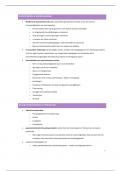
Economics and pshycology, is like water and fire. They do look at a different angel to human decision
making and behavior.
Economics: Psychology:
- Assumptions about human behavior (they - Research about behavior ( they
have assumptions and mathematical models. do measure how people behave)
- Aggregated behavior - Individual behavior
- Normative theory (how an rational person - Descriptive theory
make decisions. - Separate theories (occasional
- Deviations (anomalies) from theory theories for deviations)
Assumptions of economic theory;
- Complete information about choice alternative (market transparency) this is frequently
not the case. It is impossible to know everything. People are also too lazy to know all the
information. People make decisions based on less than every information
- Correct calculation of utility of combinations
- Individualism, self-interest, people make a decision what is important for them. But this is
not true, we think a lot about fairness.
- Knowledge about short-term and long-term utility. If you want to make a rational decision
about eating chips, you have to think about the long-term. That doesn’t happen.
- Stable preferences doesn’t happen, your taste is changing all the time.
- Maximization or optimization of utility.
- No role for emotion
Human are represented as a rational economic man. Which is not realistic
Rational economic man:
- Unlimited information processing
- Maximization of own outcomes (greed)
- Incredible willpower
This is problematic
Some answers of economists:
- Maybe people are not rational, but they do act rationally, even if you don’t consider all the
options / make all the calculations / have all the information
- Irrational agents will become extinct ( not true !!)
- Aggregate behavior is more rational (little bit true, large groups are better than individuals.
But if everyone is making the wrong decision, than the aggregate behavior is not true) people
make systematic errors.
- It will even out in the long run (not true, systematic deviations)
- If it’s about big money, people become more rational (not true) at some point it is true,
people do think more rational, but there are still a lot of systematic errors/biases.
Rationality:
- Maximizing outcomes: choose the alternative with the highest expected value/utility
- Assumes knowledge and skills:
All options are known
Circumstances are known for all options, or the probabilities of these circumstances
, Consequences of all options are known
Values of consequences are known
A calculation can be accurately made, and the highest expected value or utility can
be calculated.
Decision making
Decisions are really important:
- Since resources are limited
- To adjust to one’s environment
- Decisions have a large influence on both an individual’s happiness and society
What is a decision?
- A decision is defined as a moment in an ongoing process of evaluating alternatives for
meeting an objective, at which expectations about a particular course of action impel the
decision maker to select that course of action most likely to result in attaining the objective.
- One moment in a larger process
- When alternatives are evaluated
- Leading to the selection of one alternative
- Aimed at a specific goal
1. Gathering information:
- Problem definition (current situation-goal)
- Criteria; weight of criteria
- Creating alternative options
- Assessing (possible) consequences of alternatives
2. Evaluation
- Judging the options
- Designing/calculating outcomes
3. Action
- Deciding/choosing
4. Implementation
- Executing the decision
5. Evaluation of decision outcome
- This helps you to make your next decision
Examples:
- Ordering a meal in a restaurant
- Starting a consultancy firm
- Not quitting smoking
Important distinctions:
- What is the difference between judgement and decision-making?
- What is the difference between problem-solving and decision-making?
- What is the difference between a decision and decision-making?
Judgement vs decision making:
- Judgement is the cognitive part of decision making where you are considering the
alternatives.
- Usually before the decision or as a evaluation after decision
- A judgement requires a choice to become a decision. It only becomes a decision when you
pick it.
, Problem solving:
- Problem-solving may or may not require action. There is not always an action, you do not
always have to make a decision.
But large overlap with decision making
Both can contain multiple decisions
More focus on analyzing the problem in problem solving
More focus toward the end of the process in decision-making
Lecture 2
Rationality:
- Maximizing outcomes: choose the alternative with the highest expected value/utility
- Assumes knowledge and skills:
All options are known
Circumstances are known for all options, or the probabilities of these circumstances
Consequences of all options are known
Value of consequences are known
A calculation can be accurately made, and the highest expected value or utility can
be calculated.
Bounded rationality:
Decision-makers try to be rational, but:
- They lack important information with regard to the problem, criteria, options, etc.
- Time and cost restrictions create boundaries to making accurate assessments of problem,
options and criteria
- Restrictions in intelligence and perception create boundaries to making accurate calculations
on utility
- People use simplified models
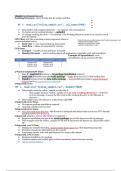
Two processing systems:
Rational / analytic system (2) Emotional / affective system (1)
Analytic Holistic
Logical Intuitive
Deliberative Affective
- Fear, dread, anxiety represents risks as
feelings
Abstract Vivid
- Encodes reality in abstract symbols, - Encodes reality in concrete images and
words & numbers narratives, linked to associative
- Rules and algorithms need to be learned networks
- System needs to be cued; does not - Operates automatically and without any
operate automatically training
There is never a decision where you do only use the analytic system. Indeed there are decisions
where you only use the emotional system.
System 1 & 2
Economics and pshycology, is like water and fire. They do look at a different angel to human decision
making and behavior.
Economics: Psychology:
- Assumptions about human behavior (they - Research about behavior ( they
have assumptions and mathematical models. do measure how people behave)
- Aggregated behavior - Individual behavior
- Normative theory (how an rational person - Descriptive theory
make decisions. - Separate theories (occasional
- Deviations (anomalies) from theory theories for deviations)
Assumptions of economic theory;
- Complete information about choice alternative (market transparency) this is frequently
not the case. It is impossible to know everything. People are also too lazy to know all the
information. People make decisions based on less than every information
- Correct calculation of utility of combinations
- Individualism, self-interest, people make a decision what is important for them. But this is
not true, we think a lot about fairness.
- Knowledge about short-term and long-term utility. If you want to make a rational decision
about eating chips, you have to think about the long-term. That doesn’t happen.
- Stable preferences doesn’t happen, your taste is changing all the time.
- Maximization or optimization of utility.
- No role for emotion
Human are represented as a rational economic man. Which is not realistic
Rational economic man:
- Unlimited information processing
- Maximization of own outcomes (greed)
- Incredible willpower
This is problematic
Some answers of economists:
- Maybe people are not rational, but they do act rationally, even if you don’t consider all the
options / make all the calculations / have all the information
- Irrational agents will become extinct ( not true !!)
- Aggregate behavior is more rational (little bit true, large groups are better than individuals.
But if everyone is making the wrong decision, than the aggregate behavior is not true) people
make systematic errors.
- It will even out in the long run (not true, systematic deviations)
- If it’s about big money, people become more rational (not true) at some point it is true,
people do think more rational, but there are still a lot of systematic errors/biases.
Rationality:
- Maximizing outcomes: choose the alternative with the highest expected value/utility
- Assumes knowledge and skills:
All options are known
Circumstances are known for all options, or the probabilities of these circumstances
, Consequences of all options are known
Values of consequences are known
A calculation can be accurately made, and the highest expected value or utility can
be calculated.
Decision making
Decisions are really important:
- Since resources are limited
- To adjust to one’s environment
- Decisions have a large influence on both an individual’s happiness and society
What is a decision?
- A decision is defined as a moment in an ongoing process of evaluating alternatives for
meeting an objective, at which expectations about a particular course of action impel the
decision maker to select that course of action most likely to result in attaining the objective.
- One moment in a larger process
- When alternatives are evaluated
- Leading to the selection of one alternative
- Aimed at a specific goal
1. Gathering information:
- Problem definition (current situation-goal)
- Criteria; weight of criteria
- Creating alternative options
- Assessing (possible) consequences of alternatives
2. Evaluation
- Judging the options
- Designing/calculating outcomes
3. Action
- Deciding/choosing
4. Implementation
- Executing the decision
5. Evaluation of decision outcome
- This helps you to make your next decision
Examples:
- Ordering a meal in a restaurant
- Starting a consultancy firm
- Not quitting smoking
Important distinctions:
- What is the difference between judgement and decision-making?
- What is the difference between problem-solving and decision-making?
- What is the difference between a decision and decision-making?
Judgement vs decision making:
- Judgement is the cognitive part of decision making where you are considering the
alternatives.
- Usually before the decision or as a evaluation after decision
- A judgement requires a choice to become a decision. It only becomes a decision when you
pick it.
, Problem solving:
- Problem-solving may or may not require action. There is not always an action, you do not
always have to make a decision.
But large overlap with decision making
Both can contain multiple decisions
More focus on analyzing the problem in problem solving
More focus toward the end of the process in decision-making
Lecture 2
Rationality:
- Maximizing outcomes: choose the alternative with the highest expected value/utility
- Assumes knowledge and skills:
All options are known
Circumstances are known for all options, or the probabilities of these circumstances
Consequences of all options are known
Value of consequences are known
A calculation can be accurately made, and the highest expected value or utility can
be calculated.
Bounded rationality:
Decision-makers try to be rational, but:
- They lack important information with regard to the problem, criteria, options, etc.
- Time and cost restrictions create boundaries to making accurate assessments of problem,
options and criteria
- Restrictions in intelligence and perception create boundaries to making accurate calculations
on utility
- People use simplified models
Two processing systems:
Rational / analytic system (2) Emotional / affective system (1)
Analytic Holistic
Logical Intuitive
Deliberative Affective
- Fear, dread, anxiety represents risks as
feelings
Abstract Vivid
- Encodes reality in abstract symbols, - Encodes reality in concrete images and
words & numbers narratives, linked to associative
- Rules and algorithms need to be learned networks
- System needs to be cued; does not - Operates automatically and without any
operate automatically training
There is never a decision where you do only use the analytic system. Indeed there are decisions
where you only use the emotional system.
System 1 & 2