

Ch 17: competition law
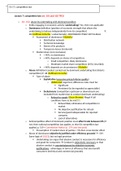
Lecture 7: competition law art. 101 and 102 TFEU
o Art. 102: abuse by undertaking with dominant position
o Entity engaging in economic activity (undertaking)? No, then not applicable
o Dominance definition [position of economic strength that allows the
undertaking to behave independently from its competitor] P.
48 (Hoffman la Roche / united brands). DOMINANCE ITSELF NOT ILLEGAL
Assessment of dominance (Michelin)
Distribution network
Technical knowledge
Extent of its products
Temporary losses (irrelevant)
Market share (not conclusive)
< 40%: no dominance
= 40%: depends on shares of competitors
o Small competitors, likely dominance
o Moderate market share competitors (25%), less likely
> 40%: depends on circumstances (Michelin)
o Abuse definition [conduct carried out by dominant undertaking that distorts
competition] P. 48 (hoffmann la roche)
Type of abuse
Exploitative (excessive prices/inferior quality)
o (AKKA/LAA) legal test, difference rates must be:
Significant
Persistent (to be regarded as appreciable)
Exclusionary (competitors upstream or downstream are
excluded from market due to conduct dominant undertaking)
o Refusal to supply (Oscar Bronner) illegal if (all
conditions have to be met!!!!:
Refusal likely eliminates all competition in
market
No objective justification for refusal
Service/good indispensable for rejected
company
Lack of alternatives
o Anticompetitive effect of dominant position must affect trade between MS (if
not, then national competition law applies, or else EU competition law
applies) p. 519 + Commission Notice (p. 179 case law pack)
Presumption: if market share of parties > 5% then cross-border effect
o Abuse of dominance objectively justified under efficiency grounds? P. 539.
Same logic of 101(3), but no legal provision
Undertaking can argue that abusive conduct is necessary for efficiency
and good for consumers Conduct is objectively necessary or that
abusive conduct is counterbalanced by objective economic
justifications - advantages in terms of efficiency that also benefit
consumers (technical and commercial grounds).
Lecture 7: competition law art. 101 and 102 TFEU
o Art. 102: abuse by undertaking with dominant position
o Entity engaging in economic activity (undertaking)? No, then not applicable
o Dominance definition [position of economic strength that allows the
undertaking to behave independently from its competitor] P.
48 (Hoffman la Roche / united brands). DOMINANCE ITSELF NOT ILLEGAL
Assessment of dominance (Michelin)
Distribution network
Technical knowledge
Extent of its products
Temporary losses (irrelevant)
Market share (not conclusive)
< 40%: no dominance
= 40%: depends on shares of competitors
o Small competitors, likely dominance
o Moderate market share competitors (25%), less likely
> 40%: depends on circumstances (Michelin)
o Abuse definition [conduct carried out by dominant undertaking that distorts
competition] P. 48 (hoffmann la roche)
Type of abuse
Exploitative (excessive prices/inferior quality)
o (AKKA/LAA) legal test, difference rates must be:
Significant
Persistent (to be regarded as appreciable)
Exclusionary (competitors upstream or downstream are
excluded from market due to conduct dominant undertaking)
o Refusal to supply (Oscar Bronner) illegal if (all
conditions have to be met!!!!:
Refusal likely eliminates all competition in
market
No objective justification for refusal
Service/good indispensable for rejected
company
Lack of alternatives
o Anticompetitive effect of dominant position must affect trade between MS (if
not, then national competition law applies, or else EU competition law
applies) p. 519 + Commission Notice (p. 179 case law pack)
Presumption: if market share of parties > 5% then cross-border effect
o Abuse of dominance objectively justified under efficiency grounds? P. 539.
Same logic of 101(3), but no legal provision
Undertaking can argue that abusive conduct is necessary for efficiency
and good for consumers Conduct is objectively necessary or that
abusive conduct is counterbalanced by objective economic
justifications - advantages in terms of efficiency that also benefit
consumers (technical and commercial grounds).


