

IOP2602 – Organisational Psychology
THEME 1: Individual level (covering topics such as values, attitudes, motivation, perception and decision-making)
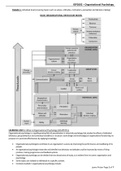
BASIC ORGANISATIONAL BEHAVIOUR MODEL
LEARNING UNIT 1: What is Organisational Psychology (CHAPTER 1)
Organisational psychology is a rapidly growing field of specialisation in industrial psychology that studies the effects of individual
behaviour, group behaviour and contextual variables (i.e. structure, work design and technology) on organisational functioning. Its
purpose is to promote effectiveness by applying knowledge.
• Organisational psychologists contribute to an organisation’s success by improving the performance and wellbeing of its
people.
• An organisational psychologist researches and identifies how behaviour and attitudes could be improved by means of hiring
practices, training programmes and feedback systems.
• Organisational psychology can be divided into two broad areas of study, as is evident from its name: organisation and
psychology.
• Some topics are related to individuals in a specific context.
• Contexts studied in organisational psychology include:
Lyana Petzer Page 1 of 7
, IOP2602 – Organisational Psychology
- Organisations
- Jobs
- Leadership
- interaction among group or team members
• Topics such as worker motivation, emotion and affect, and job attitude are also considered to be aspects of
organisational psychology.
• Organisational psychologists are interested in making organisations more productive while ensuring that workers lead
physically and psychologically productive and healthy lives.
• Organisational psychology is viewed as a scientific discipline, because these psychologists:
- as scientists derive the principles of individual, group and organisational behaviour through
research.
- as practitioners (consultants and staff psychologists) develop scientific knowledge and apply it to
solve problems in the workplace.
- as teachers train students in the research into and application of organisational psychology
Since organisational psychology studies the relationship between people and the world of work and its impact on
the organisation, we will consider behaviour in organisations.
Organisational behaviour (OB) is defined as a field of study that investigates the impact that individuals, groups
and structures have on behaviour in organisations, for the purpose of applying this knowledge to improve an
organisation’s effectiveness.
Unit of analysis: Contribution to OB:
individual • Learning, motivation, personality, emotions, perception
• Training, leadership effectiveness, job satisfaction
• Individual decision-making, performance appraisal,
attitude measurement
• Employee selection, work design and work stress
Unit of analysis: Contribution to OB:
group • Behavioural change
• Attitude change
• Communication
• Group processes
• Group decision-making
Unit of analysis: Contribution to OB:
organisational • Communication
system • Power
• Conflict
• Formal organisational theory
• Organisational technology
• Organisational change
• Organisational culture
3. What Managers do
• Managers get things done through other people.
• They make decisions.
• Managers do their work in an organisation.
• Managers oversee activities of others and who are responsible for attaining goals in organisations.
Management functions.
• Planning – defining an organisation’s goals, establishing an overall strategy of achieving those goals and
developing a comprehensive set of plans to integrate and coordinate activities.
• Organising – designing an organisations structure
Lyana Petzer Page 2 of 7
THEME 1: Individual level (covering topics such as values, attitudes, motivation, perception and decision-making)
BASIC ORGANISATIONAL BEHAVIOUR MODEL
LEARNING UNIT 1: What is Organisational Psychology (CHAPTER 1)
Organisational psychology is a rapidly growing field of specialisation in industrial psychology that studies the effects of individual
behaviour, group behaviour and contextual variables (i.e. structure, work design and technology) on organisational functioning. Its
purpose is to promote effectiveness by applying knowledge.
• Organisational psychologists contribute to an organisation’s success by improving the performance and wellbeing of its
people.
• An organisational psychologist researches and identifies how behaviour and attitudes could be improved by means of hiring
practices, training programmes and feedback systems.
• Organisational psychology can be divided into two broad areas of study, as is evident from its name: organisation and
psychology.
• Some topics are related to individuals in a specific context.
• Contexts studied in organisational psychology include:
Lyana Petzer Page 1 of 7
, IOP2602 – Organisational Psychology
- Organisations
- Jobs
- Leadership
- interaction among group or team members
• Topics such as worker motivation, emotion and affect, and job attitude are also considered to be aspects of
organisational psychology.
• Organisational psychologists are interested in making organisations more productive while ensuring that workers lead
physically and psychologically productive and healthy lives.
• Organisational psychology is viewed as a scientific discipline, because these psychologists:
- as scientists derive the principles of individual, group and organisational behaviour through
research.
- as practitioners (consultants and staff psychologists) develop scientific knowledge and apply it to
solve problems in the workplace.
- as teachers train students in the research into and application of organisational psychology
Since organisational psychology studies the relationship between people and the world of work and its impact on
the organisation, we will consider behaviour in organisations.
Organisational behaviour (OB) is defined as a field of study that investigates the impact that individuals, groups
and structures have on behaviour in organisations, for the purpose of applying this knowledge to improve an
organisation’s effectiveness.
Unit of analysis: Contribution to OB:
individual • Learning, motivation, personality, emotions, perception
• Training, leadership effectiveness, job satisfaction
• Individual decision-making, performance appraisal,
attitude measurement
• Employee selection, work design and work stress
Unit of analysis: Contribution to OB:
group • Behavioural change
• Attitude change
• Communication
• Group processes
• Group decision-making
Unit of analysis: Contribution to OB:
organisational • Communication
system • Power
• Conflict
• Formal organisational theory
• Organisational technology
• Organisational change
• Organisational culture
3. What Managers do
• Managers get things done through other people.
• They make decisions.
• Managers do their work in an organisation.
• Managers oversee activities of others and who are responsible for attaining goals in organisations.
Management functions.
• Planning – defining an organisation’s goals, establishing an overall strategy of achieving those goals and
developing a comprehensive set of plans to integrate and coordinate activities.
• Organising – designing an organisations structure
Lyana Petzer Page 2 of 7


