100% satisfaction guarantee Immediately available after payment Both online and in PDF No strings attached 4.2 TrustPilot
logo-home
Exam (elaborations)

NSG6420 Quiz Full And Revised Test (NEW BRAND).

Rating
-
Sold
-
Pages
14
Grade
A+
Uploaded on
25-02-2023
Written in
2022/2023

NSG6420 Quiz Full And Revised Test (NEW BRAND). Question : Which of the following is the most important question to ask during cardiovascular health history? Student Answer: Number of offspring Last physical exam Sudden death of a family member Use of caffeine Instructor Explanation: The sudden death of a family member is an important question to ask in the health history because it reveals the cardiovascular disease risk of the patient. Sudden death is usually due to an acute cardiovascular event, such as myocardial infarction, cardiac dysrhythmia, or stroke. Family history is particularly important for cardiac assessment because CVD, HTN, hyperlipidemia, and other vascular diseases often have a familial association that is not easily ameliorated by lifestyle changes. If there are deaths in the family related to CVD, determine the age and exact cause of death, because CVD at a young age in the immediate family carries an increased risk compared with CVD in an elderly family member. Ask about sudden death, which might indicate a congenital disease such as Marfan's syndrome. This is especially important to ask during pre-sports physicals because sudden death in athletes is often related to congenital or familial heart disease. Familial hyperlipidemia is autosomal dominant and often leads to CAD and MI at a young age. Family history of obesity and type 2 diabetes are also secondary risk factors for heart disease because the familial tendency for these is strong. Ask about smoking in the house, as secondhand smoke is a risk factor for respiratory and cardiac disease. (Goolsby 167-168) Goolsby, Mary J., Laurie Grubbs. Advanced Assessment Interpreting Findings and Formulating Differential Diagnoses, 3rd Edition. F.A. Davis Company, 11/2014. VitalBook file. Points Received: 2 of 2 Comments: Question 2. Question : A key symptom of ischemic heart disease is chest pain. However, angina equivalents may include exertional dyspnea. Angina equivalents are important because: Student Answer: Women with ischemic heart disease many times do not present with chest pain Some patients may have no symptoms or atypical symptoms; diagnosis may only be made at the time of an actual myocardial infarction Elderly patients have the most severe symptoms A & B only Instructor Explanation: The key symptom of IHD is chest pain, but other common symptoms include arm pain, lower jaw pain, shortness of breath, and diaphoresis. These symptoms are referred to as angina equivalents and can also include fatigue or breathlessness. Some patients may have no symptoms or atypical ones so that CAD may not be diagnosed until they experience a myocardial infarction. (Kennedy-Malone 227) Kennedy-Malone, Laurie, Kathleen Fletcher, Lori Martin-Plank. Advanced Practice Nursing in the Care of Older Adults. F.A. Davis Company, 2014-01- 14. VitalBook file. Points Received: 0 of 2 Comments: Question 3. Question : A 55-year-old post-menopausal woman with a history of hypertension complains of jaw pain on heavy exertion. There were no complaints of chest pain. Her ECG indicates normal sinus rhythm without ST segment abnormalities. Your plan may include: Student Answer: Echocardiogram Exercise stress test Cardiac catheterization Myocardial perfusion imaging Instructor Explanation: Once all the results of the initial laboratory and ECG testing are reviewed, a pretest probability of disease can be generated and additional tests can be ordered.2 The probability of CAD can be calculated by considering the chosen noninvasive test's sensitivity and specificity.2 Selection of the proper cardiac test (see Table 115-1) for an individual depends on the person's risk stratification, age, and tolerable level of activity. The most common and least invasive test for diagnosis of CAD is the stress test, also called the exercise tolerance test (ETT) or treadmill exercise. (Buttaro 488).

Show more Read less


Whoops! We can’t load your doc right now. Try again or contact support.

Document information

Uploaded on
February 25, 2023
Number of pages
14
Written in
2022/2023
Type
Exam (elaborations)
Contains
Questions & answers

Subjects

Content preview

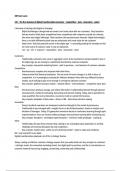
NSG6420 Quiz 1 2023-2024 Full And Revised Test (NEW BRAND). .Question :Which of the following is the most important question to ask during cardiovascular health history? Student Answer: Number of offspring Last physical exam Sudden death of a family member Use of caffeine Instructor Explanation:The sudden death of a family member is an important question to ask in the health history because it reveals the cardiovascular disease risk of the patient. Sudden death is usually due to an acute cardiovascular event, such as myocardial infarction, cardiac dysrhythmia, or stroke.
Family history is particularly important for cardiac assessment because CVD, HTN, hyperlipidemia, and other vascular diseases often have a familial association that is
not easily ameliorated by lifestyle changes. If there are deaths in the family related to CVD, determine the age and exact cause of death, because CVD at a young age
in the immediate family carries an increased risk compared with CVD in an elderly family member. Ask about sudden death, which might indicate a congenital disease such as Marfan's syndrome. This is especially important to ask during pre-sports physicals because sudden death in athletes is often related to congenital or familial heart disease. Familial hyperlipidemia is autosomal dominant and often leads to CAD and MI at a young age. Family history of obesity and type 2 diabetes are also secondary risk factors for heart disease because the familial tendency for these is strong. Ask about smoking in the house, as secondhand smoke is a risk factor for respiratory and cardiac disease. (Goolsby 167-168)
Goolsby, Mary J., Laurie Grubbs. Advanced Assessment Interpreting Findings and Formulating Differential Diagnoses, 3rd Edition . F.A. Davis Company, 11/2014. VitalBook file. Points Received: 2 of 2 Comments:
Question 2.Question :A key symptom of ischemic heart disease is chest pain. However, angina equivalents may include exertional dyspnea. Angina equivalents
are important because: Student Answer: Women with ischemic heart disease many times do not present with chest pain


Get to know the seller

Seller avatar
Reputation scores are based on the amount of documents a seller has sold for a fee and the reviews they have received for those documents. There are three levels: Bronze, Silver and Gold. The better the reputation, the more your can rely on the quality of the sellers work.
Tutorexpert01 Chamberlain College Of Nursing
View profile
Follow You need to be logged in order to follow users or courses
Sold
1019
Member since
3 year
Number of followers
815
Documents
5654
Last sold
4 days ago
BEST SELLER

Welcome All to this page. Here you will find ; ALL DOCUMENTS, PACKAGE DEALS, FLASHCARDS AND 100% REVISED & CORRECT STUDY MATERIALS GUARANTEED A+. NB: ALWAYS WRITE A GOOD REVIEW WHEN YOU BUY MY DOCUMENTS. ALSO, REFER YOUR COLLEGUES TO MY DOCUMENTS. ( Refer 3 and get 1 free document). I AM AVAILABLE TO SERVE YOU AT ANY TIME. WISHING YOU SUCCESS IN YOUR STUDIES. THANK YOU.

3.9

157 reviews

5
79
4
27
3
21
2
12
1
18

Recently viewed by you

Why students choose Stuvia

Created by fellow students, verified by reviews

Quality you can trust: written by students who passed their tests and reviewed by others who've used these notes.

Didn't get what you expected? Choose another document

No worries! You can instantly pick a different document that better fits what you're looking for.

Pay as you like, start learning right away

No subscription, no commitments. Pay the way you're used to via credit card and download your PDF document instantly.

Student with book image

“Bought, downloaded, and aced it. It really can be that simple.”

Alisha Student

Frequently asked questions