36. Histamine.
Drugs acting on histamine transmission.
Histamine is a chemical messenger mostly generated in mast cells. Histamine has no clinical
applications, but agents that inhibit the action of histamine (antihistamines or histamine
receptor blockers) have important therapeutic applications.
● Location: Histamine is present in practically all tissues, with significant amounts in
the lungs, skin, blood vessels, and GI tract. It is found at high concentration in mast
cells and basophils.
● Synthesis: Histamine is an amine formed by the decarboxylation of the amino acid
histidine by the enzyme histidine decarboxylase. In mast cells, histamine is stored in
granules. If histamine is not stored, it is rapidly inactivated by the enzyme amine
oxidase.
● Release of histamine: The stimuli for release of histamine from tissues may include
destruction of cells as a result of cold, toxins from organisms, venoms from insects,
and trauma. Allergies and anaphylaxis can also trigger significant release of
histamine.
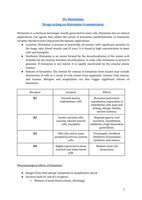
Receptor Location Effects
H1 Smooth muscle, Bronchoconstriction,
endothelium, CNS. vasodilation, separation of
endothelial cells, pain and
itching, allergic rhinitis,
motion sickness.
H2 Gastric parietal cells, Regulate gastric acid
vascular smooth muscle secretion, vasodilation,
cells, basophils. inhibition of IgE dependent
granulation.
H3 CNS cells and in some Presynaptic, feedback
peripheral nervous system inhibition of histamine
cells. synthesis and release.
H4 Highly expressed in bone Mediate mast cell
marrow and white blood chemotaxis.
cells.
Pharmacological effects of histamine.
● Ranges from mild allergic symptoms to anaphylactic shock.
● Involves both H1 and H2 receptors
○ Dilation of small blood vessels (flushing).
1
Drugs acting on histamine transmission.
Histamine is a chemical messenger mostly generated in mast cells. Histamine has no clinical
applications, but agents that inhibit the action of histamine (antihistamines or histamine
receptor blockers) have important therapeutic applications.
● Location: Histamine is present in practically all tissues, with significant amounts in
the lungs, skin, blood vessels, and GI tract. It is found at high concentration in mast
cells and basophils.
● Synthesis: Histamine is an amine formed by the decarboxylation of the amino acid
histidine by the enzyme histidine decarboxylase. In mast cells, histamine is stored in
granules. If histamine is not stored, it is rapidly inactivated by the enzyme amine
oxidase.
● Release of histamine: The stimuli for release of histamine from tissues may include
destruction of cells as a result of cold, toxins from organisms, venoms from insects,
and trauma. Allergies and anaphylaxis can also trigger significant release of
histamine.
Receptor Location Effects
H1 Smooth muscle, Bronchoconstriction,
endothelium, CNS. vasodilation, separation of
endothelial cells, pain and
itching, allergic rhinitis,
motion sickness.
H2 Gastric parietal cells, Regulate gastric acid
vascular smooth muscle secretion, vasodilation,
cells, basophils. inhibition of IgE dependent
granulation.
H3 CNS cells and in some Presynaptic, feedback
peripheral nervous system inhibition of histamine
cells. synthesis and release.
H4 Highly expressed in bone Mediate mast cell
marrow and white blood chemotaxis.
cells.
Pharmacological effects of histamine.
● Ranges from mild allergic symptoms to anaphylactic shock.
● Involves both H1 and H2 receptors
○ Dilation of small blood vessels (flushing).
1