OB EXAM 1 MATERIAL
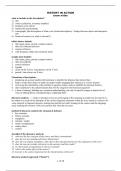
OB EXAM 1 MATERIAL• Adaptation to Extrauterine Life o Cardiovascular: NB must initiate respirations & sustain extrauterine oxygenation When born, infant forced to take in oxygen thru lungs. Shunts close & vessels clot off & regress o Respiratory: First breath also in response to temperature & pressure changes, light & noise. 1st breath requires great pressure; 40-70 cm H2O. Small amt of fluid present in lungs. 1/3 rd of this fluid forced out by pressure of vaginal birth; rest absorbed by lung tissue. C/S infants may need more suctioning & oxygen therapy. o Renal: Renal function does not fully mature until > 1st yr. 1st void occurs within 1st 24 hrs. No urine for 36 hrs. needs further eval. for obstruction or absent kidneys. 1st voiding may be o Gastrointestinal: GI tract sterile @ birth; bacteria enters GI tract thru mouth within 24 life. Bacteria needed for prod. Vit.K Infant: limited ability to digest fats & starches Meconium passed 1st 24-48 hrs. of life By 2nd - 3rd day, transitional stool passed • Thermogenesis o Brown fat : helps conserve body heat; produces heat. Found in upper chest, back of neck, around abdomen. Is deposited in 2nd trimester; Helps regulate body temp>delivery. Radiant warmer - helps regulates body temp. by conserving heat. Newborns can produce sufficient heat in optimal thermal Environment if warm enough. Rapid heat loss occurs in suboptimal environment [cooler]. Infants do not shiver; can go into cold stress quickly. Uses up extra glucose & oxygen to thermoregulate. Leads to: • metabolic acidosis; respiratory distress • Hypoglycemia; Jaundice; decreased surfactant production o Infants Lose heat in 4 ways: Convection Evaporation Conduction Radiation o IMMUNOLOGIC: Newborn still prone to infection, handwashing important! IgG: Infant born with passive immunity from mom. Fetus makes own starting @ 20 wks IgM too large to cross; makes own after delivery. IgA do not cross placenta. Produced by infant > birth @ 6-12 wks. Found in breast milk. • Care of newborn in delivery room o Adequate breathing pattern established o Mouth suctioned 1st o Nurse wraps infant in warm blanket & places under radiant warmer
Written for
- Institution
- Hesi
- Course
- Hesi
Document information
- Uploaded on
- February 22, 2023
- Number of pages
- 36
- Written in
- 2022/2023
- Type
- Exam (elaborations)
- Contains
- Questions & answers
Subjects
-
ob exam 1 material newborn • adaptation to extrauterine life o cardiovascular nb must initiate respirations amp sustain extrauterine oxygenation when born
-
infant forced to take in oxygen thru