Med-Surg Certification Practice Questions Latest With complete solution
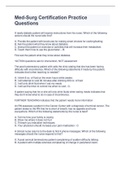
Med-Surg Certification Practice Questions A newly diabetic patient will receive instructions from his nurse. Which of the following actions should the nurse take first? A. Provide the patient with brochures for making smart choices for cooking/baking. B. Ask the patient what they know about diabetes. C. Instruct the patient on exercise or activities that will increase their metabolism. D. Teach them how to use the glucometer. - B. First ask the patient what they know about diabetes. *ACTION questions ask for intervention, NOT assessment The post hysterectomy patient with calls the clinic stating that she has been having difficulty with incontinence. Which of the following statements if made by the patient, indicates that further teaching is needed? A. I drink 8 oz. of fluid on the even hours while awake. B. I will attempt to void 30 minutes after drinking 200 cc. of fluid C. I will only drink fluid when I eat my meals D. I will set the timer to remind me when to void - C. A patient saying that he or she will only drink fluids when eating meals indicates that they don't know what to do in case of incontinence. FURTHER TEACHING indicates that the patient needs more information An RN assesses a patient in the Cancer Center with a diagnosis of terminal cancer. The patient states to the RN that he is short of breath, has no appetite and hurts everywhere. Which of the following statements by the nurse is best? A. Tell me how your family is coping B. Show me where it does not hurt C. I'll teach you relaxation techniques D. Your physician should increase your pain medication - C A clinical nurse returns to the desk to find 4 phone messages. Which of the following messages should the nurse respond to first? A. A post cervical laminectomy patient complaining of sudden difficulty talking. B. A patient with multiple sclerosis complaining of change in peripheral vision. C. A patient with a herniated disc complaining of consistent back pain. D. A patient with a cast due to a fracture of the right tibial bone complaining of tingling toes. - A B and C are expected symptoms of the patient's condition. A and D are unexpected. D is less critical than A. Best answer is A. A 75 year old patient complains to the clinical nurse that he is having difficulty sleeping. Which of the following actions by the nurse is most appropriate? A. Determine the patient's usual sleeping and waking patterns. B. Suggest that the client abstain from alcohol and caffeine before bed time. C. Recommend that client establish a bedtime routine. D. Ask how much sleep the client required before retirement. - A B and C are recommendations that the RN can share after he/she determines the patient's sleeping and waking patterns. So remove B and C. D is an inquiry, but is concerned about the past (when the person retired). Remove D. A is the best answer. The nurse cares for a patient several hours after a thyroidectomy. The RN observes that the patient is diaphoretic and confused. The vital signs are: Temp = 102° (38.9 ° C); BP is 160/90; pulse is 110, respiration is 22. The nurse expects the physician to order which of the following? A. NPO, Dextran 10 ml/kg. IV, 02 4 L/min. B. Propranolol (Inderal) 1 mg. IV, D5W 125 cc/hr IV, propylthiaouracil (PTU) 200 mg po qld. C. Levothyroxine Sodium (Synthroid) 100 mcg IV, Lactated Ringer's 125 cc/hr IV, and ciprofloxacin (cipro) 500 mg. po bid. D. Morphine sulfate 2.5 mg. IV q. 4 hrs. prn, 0.9% NACl. - B A 63 year old female patient contacts the clinic to report that she is has been extremely fatigued, is sleeping 12 hours a night, is always cold and her hair is falling out. Which of the following responses by the nurse is most appropriate? A. You will have more energy if you walk 30 min every day. B. You don't need to worry. Sleeping a lot is good for you. C. Come in and see your health care provider today. D. You should eat more green leafy vegetables. - C Need more info The RN performs blood pressure screening at the local community center. Which of the following individuals is most likely to suffer from a cerebrovascular accident? A. A 30 year old man who is an account executive B. A 40 year old man who jogs four times a week. C. A 60 year old man whose father had a stroke. D. A 75 year old man who takes multi-vitamins. - C For the patient with a new tracheostomy, the nurse must be alert to which early complication? a) Decannulation b) Infection c) Bleeding d) Tracheomalacia - C Common acute risks of tracheostomy include bleeding, airway loss, damage to adjacent structures, and failure of the chosen technique to achieve successful airway EVERYTHING 24 HR POST SURGERY, FIRST COMPLICATION IS BLEEDING. Infection comes 2-3 days later. When a pulse oximetry monitor indicates that a patient has a drop in SpO2 from 96% to 85% over 4 hours, the nurse will first: 1. Request an order for stat ABGs 2. Start the patient on oxygen by NC at 2L/minute 3. Notify the physician of the change 4. Check the position of the probe on patient's finger or earlobe - 4 Pulse oximetry is inaccurate if the probe is loose, or in the presence of poor circulation, nail polish, or dark skin pigmentation. To decrease a patient's shortness of breath and a sense of impending doom during an asthma attack, the nurse will: A. Place the patient on a cardiac monitor and observe from the nurses' station. B. Let the patient rest alone in a quiet, calm environment. C. Reassure the patient that the doctor will arrive soon D. Stay with the patient and encourage pursed-lip breathing. - D The patient experiencing an acute asthma exacerbation will be fearful and anxious. It is important for the nurse to stay with the patient for ongoing assessment and to provide a calm environment. Helping the patient breathe with pursed lips will facilitate the expiration of trapped air and help the patient regain control of his or her breathing. A 68 year old woman is admitted to the surgical unit after a gastric resection for gastric cancer. She states that she doesn't want anyone to see her in this condition, even her husband. This nurse's best response is: A."Patients' rights protect your privacy. I won't allow anyone in." B."I've seen gastric cancer patients who look much worse. Don't worry." C."Would you like to talk to a social worker?" D."What about your condition worries you?" - D The nurse should allow the patient to share her concerns and express her feelings in a nonjudgmental environment. If there is psych/behavioral component- AFFIRM AND VALIDATE, NO PROBING A patient with a tricuspid valve disorder will have impaired blood flow between the: A. Vena cava and right atrium B. Left atrium and left ventricle C. Right atrium and right ventricle D. Right ventricle and pulmonary artery - C Tricuspid valve is located between right atrium and right ventricle MITRAL VALVE- left atrium and left ventricle If the Purkinje system is damaged, conduction of the electrical impulse is impaired through the: A. Atria B. AV node C. Ventricles D. Bundle of His - C Purkinje fibers provide a high-speed distribution of excitation throughout the ventricular myocardium; if the pattern of contraction is disrupted, the ventricles will not efficiently eject blood Order of impulse is SA node to AV node to Bundle of His to bundle branch to purkinje fibers The P-wave on an EKG is representative of: A. Ventricular depolarization B. Atrial depolarization C. Atrial repolarization D. Ventricular repolarization - B. Atrial depolarization Ventricular repolarization is represented by the QRS There is no distinctly visible wave representing atrial repolarization in the ECG because it occurs during ventricular depolarization, ventricular repolarization is shown as the interval between the start of the QRS complex and the end of the T wave A patient admitted with an abscess in her left thigh undergoes incision and drainage. 3 days later, she develops fever (temperature of 103°F), chills, lethargy, and shortness of breath. Infectious endocarditis is suspected. In addition to blood cultures, the nurse would expect which of these tests? A. Transesophageal echocardiogram B. Computed tomography of the chest C. Cardiac stress test D. Cardiac enzymes - A. Echocardiogram to visualize cardiac structures. Which of the following is a sign of poor perfusion? A. Mean arterial pressure 80 mmHg B. Urine output 0.5 ml/kg/hr for 2 consecutive hours C. Lactate levels 1mmol/L D. Systolic BP of 150 mmHg - B UO should be greater or equal to .5ml per kg per hour. MAPs should be between 65-85 Lactate levels should be less than 2.3 SBP of 150 is high but does not indicate poor perfusion When performing discharge teaching with a patient who is taking warfarin sodium (Coumadin), the nurse learns that patient used complementary therapies at home. Which of the following substances is most concerning? A. Echinacea B. Vitamin B12 C. Vitamin D D. Garlic - D. Garlic When taking warfarin, caution with - garlic, ginseng, ginkgo, ibuprofen, pain drugs, vitamin E Garlic may increase bleeding, so supplemental garlic may cause a synergic effect when combined with coumadin For the same patient - who is being discharged and is taking warfarin (Coumadin), the nurse should also emphasize that: A. Regular follow-up with healthcare provider is essential B. Aspirin would be recommended for headache therapy C. The medication can be taken any time of the day D. Diet should be high in iron content - A Discuss INR. High INR is a risk for bleeding (GI, hemorrhagic stroke, etc) Aspirin also being a blood thinner can be too much blood thinning action Timing of dose needs to be consistent Iron, mag, and zinc bind with coumadin and decrease absorption, it is not an absolute contraindication, but it recommended that these supplements be taken two hours apart from coumadin Which of the following patient teaching points should the nurse include when providing discharge instructions to a patient with a new permanent pacemaker and the caregiver (select all that apply)? A. Avoid or limit air travel B. Take and record a daily pulse rate C. Obtain and wear a Medic Alert ID or bracelet at all times D. Avoid lifting arm on the side of the pacemaker above shoulder E. Avoid microwave ovens because they interfere with pacemaker function - B, C, D Back in the day, persons with pacers needed to carry a medical device ID card as proof a pacer when they would go through security, as security heightened and body scans became normal this isn't really needed anymore Daily record keeping of HR is recommended as is wearing a med alert id bracelet, patients should NOT lift above the shoulder for a period of time so that the leads can stabilize in the body without being disrupted (about 2-4 weeks) Microwaves and most other household appliances pose no risk but extreme magnetic forces do Causes of secondary hypertension would include: A. Alcohol abuse B. Diabetes C. Obesity D. Renal artery stenosis - D Renal stenosis → narrowing of arteries that carry blood to the kidneys → less blood to the kidneys → raises blood pressure A 60-year-old African American male who works as a soccer coach, is admitted with hypertension. On admission his blood pressure was 210/108 mmHg. His last total cholesterol level was 156 mg/dl, and a random blood glucose was 110 mg/dl. Which is unalterable risk factor for hypertension? A. His blood glucose level B. His cholesterol level C. His occupation D. His ethnicity - D Other risk factors: elevated serum lipids, DM, sedentary lifestyle A patient who has type 2 diabetes is prescribed carvedilol (Coreg) for hypertension. The nurse monitors for A. Hypoglycemia B. Hyperglycemia C. Hypocalcemia D. Hypercalcemia - A. Hypoglycemia In patients with DM, Coreg may increase the effects of hypoglycemic drugs (prevent adrenalin from stimulating the liver to make glucose) and mask symptoms of hypoglycemia. Which of the following is an AHA recommendation for patients with coronary artery disease for stroke prevention? A. Fibrate therapy B. Heparin therapy C. Beta-blocker therapy D. Aspirin therapy - D. Aspirin therapy This is a core measure for patients with CAD Heparin is not indicated nor is it really sustainable for home use, betablockers don't decrease your risk of stroke directly although it does reduce bp which reduces risk of stroke A client complains of crushing chest pain that radiates to his left arm. Which of the following treatments should you anticipate: A. Aspirin, oxygen, nitroglycerin, and morphine B. Aspirin, oxygen, nitroglycerin, and codeine C. Oxygen, nitroglycerin, meperidine, and thrombolytics D. Aspirin, oxygen, nitroprusside, and morphine - A. Aspirin, oxygen, nitroglycerin, and morphine MONA A patient is recovering from an uncomplicated MI. Which of the following rehabilitation guidelines is a priority to include in the teaching plan? A. Refrain from sexual activity for a minimum of 3 weeks. B. Plan a diet program that aims for a 1- to 2-pound weight loss per week. C. Begin an exercise program that aims for at least five 30-minute sessions per week. D. Consider the use of erectile agents and prophylactic NTG before engaging in sexual activity. - C Avoid intercourse for 4-6 weeks The need for a weight loss plan would be patient specific You do not want to mix nitrates and ED meds because this can cause and unsafe drop in BP The most common finding in individuals at risk for sudden cardiac death is: A. aortic valve disease B. mitral valve disease C. left ventricular dysfunction D. atherosclerotic heart disease - C. left ventricular dysfunction Those with LV dysfunction are at high risk for ventricular arrythmias. Typically, the LV dysfunction is secondary to MI, cardiomyopathy or advanced heart failure. A patient with a history of myocardial infarction (MI) complains of chest pain while walking to the restroom. Which action should the nurse perform first? A. Assess patient's vital signs B. Instruct patient to sit down C. Obtain a STAT EKG D. Call the physician - B. Instruct patient to sit down Having the patient sit down reduces myocardial oxygen demand to help relieve pain and take stress off the heart. The other actions are important, but would come after having the patient sit down to ensure safety. The key diagnostic test for heart failure is: A. Serum potassium B. B-type natriuretic peptide C. Troponin I D. Cardiac enzymes - B. B-type natriuretic peptide Hyperkalemia can be common in heart failure secondary to treatments like ACE inhibitors and betablockers can cause the kidneys to retain potassium, similarly diuretic can be used to treat fluid overload associated with heart failure, the desired effect achieving of high urine output to decrease preload can also lead to low potassium levels Troponin is the hallmark diagnostic test for acute coronary syndrome, has no value with HF, same goes for cardiac enzymes A nurse is instructing a patient taking diuretics for heart failure about foods that are high in potassium to include in her daily diet. The nurse concludes that additional education is needed when the client states that the food highest in potassium is: A. Spinach B. Apples C. Avocado D. Sweet potatoes - B. Apples From this list avocadoes have the most, followed by sweet potatoes, then spinach. Apples have the least Mr. Jones is 72 years old and admitted with an exacerbation of left-sided heart failure. The nurse would expect to see which of these signs or symptoms? A.Hepatomegaly B. Enlarged spleen C. Oliguria D. Ascites - C. Oliguria Left-sided HF - sodium and water retention and peripheral edema. Decreased blood flow to the kidneys can lead to oliguria. Ascites, hepatomegaly, enlarged spleen are signs of right-sided heart failure. LEFT- Lungs and Kidneys Mr. Jones develops acute pulmonary edema. In anticipation of the arrival of the Rapid Response Team, the nurse should take which of these measures? (select all that apply) A. Place Mr. Jones in high Fowler's position. B. Apply high-flow oxygen. C. Administer nitroglycerin sublingually. D. Insert an indwelling urinary catheter. - A, B This patient is going to feel like they're drowning in their lungs, and they are. Set the patient upright immediately and supplement O2. Nitroglycerine is a vasodilator and could be used to decrease afterload and strict urine output measuring will be ideal when diuretic treatment is initiated but these are not your initial steps at this time. In preparing for discharge, Mr. Jones should receive education about which of these types of medication? A .Beta-adrenergic agonists B. Angiotensin-converting enzyme (ACE) inhibitors C. Nonsteroidal anti-inflammatories D. Prokinetic agents - B. ACE inhibitors Ace inhibitors are commonly used to treat HF as are ARBs, beta blockers, calcium channel blockers, and diuretics Beta-adrenergic agonists are used to help with dilating airways but breathing difficulty in HF is a secondary issue to fluid build up in the heart and lungs NOT inflammation or obstruction of the airway NSAIDS and prokinetic agents like Reglan offer no value here A patient with heart failure has been started on metoprolol 12.5mg daily. The nurse should report serious adverse reactions to the medication including: A. Crackles in lungs B. Edema C. Dry, hacking cough D. Dry mouth - A. Crackles in lungs Indication of exacerbation of HF symptoms → possible complication of starting beta blockers due to the decrease in inotropic response caused by the medication. Edema is also a sign of worsening HF, but is not as specific as lung crackles. Betablockers do cause cough and dry mouth but these are not serious adverse reactions; They're just annoying and anticipated. A patient with HF and atrial fibrillation is treated with a digitalis glycoside and a loop diuretic. To prevent possible complications of this combination of drugs, the nurse needs to: A. monitor serum potassium levels. B. keep an accurate measure of intake and output. C. teach the patient about dietary restriction of potassium. D. withhold digitalis and notify health care provider if heart rate is irregular. - A. monitor serum potassium levels. Loop diuretics and most diuretics will deplete potassium as they effectively reduce preload by increase urine output. Yes, you do want to measure I&Os, but the question asks about complications not verifying the effectiveness of the regimen. Some HF drugs can lead the kidneys to hold on to K, as we discussed on an earlier slide but there is no mention of those drugs in this regimen so we don't need to educate on reducing K, rather, since they are on diuretics we need to watch for low K. Dig is antiarrhythmic drug, its being used here for the AFIB, it makes no sense to hold it for an irregular HR. This is a distraction option since we learned early in pharmacology class to auscultate the apical pulse for one minute and hold if less than 60 when giving dig. Patients with a heart transplantation are at risk for which of the following complications in the first year after transplantation (select all that apply)? A. Cancer B. Infection C. Rejection D. Vasculopathy E. Sudden cardiac death - B, C, E Cancer is not a complication of transplant. Infection risk is significant because these patients are on medications to help keep their body from rejecting the organ, this reduces their defenses to infection and can also mask early signs of infection. Rejection comes in different types and can happen early or late post transplant Vasculopathy is a complication of transplant but is not seen in the first year, this is seen later. Sudden cardiac death can occur in the event of graft failure, which tends to happen earlier post transplant Which assessment finding would the nurse expect to auscultate in a patient with mitral valve insufficiency? A. Harsh systolic murmur heard best at the right upper sternal border B. Rumbling diastolic murmur heard best at the left lower sternal border C. Holosystolic murmur heard best at the cardiac apex D. Mid-systolic click and soft diastolic murmur at the right lower sternal border - C Mitral insufficiency or regurgitation is characterized by a holosystolic murmur at the apex. Think back to your pneumatic devices from the previous slide Which of the following is a risk factor for a deep vein thrombosis (DVT)? A. Decreased thyroid stimulating hormone level B. Elevated liver function tests C. Hypocoagulability D. Dehydration - D. Dehydration A has minimal relevance, some studies have shown a potential link to two elevated liver enzyme values increasing a risk for VTE but it is not directly linked, hypocoagulapthy is a distractor to trick you into selecting it thinking it is hypercoagulability In a dehydrated state blood vessels narrow and blood becomes more concentrated, therefore creating an ideal situation for blood to pool and clot Virchow's Triad - stasis of blood flow, endothelial injury, hypercoagulability Dehydration can promote hypercoagulability Which are probably clinical findings in a patient with an acute VTE? SATA. A. Pallor and coolness of foot and calf B. Mild to moderate calf pain and tenderness C. Crossly diminished or absent pedal pulses D. Unilateral edema and induration of the thigh E. Palpable cord along a superficial varicose vein - B, D VTE will generally present as a warm, reddened, unilaterally swollen extremity with mild to moderate pain. A 50-year-old woman weighs 85kg and has a history of cigarette smoking, high blood pressure, high sodium intake, and sedentary lifestyle. When developing an individualized care plan for her, the nurse determines that the most important risk factors for peripheral artery disease that need to be modified are: A. Weight and diet B. Activity level and diet C. Cigarette smoking and high blood pressure D. Sedentary lifestyle and high blood pressure - C. Cigarette smoking and high blood pressure These really all need to be addressed but smoking most of all, especially combined with high BP A patient is admitted with peripheral artery disease. The nurse would expect to observe which of these findings in the affected lower extremity? A. Hypersensitivity to touch B. Brown pigmentation C. Pallor when elevated D. Bounding pulse - C. Pallor when elevated Pallor when the leg is elevated is a symptom of peripheral artery disease, compared to the brown pigmentation seen peripheral vein disease. Neither PAD or PVD will present with a bounding pulse, though pulses may be difficult to find in PAD due to poor perfusion or in PVD due to edema. Generalized pain to the touch will not be specific to either of them. In planning care and patient teaching for the patient with venous leg ulcers, the nurse recognizes that the most important intervention in healing and control of this condition is: A. Sclerotherapy B. Taking horse chestnut extract daily C. Using moist environment dressings D. Applying graduated compression stockings - D. Applying graduated compression stockings Compression hose will be utilized for patients with PVD but not PAD. Sclerotherapy is a treatment for varicose veins, moist dressings might be recommended but not as important as compression socks, horse extract is not widely studied or proven. "Third-spacing" can cause which form of shock? A. Anaphylactic B. Hypovolemic C. Septic D. Cardiovascular - B. Hypovolemic Third-spacing = movement of fluid out of the vascular system into the interstitial areas, resulting in loss of fluid leading to hypovolemic shock A patient is prescribed simvastatin (Zocor). Which of the following is an adverse effect of Zocor that should be reported immediately? A. Muscle pain B. Blurred vision C. Urinary retention D. Gastrointestinal reflux - A. Muscle pain Muscle pain is an adverse effect of Zocor that should be reported immediately, since muscle pain can be an indication of rhabdomyolysis and ultimately kidney failure. In a patient with thrombocytopenia, which of the following assessment findings should be immediately reported to the physician? A. Blood pressure of 210/110 B. Heart rate of 90 C. Oxygen saturation of 95% D. Specks of blood in nasal discharge after vigorous blowing - A. Blood pressure of 210/110 I think this question could be applicable to really any disease. A is a medical emergency regardless of the background where as the other choices are normal ranges and findings. These patients are at risk for hemorrhagic complications so elevated BP will only increase that risk. A 18-year-old male is admitted after a motor-vehicle accident with air-bag release. He complains of chest tightness and is restless and anxious. Heart sounds are barely audible on auscultation. The patient is most likely experiencing what condition? A. Cardiac tamponade B. Acute myocardial infarction C. Pulmonary edema D. Aortic aneurysm - A. Cardiac tamponade We know that this patient sustained trauma to the chest. Cardiac tamponade occurs when there is fluid build up around the heart that applies pressure to the heart and impairs its ability to pump adequately. This can happen with trauma or uncontrolled bleeding from an open heart procedure. Signs and symptoms include chest pain and pressure, muffled heart tones, shortness of breath, and jugular vein distention Immediately following soft tissue injury, the doctor prescribes treatment that follows the acronym "RICE," which stands for: A. Rest, immobilization, compression, exercise B. Relax, ice, conserve energy, elevation C. Rest, ice, compression, elevation D. Rigid fixator, immobilization, compression, exercise - C. Rest, ice, compression, elevation Added M to rice- early MOBILIZATION The nurse is preparing the plan of care for the client with an open fracture of the right arm. Which problem has the highest priority? A. Anger related to the inability to perform ADLs B. Sleep disturbances related to loss of work C. Infection related to exposed tissue D. Altered body image related to scarring - C. Infection related to exposed tissue When preparing the discharge teaching for the 12 year old with a fractured humerus, which information should the nurse include regarding cast care? A. Keep the arm at heart level B. Handle the cast with the tips of the fingers C. Apply an ice pack to any area that itches D. Foul smells are expected occurrences - A. Keep the arm at heart level The patient suffered a fractured femur. Which of the following would you tell the nursing assistant to report immediately? A. The patient complains of pain. B. The patient appears confused. C. The patient's blood pressure is 136/88. D. The patient voided using the bedpan. - B. The patient appears confused. Risk of FAT EMBOLISM. Will also see petechiae rash A patient with a fractured fibula is receiving skeletal traction and has skeletal pins in place. You instruct the nursing assistant to immediately report which of the following? A. The patient wants to change position in bed. B. There is a small amount of clear fluid on the pin sites. C. The traction weights are resting on the floor. D. The patient is complaining of pain and muscle spasm. - C. The traction weights are resting on the floor. A patient is admitted to the hospital with a possible fractured tibia. The X-ray shows that the bone is in alignment but a fracture line extends around the ankle. This type of fracture is called a: A. Comminuted fracture B. Colles' fracture C. Transverse fracture D. Greenstick fracture - C. Transverse fracture The nurse is preparing the preoperative client for a total hip replacement (THR). Which information should the nurse include concerning postoperative care? A. Keep abduction pillow in place between legs at all times B. Cough and deep breathe at least every 4-5 hours C. Turn to both sides every 2 hours to prevent pressure ulcers D. Sit in a high-seat chair for a flexion of less than 90 degrees - D. Sit in a high-seat chair for a flexion of less than 90 degrees Postoperative care should include measures to prevent dislocation of a patient's new hip prosthesis. Which of the following interventions would achieve this objective? A. Keeping the affected leg in a position of adduction B. Using pressure relief measures, other than turning, to prevent pressure ulcers C. Placing the leg in abduction D. Keeping the hip flexed by placing pillows under the patient's knee - C. Placing the leg in abduction As a nurse develops a postoperative nursing care plan, she knows that the patient status post total hip replacement surgery is at risk for developing complications associated with immobility. Which of the following is the most common postoperative complication for this patient? A. Pneumonia B. Thromboembolism C. Hemorrhage D. Wound infection - B. Thromboembolism A patient sustains a fracture of her right hip in a fall at a nursing home. Her surgery is delayed until she can be medically stabilized. Buck's traction is applied to the patient's right leg. Which of the following is true about Buck's traction? A. The head of the bed should be elevated. B. Her heel should be resting on the bed. C. The use of an overhead trapeze should be discouraged. D. The leg in traction must not be elevated on a pillow. - D. The leg in traction must not be elevated on a pillow. The client is diagnosed with osteoarthritis. Which sign and symptom would the nurse expect the client to exhibit? A. Severe bone deformity B. Joint stiffness C. Waddling gait D. Swan neck fingers - B. Joint stiffness Which foods should the nurse recommend to a client when discussing sources of dietary calcium? A. Yogurt and dark-green, leafy vegetables B. Oranges and citrus fruits C. Bananas and dried apricots D. Wheat bread and bran - A. Yogurt and dark-green, leafy vegetables The client is taking calcium carbonate (Tums) to help prevent further development of osteoporosis. Which teaching should the nurse implement? A. Encourage the client to take Tums with at least 8 ounces of water B. Teach the client to take Tums with the breakfast meal only C. Instruct the client to take Tums 30 to 60 minutes before meal D. Discuss the need to get a monthly serum level - C. Instruct the client to take Tums 30 to 60 minutes before meal You are initiating a nursing care plan for a patient with osteoporosis. All of these nursing interventions apply to the nursing diagnosis Risk for Falls. Which intervention should you delegate to the nursing assistant? A. Identify environmental factors that increase risk for falls. B. Monitor gait, balance, and fatigue level with ambulation. C. Collaborate with physical therapy to provide patient with walker. D. Assist the patient with ambulation to bathroom and in halls. - D. Assist the patient with ambulation to bathroom and in halls. To prevent or treat osteoporosis, adequate calcium intake: A. is essential throughout the life span B. is only necessary after menopause C. can only be obtained by supplements D. is important only until bone density peaks - A. is essential throughout the life span You delegate taking vital signs to an experienced nursing assistant. The patient has been diagnosed with osteomyelitis. Which vital sign do you want the nursing assistant to report immediately? A. Temperature 99.9˚F B. Blood pressure 136/80 C. Heart rate 96/minute D. Respiratory rate 24/minute - A. Temperature 99.9˚F An older adult client is getting out of bed for the first time. The nurse is alert for the development of which potential problem? A. Deep vein thrombosis (DVT) B. Incontinence C. Pulmonary embolism D. Orthostatic hypotension - D. Orthostatic hypotension The older client with cardiac disease or on antihypertensive medications is particularly at risk for orthostatic hypotension. The client would be a risk for DVT or pulmonary embolism the longer he or she remained on bed rest. Incontinence has nothing to do with getting out of bed. The nurse is working on an orthopedic unit. Which client should the nurse assess first after change of shift report? A. The 84 year-old female with a fracture right femoral neck in Buck's traction B. The 64 year-old female who had a left total knee replacement with confusion C. The 88 year-old male who had a right total knee replacement with an abduction pillow D. The 50 year-old post-op client who has a continuous passive motion (CPM) - B. The 64 year-old female who had a left total knee replacement with confusion What intervention will best help a client with decreased mobility decrease the risk of fractures? A. Applying a foot support B. Increasing calcium-rich foods in the diet C. Performing weight-bearing activities D. Using pressure-relieving devices - C. Performing weight-bearing activities Weight-bearing activity reduces bone mineral loss and promotes bone uptake of calcium, contributing to maintenance of bone density and reducing the risk for bone fractures. Although increasing the calcium in the diet is a good intervention, this alone will not reduce the client's susceptibility to bone fractures. A foot support and pressure relieving devices will not help prevent fractures, but may help with mobility and skin integrity. A client with a past history of angina has had a total knee replacement. What will the nurse teach the client prior to rehabilitation activities? A. "Use analgesics even if you are not in pain." B. "Take nitroglycerine prophylactically prior to activity." C. "Take anti-inflammatory medications before you get out of bed." D. "Do not exercise if you have knee pain." - B. "Take nitroglycerine prophylactically prior to activity." Participation in exercise may increase myocardial oxygen demand beyond the ability of the coronary circulation to deliver enough oxygen to meet the increased need. Nitroglycerin dilates coronary arteries within 5 minutes of use, ensuring that they will be ready to meet the demand during exercise. Which of the postoperative orders will the nurse clarify with the surgeon before discharging the client who just had arthroscopic surgery on the right knee? A. Keep right leg elevated on a soft pillow B. Non-weight-bearing by right leg for 48 hours C. Bathroom privileges with assistance and crutches D. Two tablets of Hydrocodone 10/325mg every 2 hours for pain - D. Max Tylenol (3000mg) A home care nurse is visiting a diabetic client with a new cast on the arm. On assessment, the nurse finds the client's fingers to be pale, cool, and slightly swollen. Which is the nurse's first intervention? a. Elevating the arm above the level of the heart b. Encouraging active and passive range of motion c. Applying heat to the affected hand d. Applying a bivalve the cast - a. Elevating the arm above the level of the heart Arm casts can impinge on circulation when the arm is in the dependent position. The nurse should elevate the arm above the level of the heart, ensuring that the hand is above the elbow, and reassess the extremity in 15 minutes. If the fingers are warmer and less swollen, the cast is not too tight and adjustments do not need to be made. Heat would cause more edema. Encouraging range of motion would not assist the client as much as elevating the arm. Which exercise will the nurse recommend to a client at risk for osteoporosis? a. High-impact aerobics 45 minutes once weekly b. Walking 30 minutes three times weekly c. Jogging 30 minutes four times weekly d. Bowling for 1 hour twice weekly - B Weight-bearing, nonjaring exercises have been proven to reduce or slow bone loss without causing vertebral compression. High-impact aerobics, jogging, and bowling are activities that actually could cause fractures in a client with osteoporosis. Which statement indicates that the client understands teaching about alendronate (Fosamax)? a. "I should take this drug with a full glass of water." b. "I need to lie down for 30 minutes after taking it." c. "This drug should be taken after a meal." d. "This drug needs to be taken at the same time with calcium." - A Fosamax needs to be taken on an empty stomach with a full glass of water. After taking the drug, the client needs to stay upright for 30 minutes. Fosamax should be taken on an empty stomach for best absorption. Calcium can be taken, but not at the same time as the Fosamax. While assessing an older adult client admitted 2 days ago with a fractured hip, the nurse notes that the client is confused, tachypneic, and restless. Which is the nurse's first action? a. Administering oxygen via nasal cannula b. Applying restraints c. Slowing the IV flow rate d. Discontinuing the pain medication - A The client is at high risk for a fat embolism and has some of the clinical manifestations. Although this is a life-threatening emergency, the nurse should take the time to administer oxygen first and then notify the health care provider. Oxygen administration can reduce the risk for cerebral damage from hypoxia. The nurse would not restrain a client who is confused without further assessment and orders. Pain medication would most likely not cause the client to be restless. The nurse notes that the skin around the client's skeletal traction pin site is swollen, red, and crusty, with dried drainage. Which is the nurse's priority intervention? a. Decreasing the traction weight b. Applying a new dressing c. Cleansing the area, scrubbing off the crusty areas d. Culturing the drainage - D These clinical manifestations indicate inflammation and possible infection. Infected pin sites can lead to osteomyelitis and should be treated immediately. The nurse should obtain a culture and assess vital signs. The health care provider should also be notified. Which gait-training technique is correct when teaching the client who has left leg weakness to walk with a cane? a. Placing the cane in the client's left hand and moving the cane forward, followed by moving the left leg one step forward b. Placing the cane in the client's left hand and moving the cane forward, followed by moving the right leg one step forward c. Placing the cane in the client's right hand and moving the cane forward, followed by moving the left leg one step forward d. Placing the cane in the client's right hand and moving the cane forward, followed by moving the right leg one step forward - c. Placing the cane in the client's right hand and moving the cane forward, followed by moving the left leg one step forward Placing the cane in the client's left hand does not provide sufficient stability. After the cane in the right hand (stronger side) is moved ahead, the cane and the stronger leg provide a stable base for movement of the weaker leg. The patient is prescribed a prick epicutaneous test to determine the cause of hypersensitivity reactions. Which result indicates the client is hypersensitive to the allergen? A. The patient complains of shortness of breath B. The skin is dry, intact, and without redness C. The pricked blood tests positive for allergens D. A pruritic wheal and erythema occurs - D The nurse is alerted to possible anaphylactic shock immediately after a patient has received intramuscular penicillin by the development of: A. Edema and itching at the injection site B. Sneezing and itching of the nose and eyes C. A wheal-and-flare reaction at the injection site D. Chest tightness and production of thick sputum - A. Edema and itching at the injection site Anaphylaxis: Commonly starts with cutaneous signs - urticaria, flushing, angioedema... (some children may develop respiratory manifestations before cutaneous) Other common s/s: rhinorrhea, dyspnea, wheezing, N/V, cardiovascular shock when severe. Which finding distinguishes rheumatoid arthritis from osteoarthritis and gouty arthritis? A. Crepitus with range of motion B. Symmetry of joint involvement C. Elevated serum uric acid levels D. Dominance in weight-bearing joints - B. Symmetry of joint involvement RA: mostly small joints of hands, wrists, and feet. While painful, not always red/swollen. Tends to be symmetric OA: caused by breakdown of joint cartilage and underlying bone. Most common reason for crepitus (although can be present in gout and RA) Gout: painful type of arthritis that commonly occurs in the big toe, top of the foot and ankle. Always associated with redness, swelling, and intense pain Too much Uric acid in the blood → small crystals in joints, causing inflammation and intense pain Your patient with rheumatoid arthritis (RA) is taking prednisone (Deltasone) and naproxen (Alleve) to reduce inflammation and joint pain. Which of these symptoms is the strongest indicator that a change in therapy may be necessary? A. The patient states that the RA symptoms are worst in the morning. B. The patient complains about having dry eyes. C. The patient has round and moveable nodules just under the skin. D. The patient has stools that are very dark in color. - D. The patient has stools that are very dark in color. Tarry stools may signify internal bleeding, possible side effect of naproxen (A) Morning stiffness usually lasts for an hour (Craven p.471) (B) Secondary Sjogren's syndrome occurs in 10%-15% of patients with RA; characterized by dry mouth and dry eye; but affects body's moisture-producing organs Which intervention has the highest priority when caring for a patient diagnosed with rheumatoid arthritis? A. Encourage the patient to ventilate feelings about the disease process. B. Discuss the effects of disease on the patient's career and other life roles. C. Instruct the patient to perform most important activities in the morning. D. Teach the patient the proper use of hot and cold therapy to provide pain relief. - D. Teach the patient the proper use of hot and cold therapy to provide pain relief. (C) For OA patients You assess a 24 y/o patient with RA who is considering using methotrexate for treatment. Which information is most important to communicate with the physician? A. The patient has many concerns about the safety of the drug. B. The patient has been trying to get pregnant. C. The patient takes a daily multivitamin tablet. D. The patient says that she has taken methotrexate in the past - (B) Methotrexate is a chemotherapeutic medication Ruth Zaiger, age 28, is admitted to the medical unit after an exacerbation of systemic lupus erythematosus (SLE). She was diagnosed with SLE 10 years ago. Ms. Zaiger is receiving intravenous methylprednisolone (Solumedrol). During short-term treatment with methylprednisolone, the nurse will most appropriately monitor the patient's: A. Weight B. liver function tests. C. serum glucose. D. respirations. - C. serum glucose. The nurse is preparing a female patient with SLE for discharge. Which instructions should the nurse include in the teaching plan? A. Exposure to sunlight will help control skin rashes. B. No activity limitations are necessary between flare-ups. C. Monitor body temperature. D. Corticosteroids may be stopped when symptoms are relieved. - C. The patient should monitor her body temperature because fever can signal an exacerbation and should be reported to the practitioner. A.Incorrect because sunlight and other sources of ultraviolet light may exacerbate the disease. B. Incorrect because fatigue can cause a flare-up of SLE, and patients should be encouraged to pace activities and plan for rest periods. Corticosteroids must be gradually tapered because they can suppress the function of the adrenal gland. Abruptly stopping corticosteroids can cause adrenal insufficiency, a potentially life-threatening situation. A patient with SLE is admitted to the hospital for evaluation and management of acute joint inflammation. Which information obtained in the admission laboratory testing concerns you most? A. Elevated blood urea nitrogen B. Increased C-reactive protein (CRP) C. Positive anti-nuclear antibody (ANA) D. Positive lupus erythematosus cell prep - A (A) Urea nitrogen is produced when proteins are metabolized or broken down. Elevated levels of BUN → Kidney disease, liver disease or dehydration. A possible side effect of SLE is renal failure (B) Distinguish Lupus from infection (C) Positive in 95% of patients with lupus, also may be positive with arthritis (D) Positive in 70-80% of patients with SLE The nurse is administering highly active antiretroviral therapy (HAART) to a patient with AIDS. The nurse is aware dosing of HAART medications is based on which of the following laboratory results? A. Total protein and albumin values B. Enzyme immunoassay C. HIV antibody testing D. Viral load and CD4+ counts - D. Viral load and CD4+ counts Patient's viral load, particular strain of virus, CD4+ cell count, and other considerations. A patient had a positive HIV antibody test 6 years ago but refused treatment due to medication side effects. The patient now has been diagnosed with AIDS and has agreed to begin antiretroviral therapy. What is the most appropriate action for the nurse to take to help the patient follow the antiretroviral treatment regimen? A. Assess the patient's routines and find adherence cues that fit into the patient's life circumstances. B. Set up a pillbox for the patient every week C. Give the patient a videotape and brochure to view at home. D. Tell the patient that the side effects of the drugs are bad but that they go away after a while. - A. Assess the patient's routines and find adherence cues that fit into the patient's life circumstances. In a patient who has HIV infection, the CD4+ level is measured to determine the: A. Presence of opportunistic infections B. Level of the viral load C. Extent of immune system damage D. Resistance to antigens - C. Extent of immune system damage (C) Determines the progression of disease progression to the immune system. CD4 count demonstrates the strength of the immune system. (A) CD4 count predicts risk for infection, not the presence of infection (B) CD4 level is independent of viral load (D) Viral load demonstrates resistance The patient diagnosed with AIDS is complaining of a sore mouth and tongue. When the nurse assesses the buccal mucosa, the nurse notes white, patchy lesions covering the hard and soft palates and the right inner cheek. Which interventions should the nurse implement? A. Teach the patient to brush the teeth and patchy area with soft-bristle tooth brush B. Notify the health care provider for an order for an anti-fungal swish-and-swallow medication C. Have the patient gargle with an antiseptic-based mouthwash several times a day D. Determine what types of food the patient has been eating for the last 24 hours - B. Notify the health care provider for an order for an anti-fungal swish-and-swallow medication Candida A patient with AIDS has a negative tuberculosis skin test. Which nursing action is indicated next? A. Obtain a chest X-ray and sputum smear B. No further action is needed after the negative skin test C. Teach about the anti-tuberculosis drug isoniazid (INH) D. Schedule TB testing again in 6 months - A. Obtain a chest X-ray and sputum smear HIV leads to increase in false positives. A patient with acute renal failure is being assessed to determine whether the cause is prerenal, intrarenal, or postrenal. If the cause is prerenal, which condition most likely caused it? A. Heart Failure B. Glomerulonephritis C. Ureterolithiasis D. Aminoglycoside toxicity - A. Heart Failure. By causing inadequate renal perfusion, heart failure can lead to prerenal failure. Glomerulonephritis (B) and aminoglycoside toxicity (D) are intrarenal causes, and ureterolithiasis (C) is a postrenal cause. If a patient is in the diuretic phase of acute renal failure (ARF), the nurse must monitor for which serum electrolyte imbalance? A. Hyperkalemia and hyponatremia B. Hyperkalemia and hypernatremia C. Hypokalemia and hyponatremia D. Hypokalemia and hypernatremia - C. Hypokalemia and hyponatremia The patient diagnosed with acute renal failure (ARF) is admitted to a medical surgical unit and placed on a therapeutic diet. Which diet would be most appropriate for this patient? A. A high-potassium and low-calcium diet B. A low-fat and low-cholesterol diet C. A high-carbohydrate and restricted-protein diet D. A regular diet with six (6) small feedings a day - C. A high-carbohydrate and restricted-protein diet A patient is admitted to the hospital with chronic renal failure. The nurse understands that this condition is characterized by: A. Progressive irreversible destruction of the kidneys B. A rapid decrease in urinary output with an elevated BUN C. An increasing creatinine clearance with a decrease in urinary output D. Prostration, somnolence, and confusion with coma and imminent death - A. Progressive irreversible destruction of the kidneys The patient diagnosed with ESRD is receiving peritoneal dialysis. Which assessment data warrants immediate intervention by the nurse? A. Inability to auscultate a bruit over the fistula B. The client's abdomen is soft, is nontender, and has bowel sounds C. The dialysate being removed from the client's abdomen is clear D. The dialysate instilled into the client was 1500 mL and that removed was 1500 mL - D Because the patient is in ESRD, fluid must be removed from the body so the output should be more than the amount instilled. These assessment data require intervention by the nurse. (A) Peritoneal dialysis is administered through a catheter inserted into the peritoneal cavity; a fistula is used for hemodialysis. (B) Peritonitis, inflammation of the peritoneum, is a serious complication that would result in a hard, rigid abdomen. Therefore, a soft abdomen would not warrant immediate intervention. (C) The dialysate return is normally colorless or straw-colored, but it should never be cloudy, which indicates an infection. Which observation involving a patient's fistula would require the nurse to notify the doctor? A. Blood flow detected while palpating the fistula site B. Blood flow observed through the cannula C. Absence of an audible bruit while auscultating the graft D. Straw-colored blood flow observed through the cannula - C The nurse should hear turbulent blood flow through the vessels using the bell of the stethoscope; absent bruit indicates a non-patent fistula, requiring the nurse to notify the doctor. Blood flow detected while palpating the fistula site indicates that the fistula is patent; notifying the doctor wouldn't be necessary. Because an arteriovenous fistula doesn't require an external cannula, blood flow - regardless of color, wouldn't be visible. In chronic renal failure, symptoms may not become apparent until later stages of the disease because: A. Liver hormones mask the symptoms B. The kidneys have a great functional reserve C. Other body systems take over some of the kidney's functions D. The adrenal glands compensate for the kidney's decreased function - B. The kidneys have a great functional reserve Because of the great functional reserve of the kidneys, chronic renal failure develops more slowly than acute renal failure and signs and symptoms don't appear until later stages of the disease. Liver hormones don't mask symptoms of renal failure, and other body systems don't compensate for the kidney's decreased function. A patient is admitted to the hospital with a history of chronic renal failure. Which of these laboratory tests is the most accurate indicator of a patient's renal function? A. Blood urea nitrogen B. Creatinine clearance C. Serum creatinine D. Urinalysis - B. Creatinine clearance Creatinine clearance closely correlates with the kidney's glomerular filtration rate and tubular excretion ability. Results from blood urea nitrogen, serum creatinine, and urinalysis may be influenced by various conditions and aren't specific to renal disease, such as dehydration. The immunologic mechanism involved in glomerulonephritis include: A. Tubular blocking by precipitates of bacteria and antibody reactions B. Deposition of immune complexes and complement along the GBM C. Thickening of the GBM from autoimmune microangiopathic changes D. Destruction of glomeruli by proteolytic enzymes contained in the GBM - B. Deposition of immune complexes and complement along the GBM
Written for
- Institution
- Med-Surg Certification practice
- Course
- Med-Surg Certification practice
Document information
- Uploaded on
- February 19, 2023
- Number of pages
- 73
- Written in
- 2022/2023
- Type
- Exam (elaborations)
- Contains
- Questions & answers
Subjects
-
med surg certification practice questions latest with complete solution

Also available in package deal