Chapter 10
Finance function
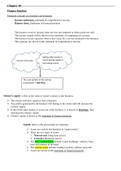
Financial concepts in a business environment:
- Income statement: statement of comprehensive income.
- Balance sheet: Statement of financial position.
- The business receives income when services are rendered or when goods are sold.
- The income earned will be shown in the statement of comprehensive income.
- The business incurs expenses when it has to pay for a service rendered to the business.
- The expenses are shown in the statement of comprehensive income.
Selling other assets or
Income from sales. owner giving capital or
borrowing money.
The cash portion of the various
transactions = cash flow.
Owner’s equity: refers to the value of owner’s money in the business.
➢ The owners will give capital to start a business.
➢ Any profits generated by the business will belong to the owner and will increase the
owners’ equity.
➢ If the owner takes money or assets out of the business, it is known as drawings. This
decreases the owners’ equity.
➢ Owners’ equity is shown in the statement of financial position.
Assets: refers to the possessions of a business.
➢ Assets are used by the business to “make money”.
➢ There are two types of assets:
1. Non-current {long-term assets}
2. Current {short term assets}
➢ The non - current assets include: Land; buildings; vehicles; long –
term investments in the bank.
➢ The current assets include: trading inventory; debtors and cash.
➢ Assets are shown in the statement of financial position.
, Liabilities: refer to the debt of the business.
➢ There are two types of liabilities: Assets = Owner’s equity + liabilities.
1. Current. {short term}
2. Non-current. {long term}
➢ Non – current liabilities include a mortage bond.
➢ Current liabilities are creditors and a bank overdraft
➢ Liabilities are shown in the statement of financial position.
Costs:
- Fixed costs:
¬ Remain the same, irrespective of the output.
¬ Salaries of workers are usually fixed if they are not directly involved in
the production process.
- Variable costs:
¬ vary according to the output.
¬ Variable costs will increase when production increases.
Total cost: The sum of fixed cost Cost per unit: calculated by dividing
and the variable cost. the total cost by the number of units
produced.
Break – Even analysis:
- Beak even point, is the point where the income
generated from sales is exactly equal to the total
costs.
Safety margin:
- Safety margin refers to how far above the break – even point the
business has to perform in order to ensure the business can
safely continue to exist.
Finance function
Financial concepts in a business environment:
- Income statement: statement of comprehensive income.
- Balance sheet: Statement of financial position.
- The business receives income when services are rendered or when goods are sold.
- The income earned will be shown in the statement of comprehensive income.
- The business incurs expenses when it has to pay for a service rendered to the business.
- The expenses are shown in the statement of comprehensive income.
Selling other assets or
Income from sales. owner giving capital or
borrowing money.
The cash portion of the various
transactions = cash flow.
Owner’s equity: refers to the value of owner’s money in the business.
➢ The owners will give capital to start a business.
➢ Any profits generated by the business will belong to the owner and will increase the
owners’ equity.
➢ If the owner takes money or assets out of the business, it is known as drawings. This
decreases the owners’ equity.
➢ Owners’ equity is shown in the statement of financial position.
Assets: refers to the possessions of a business.
➢ Assets are used by the business to “make money”.
➢ There are two types of assets:
1. Non-current {long-term assets}
2. Current {short term assets}
➢ The non - current assets include: Land; buildings; vehicles; long –
term investments in the bank.
➢ The current assets include: trading inventory; debtors and cash.
➢ Assets are shown in the statement of financial position.
, Liabilities: refer to the debt of the business.
➢ There are two types of liabilities: Assets = Owner’s equity + liabilities.
1. Current. {short term}
2. Non-current. {long term}
➢ Non – current liabilities include a mortage bond.
➢ Current liabilities are creditors and a bank overdraft
➢ Liabilities are shown in the statement of financial position.
Costs:
- Fixed costs:
¬ Remain the same, irrespective of the output.
¬ Salaries of workers are usually fixed if they are not directly involved in
the production process.
- Variable costs:
¬ vary according to the output.
¬ Variable costs will increase when production increases.
Total cost: The sum of fixed cost Cost per unit: calculated by dividing
and the variable cost. the total cost by the number of units
produced.
Break – Even analysis:
- Beak even point, is the point where the income
generated from sales is exactly equal to the total
costs.
Safety margin:
- Safety margin refers to how far above the break – even point the
business has to perform in order to ensure the business can
safely continue to exist.