Chapter 2
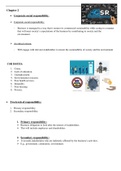
• Corporate social responsibility.
➢ Corporate social responsibility:
- Business is managed in a way that it ensures its commercial sustainability while acting in a manner
that will meet society’s expectations of the business by contributing to society and the
environment.
➢ An ethical citizen:
- Will engage with relevant stakeholders to ensure the sustainability of society and the environment.
CSR ISSUES:
1. Crime.
2. Lack of education.
3. Unemployment.
4. Environmental concerns.
5. Poor health services.
6. Inequality.
7. Poor housing.
8. Poverty.
• Two levels of responsibility:
1. Primary responsibility.
2. Secondary responsibility.
1. Primary responsibility:
➢ Business obligation to look after the interest of stakeholders.
➢ This will include employees and shareholders.
2. Secondary responsibility:
➢ It towards stakeholders who are indirectly affected by the business’s activities.
➢ E.g., government, community, environment.
, The two pioneers in the field of CSR:
1. BLOWFIELD.
2. MURRAY.
• Pyramid used to determine level of responsibility:
1. Discretionary responsibility.
2. Ethical responsibility.
3. Legal responsibility.
4. Economic responsibility.
• Economic responsibility:
➢ Business is responsible to ensure that it is economically active.
• Legal responsibility:
➢ All businesses have the responsibility to ensure it is respecting the laws of the country in which it
operates.
➢ By obeying the law, the business is a responsible citizen in the business society.
• Ethical responsibility:
➢ Ensure business is making ethical sound decisions that will not have a negative impact on
stakeholders.
• Discretionary responsibility:
➢ Business should consider how or what and to whom the business will give back.
➢ {it is about building a brand with values and ensuring they are being practiced.}
• Corporate social responsibility.
➢ Corporate social responsibility:
- Business is managed in a way that it ensures its commercial sustainability while acting in a manner
that will meet society’s expectations of the business by contributing to society and the
environment.
➢ An ethical citizen:
- Will engage with relevant stakeholders to ensure the sustainability of society and the environment.
CSR ISSUES:
1. Crime.
2. Lack of education.
3. Unemployment.
4. Environmental concerns.
5. Poor health services.
6. Inequality.
7. Poor housing.
8. Poverty.
• Two levels of responsibility:
1. Primary responsibility.
2. Secondary responsibility.
1. Primary responsibility:
➢ Business obligation to look after the interest of stakeholders.
➢ This will include employees and shareholders.
2. Secondary responsibility:
➢ It towards stakeholders who are indirectly affected by the business’s activities.
➢ E.g., government, community, environment.
, The two pioneers in the field of CSR:
1. BLOWFIELD.
2. MURRAY.
• Pyramid used to determine level of responsibility:
1. Discretionary responsibility.
2. Ethical responsibility.
3. Legal responsibility.
4. Economic responsibility.
• Economic responsibility:
➢ Business is responsible to ensure that it is economically active.
• Legal responsibility:
➢ All businesses have the responsibility to ensure it is respecting the laws of the country in which it
operates.
➢ By obeying the law, the business is a responsible citizen in the business society.
• Ethical responsibility:
➢ Ensure business is making ethical sound decisions that will not have a negative impact on
stakeholders.
• Discretionary responsibility:
➢ Business should consider how or what and to whom the business will give back.
➢ {it is about building a brand with values and ensuring they are being practiced.}