Unit 3
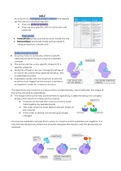
An enzyme is a biological, protein catalyst that speeds
up the rate of a chemical reaction
● They are globular proteins
● They are very specific; with its active site and
substrate
They can be:
● Intracellular: produced and function inside the cell
● Extracellular: produced inside and secreted to
catalyse reactions outside cells
Mode of enzyme action
● Enzymes have an active site, where a specific
substrate binds forming an enzyme-substrate
complex
● The active site has a very specific shape to fit a
specific substrate
● Extremes of heat or pH can change the shape of
an active site, preventing substrate binding - this
is called denaturation
● Substrates collide with the enzymes’ active site
and this must happen at the correct orientation
and speed in order for a reaction to occur
The specificity of an enzyme is a result of the complementary nature between the shape of
the active site and its substrate(s)
● The shape of the active site, and therefore its specificity, is determined by the complex
tertiary structure that makes up the enzyme
● Proteins are formed from chains of amino acids
held together by peptide bonds
● The order of amino acids determines the shape of
the enzyme
● If the order is altered, the resulting 3D shape
changes
An enzyme-substrate complex forms when an enzyme and its substrate join together. It is
only formed temporarily, before the enzyme catalyses the reaction and the product(s) are
released.
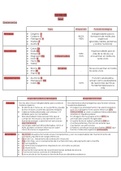
, Types of enzyme reactions
Catabolic Anabolic
Involves the breakdown of complex Involves the building of more complex
molecules into simple products, when one molecules from simpler ones by drawing
substrate is drawn into the active site and two or more substrates into the active site,
forming bonds between them and releasing
broken apart into 2 or more distinct
a single product
molecules
Eg: cellular respiration & hydrolysis Eg: protein synthesis & photosynthesis
How do they work?
● All chemical reactions are associated with energy changes
● For a reaction to proceed, there must be enough activation energy (EA)
● This EA is the amount of energy needed by the substrate to become just unstable enough for
a reaction to occur and products to be formed
● Enzymes speed up chemical reactions because they influence the stability of bonds in
the reactants
● The destabilisation of bonds in the substrate makes it more reactive
● Enzymes work by lowering the EA of a reaction and in doing so they provide an alternative
energy pathway
An enzyme is a biological, protein catalyst that speeds
up the rate of a chemical reaction
● They are globular proteins
● They are very specific; with its active site and
substrate
They can be:
● Intracellular: produced and function inside the cell
● Extracellular: produced inside and secreted to
catalyse reactions outside cells
Mode of enzyme action
● Enzymes have an active site, where a specific
substrate binds forming an enzyme-substrate
complex
● The active site has a very specific shape to fit a
specific substrate
● Extremes of heat or pH can change the shape of
an active site, preventing substrate binding - this
is called denaturation
● Substrates collide with the enzymes’ active site
and this must happen at the correct orientation
and speed in order for a reaction to occur
The specificity of an enzyme is a result of the complementary nature between the shape of
the active site and its substrate(s)
● The shape of the active site, and therefore its specificity, is determined by the complex
tertiary structure that makes up the enzyme
● Proteins are formed from chains of amino acids
held together by peptide bonds
● The order of amino acids determines the shape of
the enzyme
● If the order is altered, the resulting 3D shape
changes
An enzyme-substrate complex forms when an enzyme and its substrate join together. It is
only formed temporarily, before the enzyme catalyses the reaction and the product(s) are
released.
, Types of enzyme reactions
Catabolic Anabolic
Involves the breakdown of complex Involves the building of more complex
molecules into simple products, when one molecules from simpler ones by drawing
substrate is drawn into the active site and two or more substrates into the active site,
forming bonds between them and releasing
broken apart into 2 or more distinct
a single product
molecules
Eg: cellular respiration & hydrolysis Eg: protein synthesis & photosynthesis
How do they work?
● All chemical reactions are associated with energy changes
● For a reaction to proceed, there must be enough activation energy (EA)
● This EA is the amount of energy needed by the substrate to become just unstable enough for
a reaction to occur and products to be formed
● Enzymes speed up chemical reactions because they influence the stability of bonds in
the reactants
● The destabilisation of bonds in the substrate makes it more reactive
● Enzymes work by lowering the EA of a reaction and in doing so they provide an alternative
energy pathway