Learning Goals
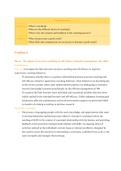
Problem 6 What is coaching?
What are the different forms of coaching?
What is the role of goals and feedback in the coaching process?
Problem 7 What characterizes a good coach?
What skills and competencies are necessary to become a good coach?
Problem 6
Baron - The impact of executive coaching on self-efficacy related to management soft-skills
Introduction
Purpose: Investigate the links between executive coaching and self-efficacy in regard to
supervisory coaching behaviors.
1. To determine whether there is a positive relationship between executive coaching and
self-efficacy related to supervisory coaching behaviors, these behaviors are becoming key
in the current context where most industrialized countries are undergoing a transition
toward a knowledge economy based largely on the efficient management of HR.
2. To examine the links between some individual and situational variables that have been
widely studied in the training literature and self-efficacy. Utility judgment, learning goal
orientation, affective commitment, and work-environment support are positively linked
to transfer of training according to previous research.
Executive Coaching
● The process of equipping people with the tools, knowledge, and opportunities they need
to develop themselves and become more effective. Executive coaching involves the
teaching of skills in the context of a personal relationship with the learner, and providing
feedback on the executive’s interpersonal relations and skills. An ongoing series of
activities tailored to the individual’s current issues or relevant problem is designed by
the coach to assist the executive in maintaining a consistent, confident focus as he or she
tunes strengths and manages shortcomings.
, ○ There is either an external or internal coach that helps people at executive levels
like CEO and vice-presidents. Nowadays, the executive coaching style is being
used on lower levels of management.
● Executive coaching differs from supervisory coaching behaviors and mentoring.
● Supervisory coaching is mainly used by managers. They have authority over the
employee, and exercise significant control over them. The control can have a restraining
effect on the employee in which they can’t bring up certain subjects thought to be more
delicate like things with personal nature. They show daily coaching behaviors and it is
not a formal development process with a certain beginning and ending.
○ Executive coach doesn’t have direct authority over the employee-coachee. They
have a formal development process with a beginning and an end.
● Mentoring is a relationship between an older, more experienced mentor and a younger
less-experienced protege for the purpose of helping and developing the proteges career.
● Executive coaching follows 6 stages for an effective coaching process:
○ 1. Establishing a relationship of trust between the coach and the coachee;
○ 2. Evaluating the coachee and the professional setting in which he or she works;
○ 3 Providing feedback on this evaluation to the coachee;
○ 4. Establishing a development plan and setting goals;
○ 5. Implementing the behaviors to be developed or improved;
○ 6. Evaluating the progress achieved.
● There are 2 types of coaching services offered. External or internal coaching. They both
have pros and cons. Internal coach knows the coachee’s work environment better.
External coach generally approaches the training situation with more objectivity.
● 4 contexts executive coaching is most commonly used. With the first 3 coaching is
proposed to achieve development goals. Last context’s objective is to take corrective
action.
○ Major organizational changes requiring new skills;
○ A skill-development need stemming from a promotion;
○ A specific skill-development need for the managers in question; and
○ The resolution of individual performance problems.
Empirical Studies on Executive Coaching
● Leadership skills improved by 55-60%. Positive correlation between the number of
coaching sessions and leadership efficacy (reported by managers).
, ● Increase in satisfaction with work, supervision and peers.
● The managers who worked with a coach set more clear and specific goals, were more
likely to ask for ideas for self-improvement from their supervisor, and had better
evaluations from their supervisor and their direct contacts than did the managers in the
control group who did not receive coaching.
● Productivity improved by 22%.
● Managerial flexibility increased.
● Executive coaching was positively associated with effective people management,
relationship with managers, goal setting and prioritization, engagement and
productivity, and dialogue and communication. No correlation.
● Self-efficacy.
Executive Coaching and Self-Efficacy
● Self-efficacy is measured as the main outcome of training with an executive coach
because measurement of skills transfer is challenging.
● Self-Efficacy: Belief that a person has of being capable of accomplishing a given task.
○ The connection between self-efficacy and the performance of complex
interpersonal tasks such as negotiation has also been demonstrated many times.
○ Significant correlation between self-efficacy and work performance.
Individual and Situational Variables Related to Self-Efficacy
● Utility Judgment: Participant’s subjective evaluation of the utility of the training
received when he or she returns to work. It can constitute satisfaction, transfer,
motivation.
Problem 6 What is coaching?
What are the different forms of coaching?
What is the role of goals and feedback in the coaching process?
Problem 7 What characterizes a good coach?
What skills and competencies are necessary to become a good coach?
Problem 6
Baron - The impact of executive coaching on self-efficacy related to management soft-skills
Introduction
Purpose: Investigate the links between executive coaching and self-efficacy in regard to
supervisory coaching behaviors.
1. To determine whether there is a positive relationship between executive coaching and
self-efficacy related to supervisory coaching behaviors, these behaviors are becoming key
in the current context where most industrialized countries are undergoing a transition
toward a knowledge economy based largely on the efficient management of HR.
2. To examine the links between some individual and situational variables that have been
widely studied in the training literature and self-efficacy. Utility judgment, learning goal
orientation, affective commitment, and work-environment support are positively linked
to transfer of training according to previous research.
Executive Coaching
● The process of equipping people with the tools, knowledge, and opportunities they need
to develop themselves and become more effective. Executive coaching involves the
teaching of skills in the context of a personal relationship with the learner, and providing
feedback on the executive’s interpersonal relations and skills. An ongoing series of
activities tailored to the individual’s current issues or relevant problem is designed by
the coach to assist the executive in maintaining a consistent, confident focus as he or she
tunes strengths and manages shortcomings.
, ○ There is either an external or internal coach that helps people at executive levels
like CEO and vice-presidents. Nowadays, the executive coaching style is being
used on lower levels of management.
● Executive coaching differs from supervisory coaching behaviors and mentoring.
● Supervisory coaching is mainly used by managers. They have authority over the
employee, and exercise significant control over them. The control can have a restraining
effect on the employee in which they can’t bring up certain subjects thought to be more
delicate like things with personal nature. They show daily coaching behaviors and it is
not a formal development process with a certain beginning and ending.
○ Executive coach doesn’t have direct authority over the employee-coachee. They
have a formal development process with a beginning and an end.
● Mentoring is a relationship between an older, more experienced mentor and a younger
less-experienced protege for the purpose of helping and developing the proteges career.
● Executive coaching follows 6 stages for an effective coaching process:
○ 1. Establishing a relationship of trust between the coach and the coachee;
○ 2. Evaluating the coachee and the professional setting in which he or she works;
○ 3 Providing feedback on this evaluation to the coachee;
○ 4. Establishing a development plan and setting goals;
○ 5. Implementing the behaviors to be developed or improved;
○ 6. Evaluating the progress achieved.
● There are 2 types of coaching services offered. External or internal coaching. They both
have pros and cons. Internal coach knows the coachee’s work environment better.
External coach generally approaches the training situation with more objectivity.
● 4 contexts executive coaching is most commonly used. With the first 3 coaching is
proposed to achieve development goals. Last context’s objective is to take corrective
action.
○ Major organizational changes requiring new skills;
○ A skill-development need stemming from a promotion;
○ A specific skill-development need for the managers in question; and
○ The resolution of individual performance problems.
Empirical Studies on Executive Coaching
● Leadership skills improved by 55-60%. Positive correlation between the number of
coaching sessions and leadership efficacy (reported by managers).
, ● Increase in satisfaction with work, supervision and peers.
● The managers who worked with a coach set more clear and specific goals, were more
likely to ask for ideas for self-improvement from their supervisor, and had better
evaluations from their supervisor and their direct contacts than did the managers in the
control group who did not receive coaching.
● Productivity improved by 22%.
● Managerial flexibility increased.
● Executive coaching was positively associated with effective people management,
relationship with managers, goal setting and prioritization, engagement and
productivity, and dialogue and communication. No correlation.
● Self-efficacy.
Executive Coaching and Self-Efficacy
● Self-efficacy is measured as the main outcome of training with an executive coach
because measurement of skills transfer is challenging.
● Self-Efficacy: Belief that a person has of being capable of accomplishing a given task.
○ The connection between self-efficacy and the performance of complex
interpersonal tasks such as negotiation has also been demonstrated many times.
○ Significant correlation between self-efficacy and work performance.
Individual and Situational Variables Related to Self-Efficacy
● Utility Judgment: Participant’s subjective evaluation of the utility of the training
received when he or she returns to work. It can constitute satisfaction, transfer,
motivation.