Advanced Auditing – Preparation
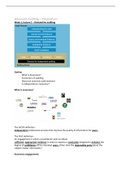
Week 1, lecture 1 – Demand for auditing
Outline
- What is Assurance?
- Economics of auditing
- Historical overview audit demand
- Is independence necessary?
What is assurance?
The AICPA definition:
Independent professional services that improve the quality of information for users.
The IFAC definition:
An engagement in which a practitioner aims to obtain
sufficient, appropriate evidence in order to express a conclusion designed to enhance the
degree of confidence off the intended users. Other than the responsible party about the
subject matter information.”
Assurance engagements
,What is an audit?
Opinion by an independent auditor on whether financial statements are in all material
aspects present fairly in accordance with GAAP
- GAAP: IFRS, USGAAP, DAS
- GAAS: ISAs, COS
- Reasonable assurance
- Use materiality
- Exercise professional judgment
• Risk, Materiality, Evidence
- Behavioral requirements
• Independence
• Skepticism
Types of Audits
- GAAS audit and Integrated audit
- Integrated audit of financial statements with a report on effectiveness of internal
control over financial reporting.
- Firms listed at NYSE / NASDAQ
- Municipalities in the Netherlands (2021)
Parties involved
,Economics of Audit Demand
Demand by outside intervention
Demand arises within the economy
Exogenous Audit Demand
- Government intervention
- Statutory audit
- Environment agency requires audit of pollution reports
- Ministry of Health requires audit of health care declarations by hospitals
- Government grant with condition external audit
Endogenous Audit Demand
- Agency relation: Principle (shareholder) delegates decision-making to agent
(manager)
, - Agency theory: Conflicts of interests between two parties due to differences in
incentives and reflects information asymmetry between two parties to a transaction
Endogenous Audit Demand
- Adverse selection: principle cannot observe the quality of the firm
- Moral Hazard: agent actions not observed yet incentivized (work hard / shirk)
- Independent audit: high quality report ‘ensures’ truth about agents' hard work
(endogenous)
Theory of the firm
- Firm is nexus of contracts (Coase)
- Different contractual arrangements provide different incentives for opportunistic
behavior.
- Enforcement of contracts
o Bonding
o Monitoring (Audit)
Agency cost (JM1976)
Endogenous?
- Endogenous: Independent audit reduces incentive problems of the manager and
should exist in earliest firms [JM1976]
- Exogenous: Audit textbooks: recent product of government intervention (e.g.created
by securities acts)
Merchant Guilds (1200s)
- Bonding: Alderman oath of all profits
- Monitoring: audit of expenses
- Auditors: committee of members
- Independence: fine and reputation
Regulated companies (1500s)
- Bonding: Treasurer statement of receipts
- Monitoring: audit
- Auditors: committee of members
- Independence: fine and reputation
Joint stock companies (1600s)
- Bonding: sureties and guarantees by officers
Week 1, lecture 1 – Demand for auditing
Outline
- What is Assurance?
- Economics of auditing
- Historical overview audit demand
- Is independence necessary?
What is assurance?
The AICPA definition:
Independent professional services that improve the quality of information for users.
The IFAC definition:
An engagement in which a practitioner aims to obtain
sufficient, appropriate evidence in order to express a conclusion designed to enhance the
degree of confidence off the intended users. Other than the responsible party about the
subject matter information.”
Assurance engagements
,What is an audit?
Opinion by an independent auditor on whether financial statements are in all material
aspects present fairly in accordance with GAAP
- GAAP: IFRS, USGAAP, DAS
- GAAS: ISAs, COS
- Reasonable assurance
- Use materiality
- Exercise professional judgment
• Risk, Materiality, Evidence
- Behavioral requirements
• Independence
• Skepticism
Types of Audits
- GAAS audit and Integrated audit
- Integrated audit of financial statements with a report on effectiveness of internal
control over financial reporting.
- Firms listed at NYSE / NASDAQ
- Municipalities in the Netherlands (2021)
Parties involved
,Economics of Audit Demand
Demand by outside intervention
Demand arises within the economy
Exogenous Audit Demand
- Government intervention
- Statutory audit
- Environment agency requires audit of pollution reports
- Ministry of Health requires audit of health care declarations by hospitals
- Government grant with condition external audit
Endogenous Audit Demand
- Agency relation: Principle (shareholder) delegates decision-making to agent
(manager)
, - Agency theory: Conflicts of interests between two parties due to differences in
incentives and reflects information asymmetry between two parties to a transaction
Endogenous Audit Demand
- Adverse selection: principle cannot observe the quality of the firm
- Moral Hazard: agent actions not observed yet incentivized (work hard / shirk)
- Independent audit: high quality report ‘ensures’ truth about agents' hard work
(endogenous)
Theory of the firm
- Firm is nexus of contracts (Coase)
- Different contractual arrangements provide different incentives for opportunistic
behavior.
- Enforcement of contracts
o Bonding
o Monitoring (Audit)
Agency cost (JM1976)
Endogenous?
- Endogenous: Independent audit reduces incentive problems of the manager and
should exist in earliest firms [JM1976]
- Exogenous: Audit textbooks: recent product of government intervention (e.g.created
by securities acts)
Merchant Guilds (1200s)
- Bonding: Alderman oath of all profits
- Monitoring: audit of expenses
- Auditors: committee of members
- Independence: fine and reputation
Regulated companies (1500s)
- Bonding: Treasurer statement of receipts
- Monitoring: audit
- Auditors: committee of members
- Independence: fine and reputation
Joint stock companies (1600s)
- Bonding: sureties and guarantees by officers