MPPF Belangrijke termen/theorieën
Week 1 – Lecture 1
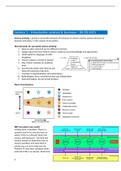
Motivation: - describes the psychological processes that underlie direction,
intensity, and persistence of behavior
- A set of energetic forces that originate within and outside an
employee that initiates work-related effort and determines its
direction, intensity, and persistence
Early/Content theories on motivation:
1. Maslow’s Hierarchy of Needs Theory:
2. Alderfer’s ERG Theory:
- Extension of Maslow’s theory 3 levels of needs ->
Existense, Relatedness, and Growth needs
- Multiple needs can be activated simultaneously and change in
prominence (prominence = becoming important or famous)
- mixed empirical support
3. McClelland’s Need Theory:
- 1 of 3 main drivers for motivation: Achievement, Affiliation, and
Power (AAP)
- Popular lay theory based on value of extrinsic rewards
(extrinsic=coming from the outside)
4. Herzberg’s Motivation-Hygiene Theory: two-factor model
- Hygiene factors determine dissatisfaction;
Motivation factors determine satisfaction beginning of
understanding intrinsic motivation
- Empirical support questionable; Two-factor aspect not as clear as
portrayed
5. Equity Theory (Adams): Justice as a motive:
- Equity compares how well you are doing compared to how well
others are doing in similar jobs
- Instead of focusing just on what you put in and get out, equity theory
also considers the comparison of your input-output ratio to those of
others
- Fairness (cf. Organizational
Justice Theory)
, 6. Self-Determination Theory, STD, (Ryan & Deci, 2000)
- Interplay between intrinsic and extrinsic motivational factors
- Three basic human needs:
1. Autonomy
2. Competence/Mastery
3. Relatedness
- Fulfillment of needs wellbeing, engagement intrinsic motivation
- Hybrid theory of
content and
process
- Often used as foundation for job design theories
- Strong empirical support for validity and usefulness of the theory:
When needs are met, people perform better, are healthier, more
engaged, and more committed (among other outcomes)
- Implications for organizations: design jobs in such a way that
autonomy, mastery, and connectedness are promoted (e.g., allow
space to self-manage, provide feedbacl and support)
conclusion of early/content theories => people have basic needs that motivate
behavior
,Context-based theories on motivation:
1) The Job Characteristics Model:
- Motivational aspects of work by designing jobs
- Hackman & Oldham (1980): job design is the organization of a
job’s elements
- Job Characteristics Model
Skill variety
Task identity
Task significance
Autonomy (self-determination, freedom)
Feedback
2) Job Demands-Resources Theory
- “job resources are those physical, psychological, social, or
organizational aspects of the job that are either functional in
achieving work goals, reducing job demands, reducing stress, or
stimulating personal growth, learning, and development”
e.g., autonomy, social support, opportunities for development
- “job demands refer to those physical, psychological, social, or
organizational aspects of the job that require sustained physical
and/or psychological (cognitive and emotional) effort or skills and
are therefore associated with certain physical and/or psychological
costs”
e.g., work pressure, emotional workload, conflict
, - JD-R model & SDT: Job resources fulfill basic human needs of
autonomy, competence, and relatednedd (i.e., they are intrinsically
motivating)
- Demand is not always neegative
o … as long as they are manageable and buffered by sufficient
resources
o … challenge demands vs. hindrance demands
o … to prevent boreout (demands + resources needed)
- JD-R processes related to many outcomes (e.g., performance,
satisfaction, health, commitment, absenteeism, job loss)
conclusion of context-based theories on motivation => it is important to
understand individuals’ motivation in team systems and the larger context
Week 1 – Lecture 1
Motivation: - describes the psychological processes that underlie direction,
intensity, and persistence of behavior
- A set of energetic forces that originate within and outside an
employee that initiates work-related effort and determines its
direction, intensity, and persistence
Early/Content theories on motivation:
1. Maslow’s Hierarchy of Needs Theory:
2. Alderfer’s ERG Theory:
- Extension of Maslow’s theory 3 levels of needs ->
Existense, Relatedness, and Growth needs
- Multiple needs can be activated simultaneously and change in
prominence (prominence = becoming important or famous)
- mixed empirical support
3. McClelland’s Need Theory:
- 1 of 3 main drivers for motivation: Achievement, Affiliation, and
Power (AAP)
- Popular lay theory based on value of extrinsic rewards
(extrinsic=coming from the outside)
4. Herzberg’s Motivation-Hygiene Theory: two-factor model
- Hygiene factors determine dissatisfaction;
Motivation factors determine satisfaction beginning of
understanding intrinsic motivation
- Empirical support questionable; Two-factor aspect not as clear as
portrayed
5. Equity Theory (Adams): Justice as a motive:
- Equity compares how well you are doing compared to how well
others are doing in similar jobs
- Instead of focusing just on what you put in and get out, equity theory
also considers the comparison of your input-output ratio to those of
others
- Fairness (cf. Organizational
Justice Theory)
, 6. Self-Determination Theory, STD, (Ryan & Deci, 2000)
- Interplay between intrinsic and extrinsic motivational factors
- Three basic human needs:
1. Autonomy
2. Competence/Mastery
3. Relatedness
- Fulfillment of needs wellbeing, engagement intrinsic motivation
- Hybrid theory of
content and
process
- Often used as foundation for job design theories
- Strong empirical support for validity and usefulness of the theory:
When needs are met, people perform better, are healthier, more
engaged, and more committed (among other outcomes)
- Implications for organizations: design jobs in such a way that
autonomy, mastery, and connectedness are promoted (e.g., allow
space to self-manage, provide feedbacl and support)
conclusion of early/content theories => people have basic needs that motivate
behavior
,Context-based theories on motivation:
1) The Job Characteristics Model:
- Motivational aspects of work by designing jobs
- Hackman & Oldham (1980): job design is the organization of a
job’s elements
- Job Characteristics Model
Skill variety
Task identity
Task significance
Autonomy (self-determination, freedom)
Feedback
2) Job Demands-Resources Theory
- “job resources are those physical, psychological, social, or
organizational aspects of the job that are either functional in
achieving work goals, reducing job demands, reducing stress, or
stimulating personal growth, learning, and development”
e.g., autonomy, social support, opportunities for development
- “job demands refer to those physical, psychological, social, or
organizational aspects of the job that require sustained physical
and/or psychological (cognitive and emotional) effort or skills and
are therefore associated with certain physical and/or psychological
costs”
e.g., work pressure, emotional workload, conflict
, - JD-R model & SDT: Job resources fulfill basic human needs of
autonomy, competence, and relatednedd (i.e., they are intrinsically
motivating)
- Demand is not always neegative
o … as long as they are manageable and buffered by sufficient
resources
o … challenge demands vs. hindrance demands
o … to prevent boreout (demands + resources needed)
- JD-R processes related to many outcomes (e.g., performance,
satisfaction, health, commitment, absenteeism, job loss)
conclusion of context-based theories on motivation => it is important to
understand individuals’ motivation in team systems and the larger context