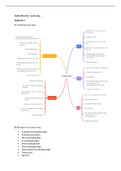
Unit 2: Practical Scientific Procedures and Techniques
A1: Undertake titration to determine the concentration of solutions.
Making a standard solution of sodium hydrogen sulfate (NaHSO4)
1. Scale to weigh the mass of Sodium hydrogen sulfate. (NaHSO4)
2. Glass beaker 250 cm3 and Volumetric Flask.
3. Glass rod.
4. Funnel.
5. Distilled water, Sodium hydroxide.
6. Preparing 250cm3 of 0.1moldm3 solution of (NaHSO4).
7. Personal Protective Equipment (PPE), Safety Goggles/Gloves must be
worn at all times.
Method
Using a balance.
Switch on the balance and allow enough time for the device to attain thermal
equilibrium. Make sure the levelling is checked. Place a calibration weight on
the pan. On no occasion weigh the material directly onto the balance. To
maintain the balance, keep it switched on during long activities, keep clean and
regularly check for drifting of the measurements by using calibration weights.
Key terms
Drifting in measurements convey when the amount of a constant quantity such
as a mass is repeated several times and the measurements drift one way
during an experiment.
Calibration is to adjust or correct the graduations of a measuring device when
being compared to a known value standard.
Firstly, use a balance to weigh out the preferred mass of solid sodium
hydroxide (NaHSO4). Then add distilled water to cover over the solid crystals,
just be careful not to add more than 100cm3 of water at this stage. When
completed use a glass rod to swirl the crystals in the water and this would start
the dissolving process. The partially dissolved Sodium hydroxide should then
be poured into a 250cm3 volumetric flask. In addition to this, the distilled water
should be added to the volumetric flask until the meniscus of the solution sits
on the 250cm3 marker line. Lastly, a stopper is placed on the volumetric flask
, and it is then shaken thoroughly to dissolve all of the solid and then evenly mix
the solution.
Calculating Mass of sodium hydrogen sulfate (NaHSO4)
Mass of Sodium hydrogen sulfate (NaHSO4)
Mol = Concentration x volume. Convert 250cm^3 = 0.25 dm 3
Mol = 0.1 X 0.25 = 0.025
Mass = Number of moles x Molar mass of substance required.
Mass = Na, S, H, O = 23+32.1+1 + (4x16) = 120. 1g per mol
1/10 Molar mass = 12.01g
1 dm3 of 0.1 mol per dm3 will contain 12.01g per 1dm3
0.025 X 120.1 = 3.00g Mass = 3.00g
250cm3 of 0.1 mol per dm3 will contain 12.01/ 4 = 3.00g
Titration
Titration is a process of determining the concentration of an unknown solution
using a solution of known concentration.
Equipment used:
Burette.
Conical flask.
Indicator (phenolphthalein)
Bulb form pipette
Clamp and stand
Funnel
Goggles – PPE
Method
Image - (Hartley, J et al 2016) – 20/01/2021
Here is a diagram illustrating the setup of the Titration practical.
A1: Undertake titration to determine the concentration of solutions.
Making a standard solution of sodium hydrogen sulfate (NaHSO4)
1. Scale to weigh the mass of Sodium hydrogen sulfate. (NaHSO4)
2. Glass beaker 250 cm3 and Volumetric Flask.
3. Glass rod.
4. Funnel.
5. Distilled water, Sodium hydroxide.
6. Preparing 250cm3 of 0.1moldm3 solution of (NaHSO4).
7. Personal Protective Equipment (PPE), Safety Goggles/Gloves must be
worn at all times.
Method
Using a balance.
Switch on the balance and allow enough time for the device to attain thermal
equilibrium. Make sure the levelling is checked. Place a calibration weight on
the pan. On no occasion weigh the material directly onto the balance. To
maintain the balance, keep it switched on during long activities, keep clean and
regularly check for drifting of the measurements by using calibration weights.
Key terms
Drifting in measurements convey when the amount of a constant quantity such
as a mass is repeated several times and the measurements drift one way
during an experiment.
Calibration is to adjust or correct the graduations of a measuring device when
being compared to a known value standard.
Firstly, use a balance to weigh out the preferred mass of solid sodium
hydroxide (NaHSO4). Then add distilled water to cover over the solid crystals,
just be careful not to add more than 100cm3 of water at this stage. When
completed use a glass rod to swirl the crystals in the water and this would start
the dissolving process. The partially dissolved Sodium hydroxide should then
be poured into a 250cm3 volumetric flask. In addition to this, the distilled water
should be added to the volumetric flask until the meniscus of the solution sits
on the 250cm3 marker line. Lastly, a stopper is placed on the volumetric flask
, and it is then shaken thoroughly to dissolve all of the solid and then evenly mix
the solution.
Calculating Mass of sodium hydrogen sulfate (NaHSO4)
Mass of Sodium hydrogen sulfate (NaHSO4)
Mol = Concentration x volume. Convert 250cm^3 = 0.25 dm 3
Mol = 0.1 X 0.25 = 0.025
Mass = Number of moles x Molar mass of substance required.
Mass = Na, S, H, O = 23+32.1+1 + (4x16) = 120. 1g per mol
1/10 Molar mass = 12.01g
1 dm3 of 0.1 mol per dm3 will contain 12.01g per 1dm3
0.025 X 120.1 = 3.00g Mass = 3.00g
250cm3 of 0.1 mol per dm3 will contain 12.01/ 4 = 3.00g
Titration
Titration is a process of determining the concentration of an unknown solution
using a solution of known concentration.
Equipment used:
Burette.
Conical flask.
Indicator (phenolphthalein)
Bulb form pipette
Clamp and stand
Funnel
Goggles – PPE
Method
Image - (Hartley, J et al 2016) – 20/01/2021
Here is a diagram illustrating the setup of the Titration practical.