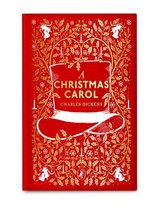
How is the theme of Christmas presented in the novella ‘A Christmas Carol’?
The novella, ‘A Christmas Carol’ is set in the Victorian era. During the Victorian era,
books written on the idea of Christmas were not common, hence Charles Dickens has
created a new genre through ‘A Christmas Carol’. In this novella, Dickens portrays the
opposing views of Christmas through the eyes of different characters. In addition,
Dickens uses the theme of Christmas to share his social message of an urgent need of
help to resolve poverty, which was a raging issue in the Victorian era and close the
gap between the rich and the poor.
This extract is taken from the novella's beginning, which takes place on Christmas
Eve. Fred wishes "A merry Christmas" to Scrooge, to which he replies, "You're poor
enough." Dickens intentionally associates wealth, the "poor," with Christmas in order
to express Scrooge's attitude that the "poor" must not be allowed to celebrate the
holiday season. Readers can infer from this comment that Scrooge believes a
person's level of happiness is determined by their money. These types of sentiments
were typical among upper-class Victorians who were ignorant of the importance of
supporting those in need.
Dickens uses synecdoche while describing Fred's appearance to signify the joy and
happiness Christmas offers. "Ruddy and attractive," with "his eyes sparkling," is how
Fred is described. Dickens employs antithesis in this instance as Fred's portrayal
strikingly contrasts with Scrooge's, who is described as "hard and sharp as flint."
Scrooge's miserly outlook on Christmas and Fred's cheerful outlook are both
metaphorically expressed by the way they look.
Fred lists several adjectives at the end of this extract to define Christmas : "a kind,
forgiving, charitable, happy time." The adjective "charitable" shines out the most in
this list, as it proves that Fred acknowledges how vital it is to take care of the less
fortunate during celebrations like these. Despite being "poor enough" in Scrooge's
perspective, Fred nevertheless makes an effort, unlike the exorbitantly wealthy
Scrooge. Dickens illustrates to the upper rank how desperately the poor need their
aid. This links to the Poor Law and the Treadmill, which were implemented as
"solutions" to assist the poor yet were not really much worse than prisons. Dickens'
aim was for readers in the 1800s to be aware of these and empathise with them.
The novella, ‘A Christmas Carol’ is set in the Victorian era. During the Victorian era,
books written on the idea of Christmas were not common, hence Charles Dickens has
created a new genre through ‘A Christmas Carol’. In this novella, Dickens portrays the
opposing views of Christmas through the eyes of different characters. In addition,
Dickens uses the theme of Christmas to share his social message of an urgent need of
help to resolve poverty, which was a raging issue in the Victorian era and close the
gap between the rich and the poor.
This extract is taken from the novella's beginning, which takes place on Christmas
Eve. Fred wishes "A merry Christmas" to Scrooge, to which he replies, "You're poor
enough." Dickens intentionally associates wealth, the "poor," with Christmas in order
to express Scrooge's attitude that the "poor" must not be allowed to celebrate the
holiday season. Readers can infer from this comment that Scrooge believes a
person's level of happiness is determined by their money. These types of sentiments
were typical among upper-class Victorians who were ignorant of the importance of
supporting those in need.
Dickens uses synecdoche while describing Fred's appearance to signify the joy and
happiness Christmas offers. "Ruddy and attractive," with "his eyes sparkling," is how
Fred is described. Dickens employs antithesis in this instance as Fred's portrayal
strikingly contrasts with Scrooge's, who is described as "hard and sharp as flint."
Scrooge's miserly outlook on Christmas and Fred's cheerful outlook are both
metaphorically expressed by the way they look.
Fred lists several adjectives at the end of this extract to define Christmas : "a kind,
forgiving, charitable, happy time." The adjective "charitable" shines out the most in
this list, as it proves that Fred acknowledges how vital it is to take care of the less
fortunate during celebrations like these. Despite being "poor enough" in Scrooge's
perspective, Fred nevertheless makes an effort, unlike the exorbitantly wealthy
Scrooge. Dickens illustrates to the upper rank how desperately the poor need their
aid. This links to the Poor Law and the Treadmill, which were implemented as
"solutions" to assist the poor yet were not really much worse than prisons. Dickens'
aim was for readers in the 1800s to be aware of these and empathise with them.