Unit 5: Energy Changes
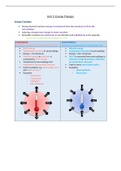
Energy Transfers
During chemical reactions energy is transferred from the chemicals to/from the
surroundings.
Inducing a temperature change in many reactions.
Reversible reactions are exothermic in one direction and endothermic in the opposite.
- Transferring the same amount of energy each way.
EXOTHERMIC ENDOTHERMIC
Reactions accompanied by a temperature rise. Reactions accompanied by a temperature fall.
Emits energy Absorbs energy
Temperature increase in surroundings. Temperature decrease in surroundings.
Energy exits chemicals. Energy enters chemicals.
Chemical energy in reactants is HEAT is converted from surroundings to
converted to HEAT energy chemical energy in products, indicated
Transferred to surroundings and by temperature decrease.
indicated by temperature increase. Used in some sports injury packs.
Used in products e.g. self-heating cans Examples:
and hand warmers. - Photosynthesis
Examples: - Electrolysis
- Respiration
- Combustion
- Oxidation
- Neutralisation
Heat
Heat
He
at t a
He
He
at at
He
Heat Heat
Heat Heat
a t He
He at
at
He
He
Heat
ta
Heat
, Required Practical: Investigating Energy Changes in Reactions
Method: Independent variable: metal used.
Set up the equipment shown. Dependant variable: temperature change
Take the temperature of the acid. Control variable: type, concentration and volume
Add the metal powder and stir. of acid
Record the highest temperature the reaction Hazards/Risks: there is a low risk of a corrosive acid
mixture reaches. damaging the experimenter’s eye, wear goggles.
Calculate the temperature change for the reaction.
Repeat the experiment using a different metal.
Considerations, Mistakes and Errors: Thermometer
The more reactive the metal, the greater the Lid
temperature change (an evident correlation Polystyrene
between metal reactivity and temp change) cup
Always uncertainty about results obtained when a Cotton
measurement is made. Repeat experiment three Reaction
wool mixture
times to collect an average, work out an
uncertainty too. Large
beaker
Calorimetry: study of energy changes which occur in chemical reactions.Calorimeter: insulated reaction
vessel used to measure temperature changes during chemical reactions.
Energy Level Diagrams (Reaction Profiles)
Chemical reactions only occur when reacting particles collide with sufficient energy.
These diagrams show the energy change as the reaction occurs.
Activation energy (Ea): minimum amount of energy needed for particles to react.
Overall energy change (ΔH): total energy change in energy between reactants and products.
EXOTHERMIC REACTION ENDOTHERMIC REACTION
Products
Ea
Reactants
Ea +Δ
H
-ΔH Reactants
Products
Energy Transfers
During chemical reactions energy is transferred from the chemicals to/from the
surroundings.
Inducing a temperature change in many reactions.
Reversible reactions are exothermic in one direction and endothermic in the opposite.
- Transferring the same amount of energy each way.
EXOTHERMIC ENDOTHERMIC
Reactions accompanied by a temperature rise. Reactions accompanied by a temperature fall.
Emits energy Absorbs energy
Temperature increase in surroundings. Temperature decrease in surroundings.
Energy exits chemicals. Energy enters chemicals.
Chemical energy in reactants is HEAT is converted from surroundings to
converted to HEAT energy chemical energy in products, indicated
Transferred to surroundings and by temperature decrease.
indicated by temperature increase. Used in some sports injury packs.
Used in products e.g. self-heating cans Examples:
and hand warmers. - Photosynthesis
Examples: - Electrolysis
- Respiration
- Combustion
- Oxidation
- Neutralisation
Heat
Heat
He
at t a
He
He
at at
He
Heat Heat
Heat Heat
a t He
He at
at
He
He
Heat
ta
Heat
, Required Practical: Investigating Energy Changes in Reactions
Method: Independent variable: metal used.
Set up the equipment shown. Dependant variable: temperature change
Take the temperature of the acid. Control variable: type, concentration and volume
Add the metal powder and stir. of acid
Record the highest temperature the reaction Hazards/Risks: there is a low risk of a corrosive acid
mixture reaches. damaging the experimenter’s eye, wear goggles.
Calculate the temperature change for the reaction.
Repeat the experiment using a different metal.
Considerations, Mistakes and Errors: Thermometer
The more reactive the metal, the greater the Lid
temperature change (an evident correlation Polystyrene
between metal reactivity and temp change) cup
Always uncertainty about results obtained when a Cotton
measurement is made. Repeat experiment three Reaction
wool mixture
times to collect an average, work out an
uncertainty too. Large
beaker
Calorimetry: study of energy changes which occur in chemical reactions.Calorimeter: insulated reaction
vessel used to measure temperature changes during chemical reactions.
Energy Level Diagrams (Reaction Profiles)
Chemical reactions only occur when reacting particles collide with sufficient energy.
These diagrams show the energy change as the reaction occurs.
Activation energy (Ea): minimum amount of energy needed for particles to react.
Overall energy change (ΔH): total energy change in energy between reactants and products.
EXOTHERMIC REACTION ENDOTHERMIC REACTION
Products
Ea
Reactants
Ea +Δ
H
-ΔH Reactants
Products