REFLEX ARC
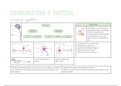
In the finger we have the Sensory N
which sends an input via the Afferent
N which is connected to the
interneuron located in the spinal cord,
via the Efferent N, we get to the
effector (muscle), so the hand moves
away
SENSORY NEURON RELAY NEURON MOTOR NEURON 1- Stimulus picked up by receptor in finger
2- Impulse passed on to Sensory N
3- Sensory N passes impulse to spinal cord
4- Spinal cord sends a message to Motor N
5- Motor N tells muscle to contract
6- Finger moves away from the stimulus
connects sensory & motor transfers impulse to the
neurons effector organ
- The NS uses electrical messages so you can react to your surroundings = coordination - Impulses from receptors pass along nerves to the CNS.
- Cells called sensors detect changes in the environment known as stimuli (we call - Impulses are sent from here to the effector along motor nerves (effectors can be
them receptors) muscles or glands)
, NEUROTRANSMITTERS SYNAPSE
Chemical released from the Presynaptic N to the Postsynaptic N (eg: Glutamate- memory) Conection between neurons
EXCITATORY INHIBITORY DRUGS AND ALCOHOL
It builds up in the synapse, stimulating receiving-neuron receptors more copiously and
↑ likelihood that the neuron will fire an action ↓ likelihood that the neuron will fire producing much greater dopamine impact on the receiving neurons than occurs naturally.
potential an action potential
PROCESS
1. Impulse arrives at the end of presynaptic neuron
2. vesicles fuse with presynaptic membrane (neurotr. are released to synaptic cleft)
3. Neurotr. diffuses across the synaptic cleft
4. Neurotr. attach to receptors on presynaptic membrane
5. Impulse created travels along the postsynaptic neuron
6. Neurotr. are recycled / destroyed once impulse is sent
In the finger we have the Sensory N
which sends an input via the Afferent
N which is connected to the
interneuron located in the spinal cord,
via the Efferent N, we get to the
effector (muscle), so the hand moves
away
SENSORY NEURON RELAY NEURON MOTOR NEURON 1- Stimulus picked up by receptor in finger
2- Impulse passed on to Sensory N
3- Sensory N passes impulse to spinal cord
4- Spinal cord sends a message to Motor N
5- Motor N tells muscle to contract
6- Finger moves away from the stimulus
connects sensory & motor transfers impulse to the
neurons effector organ
- The NS uses electrical messages so you can react to your surroundings = coordination - Impulses from receptors pass along nerves to the CNS.
- Cells called sensors detect changes in the environment known as stimuli (we call - Impulses are sent from here to the effector along motor nerves (effectors can be
them receptors) muscles or glands)
, NEUROTRANSMITTERS SYNAPSE
Chemical released from the Presynaptic N to the Postsynaptic N (eg: Glutamate- memory) Conection between neurons
EXCITATORY INHIBITORY DRUGS AND ALCOHOL
It builds up in the synapse, stimulating receiving-neuron receptors more copiously and
↑ likelihood that the neuron will fire an action ↓ likelihood that the neuron will fire producing much greater dopamine impact on the receiving neurons than occurs naturally.
potential an action potential
PROCESS
1. Impulse arrives at the end of presynaptic neuron
2. vesicles fuse with presynaptic membrane (neurotr. are released to synaptic cleft)
3. Neurotr. diffuses across the synaptic cleft
4. Neurotr. attach to receptors on presynaptic membrane
5. Impulse created travels along the postsynaptic neuron
6. Neurotr. are recycled / destroyed once impulse is sent