1. Introduction
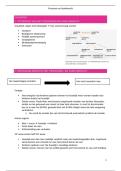
Social dialogue = attempt to pacify the employment relationship by institutionalizing the conflict
= attempt to rebalance unequal power relation through collective voice
= attempt to regulate the labor market, through collective bargaining
Employee & employer = connected
through employment relationship (kind
of contracts etc)
Social dialogue
- = an attempt to pacify the employment relationship by institutionalizing the conflict
- = an attempt to rebalance unequal power relation through collective voice
- = an attempt to regulate the labour market, through collective bargaining
2. Frames of references
= influences strongly how you perceive reality and how you act
Frame of reference = way in which a person perceives and interprets events by means of a
conceptual structure of generalizations or contexts, postulates about what is essential, assumptions
as to what is valuable, attitudes about what is possible, and ideas about what will work effectively
- Built on a series of assumptions
- Guides actors towards certain interventions and limits the possible interventions envisaged
by the actor
Most important differentiating factor perception regarding the degree of divergence of interest
between employers and employees
,Ideology = set of beliefs and values that one wishes to spread and live by
2.1 One team: the unitarist view
employees and employers share the same interests
- a team working towards a common goal
o but they have different roles
- win-win for everybody
worker’s interest
- quite ambitious
- seek a kind of fulfilment, well-being and actualization
- develops the competences of the employee & that they can really use their talents to the
best of their ability
employer interest
- profit maximization
- having all their employees work to the best of their abilities, be creative and innovative &
provide high quality services
- management through consent
- ‘as a manager my door is always open’
o Not really open because they think conflict is a result of a miscommunication
,conflict
- abnormal
- conflict can and should be avoided
- attributed to individual misunderstandings & problems in communication
- in case of conflict management should increase collaboration and understanding
voice
- direct, individual communication between the worker and his supervisor
- through direct consultations or open group formats
- individual voice is enough
trade unions
- troublemakers
- unnecessary given that interests are aligned
- no one best way to handle trade unions
o OR ignore them as much as possible
Undermine their legitimacy without openly being confrontational
o OR incorporate trade unions
Use them to better spread information
Power differences
- Unimportant
- Problems in power differences due to interpersonal relations or deficient leadership qualities
o Solved by management training, better human resource management &
organizational design
Role of the state
- Limited to protection of property & freedom of enterprise
Perspective mostly found in the discourse of many HR departments & HR literature
Scholars
- Mostly adhered to by industrial psychology, HR & organizational behavior scholars
- Keywords associated with unitarist view
o Employee commitment
o Employee engagement
o Organizational trust
Importance of trust
- Without it
o Many social interactions and cooperation would be seriously inhibited
- Gross majority of studies depart from a unitarist perspective in which trust is seen as the
normal state and conflict as being the result of misunderstandings or in other words a
pathology
- Trust is essential but is it
, o The normal state of things
o Something to be constructed and managed
o In the interest of the employer only
Critique
- Not realistic
o Conflicts are daily reality
o Ignores differences of interest and power
- Very individualist streak
o Ignores existence of any kind of collective interests of the employees
- Ignores the influence of context and institutions
- Main initiating actors is the management and the employer
- So a useful fiction
- Paternalistic
Examples
- Google
o Don’t be evil
o Do the right thing
o Gives their workers ample autonomy and nourishes a strong internal culture
o Through this policy, conflict does not exist in such a high-trust environment
Could not avoid the emergence of conflict and collective organization at
Google
- Ford
Looking in a unitarist way
- Scientific management theory
o One-best way to organize production and the company
o Given the difference in competences between workers and managers, it are the
managers who will design this best way of doing things and the workers will execute
these prescribed tasks
- HRM
o Starts from the belief that by good procedures and work organization, employees
can find fulfilment and satisfaction in their jobs
o Open door policy signals that employees can always communicate their issues to
which a professional, fair and equitable HR department will respond
2.2 Two teams, the pluralist view
In any group there are subgroups with sometimes similar and sometimes diverging interests
- Work around common objectives BUT in same time have issues where their interests are
clearly different
Employee interest
- Beyond merely having an income
- Want to be heard (collectively) in the decision-making process
This pluralist perspective was for a long time the dominant approach to work and social dialogue
Social dialogue = attempt to pacify the employment relationship by institutionalizing the conflict
= attempt to rebalance unequal power relation through collective voice
= attempt to regulate the labor market, through collective bargaining
Employee & employer = connected
through employment relationship (kind
of contracts etc)
Social dialogue
- = an attempt to pacify the employment relationship by institutionalizing the conflict
- = an attempt to rebalance unequal power relation through collective voice
- = an attempt to regulate the labour market, through collective bargaining
2. Frames of references
= influences strongly how you perceive reality and how you act
Frame of reference = way in which a person perceives and interprets events by means of a
conceptual structure of generalizations or contexts, postulates about what is essential, assumptions
as to what is valuable, attitudes about what is possible, and ideas about what will work effectively
- Built on a series of assumptions
- Guides actors towards certain interventions and limits the possible interventions envisaged
by the actor
Most important differentiating factor perception regarding the degree of divergence of interest
between employers and employees
,Ideology = set of beliefs and values that one wishes to spread and live by
2.1 One team: the unitarist view
employees and employers share the same interests
- a team working towards a common goal
o but they have different roles
- win-win for everybody
worker’s interest
- quite ambitious
- seek a kind of fulfilment, well-being and actualization
- develops the competences of the employee & that they can really use their talents to the
best of their ability
employer interest
- profit maximization
- having all their employees work to the best of their abilities, be creative and innovative &
provide high quality services
- management through consent
- ‘as a manager my door is always open’
o Not really open because they think conflict is a result of a miscommunication
,conflict
- abnormal
- conflict can and should be avoided
- attributed to individual misunderstandings & problems in communication
- in case of conflict management should increase collaboration and understanding
voice
- direct, individual communication between the worker and his supervisor
- through direct consultations or open group formats
- individual voice is enough
trade unions
- troublemakers
- unnecessary given that interests are aligned
- no one best way to handle trade unions
o OR ignore them as much as possible
Undermine their legitimacy without openly being confrontational
o OR incorporate trade unions
Use them to better spread information
Power differences
- Unimportant
- Problems in power differences due to interpersonal relations or deficient leadership qualities
o Solved by management training, better human resource management &
organizational design
Role of the state
- Limited to protection of property & freedom of enterprise
Perspective mostly found in the discourse of many HR departments & HR literature
Scholars
- Mostly adhered to by industrial psychology, HR & organizational behavior scholars
- Keywords associated with unitarist view
o Employee commitment
o Employee engagement
o Organizational trust
Importance of trust
- Without it
o Many social interactions and cooperation would be seriously inhibited
- Gross majority of studies depart from a unitarist perspective in which trust is seen as the
normal state and conflict as being the result of misunderstandings or in other words a
pathology
- Trust is essential but is it
, o The normal state of things
o Something to be constructed and managed
o In the interest of the employer only
Critique
- Not realistic
o Conflicts are daily reality
o Ignores differences of interest and power
- Very individualist streak
o Ignores existence of any kind of collective interests of the employees
- Ignores the influence of context and institutions
- Main initiating actors is the management and the employer
- So a useful fiction
- Paternalistic
Examples
o Don’t be evil
o Do the right thing
o Gives their workers ample autonomy and nourishes a strong internal culture
o Through this policy, conflict does not exist in such a high-trust environment
Could not avoid the emergence of conflict and collective organization at
- Ford
Looking in a unitarist way
- Scientific management theory
o One-best way to organize production and the company
o Given the difference in competences between workers and managers, it are the
managers who will design this best way of doing things and the workers will execute
these prescribed tasks
- HRM
o Starts from the belief that by good procedures and work organization, employees
can find fulfilment and satisfaction in their jobs
o Open door policy signals that employees can always communicate their issues to
which a professional, fair and equitable HR department will respond
2.2 Two teams, the pluralist view
In any group there are subgroups with sometimes similar and sometimes diverging interests
- Work around common objectives BUT in same time have issues where their interests are
clearly different
Employee interest
- Beyond merely having an income
- Want to be heard (collectively) in the decision-making process
This pluralist perspective was for a long time the dominant approach to work and social dialogue