Corporate Finance Pearon 5th Edition
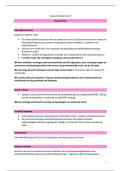
Chapter 28: Mergers & Acquisitions
28.1 Background and Historical Trends
● Merger waves → peaks of heavy activity followed by quiet troughs of few transactions in
the takeover market.
● Merger activity is greater during economic expansions and during bull markets.
○ Technological advancements motivate managers to restructure assets through
mergers and acquisitions.
● Types of mergers
○ Horizontal merger
■ Target and acquirer are in the same industry
○ Vertical merger
■ Target’s industry buys from or sells to the acquirer’s industry
○ Conglomerate merger
■ Target and acquirer operate in unrelated industries
28.2 Market Reaction to Takeover
● A bidder is unlikely to acquire a target company for less than its current market value.
○ Most acquirers pay a premium to the current market value
● Acquisition premium → paid by an acquirer in a takeover and it is the percentage
difference between the acquisition price and the pre-merger price of a target firm
28.3 Reasons to Acquire
● Large synergies are by far the most common justification that bidders give for the
premium they pay for a target.
, Corporate Finance Pearon 5th Edition
○ Such synergies usually fall into two categories
1. Cost-reduction synergies are more common and easiest to achieve
because they generally translate into layoffs of overlapping employees
and elimination of redundant resources
2. Revenue-enhancement synergies are much harder to predict and achieve
● Economics of Scale and Scope
○ Economies of Scale
■ The savings of large company can enjoy from producing goods in high
volume, that is not available to a small company
○ Economies of Scope
■ Savings large companies can realize that come from combining the
marketing and distribution of different types of related products
● Vertical integration
○ Refers to the merger of two companies in the same industry that make products
required at different stages of the production cycle
○ A major benefit is coordination.
● Expertise
○ Firms often need expertise in particular areas to compete more effectively.
● Monopoly Gains
○ It is often argued that merging with or acquiring a major rival enables a firm to
substantially reduce competition within the industry thereby increasing profits.
■ Most countries have antitrust laws that limit such activity
○ While all companies in the industry benefit when competition is reduced, only the
merging company pays the associated costs
● Efficiency Gains
○ Another justification acquirers cite for paying a premium for a target is efficiency
gains, which are often achieved through the elimination of duplication.
● Tax Savings from Operating Losses
Chapter 28: Mergers & Acquisitions
28.1 Background and Historical Trends
● Merger waves → peaks of heavy activity followed by quiet troughs of few transactions in
the takeover market.
● Merger activity is greater during economic expansions and during bull markets.
○ Technological advancements motivate managers to restructure assets through
mergers and acquisitions.
● Types of mergers
○ Horizontal merger
■ Target and acquirer are in the same industry
○ Vertical merger
■ Target’s industry buys from or sells to the acquirer’s industry
○ Conglomerate merger
■ Target and acquirer operate in unrelated industries
28.2 Market Reaction to Takeover
● A bidder is unlikely to acquire a target company for less than its current market value.
○ Most acquirers pay a premium to the current market value
● Acquisition premium → paid by an acquirer in a takeover and it is the percentage
difference between the acquisition price and the pre-merger price of a target firm
28.3 Reasons to Acquire
● Large synergies are by far the most common justification that bidders give for the
premium they pay for a target.
, Corporate Finance Pearon 5th Edition
○ Such synergies usually fall into two categories
1. Cost-reduction synergies are more common and easiest to achieve
because they generally translate into layoffs of overlapping employees
and elimination of redundant resources
2. Revenue-enhancement synergies are much harder to predict and achieve
● Economics of Scale and Scope
○ Economies of Scale
■ The savings of large company can enjoy from producing goods in high
volume, that is not available to a small company
○ Economies of Scope
■ Savings large companies can realize that come from combining the
marketing and distribution of different types of related products
● Vertical integration
○ Refers to the merger of two companies in the same industry that make products
required at different stages of the production cycle
○ A major benefit is coordination.
● Expertise
○ Firms often need expertise in particular areas to compete more effectively.
● Monopoly Gains
○ It is often argued that merging with or acquiring a major rival enables a firm to
substantially reduce competition within the industry thereby increasing profits.
■ Most countries have antitrust laws that limit such activity
○ While all companies in the industry benefit when competition is reduced, only the
merging company pays the associated costs
● Efficiency Gains
○ Another justification acquirers cite for paying a premium for a target is efficiency
gains, which are often achieved through the elimination of duplication.
● Tax Savings from Operating Losses