Definitions ofabnormality
Definition 1 -
Statistical
infrequency
Defining abnormality
in terms of statistics
The most obvious way define anything
to as 'normal' or 'abnormal is in terms of the number
oftimes
it
is observed.
Statistics is about numbers
analysing
Behaviour abnormal
that
is
rarely seen as
Any relatively usual, behaviour be 'normal'
or
often seen, can
thought
ofa n
Any behaviour is 'abnormal', ie: statistical
that different, or rare, is a
infrequency
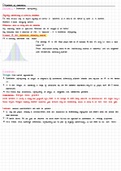
Example:10 and intellectual disability disorder
19 is distrubled like below:
normally
The average 10is 100. Most have 10between 85 and 115, 2%have
people an
only a score
below 70.
Those 'adnormal'
individuals scoring below 70 are statistically unusual or and are
diagnosed
with
intellectual disorder.
disability
Evaluation:
Strength:real-world application
P-Statistical because 18i n
infrequency is
useful in
diagnosis, e.g.intervectual disability disorder requires
this an the bottom
21.
E. It depression, only 30+ c:s evere
is also
helpful in
assessing a
range ofconditions eg:the BDI assesses 5%
ofpeople score
depress won)
M. this means that statistical
infrequency is
useful in
diagnostic and assessment
processes.
Counterpoint:Benefits versus
problems
When someone is
using a
happy and
julgued life, there is no
benefitto them being labelled as abnormal, and this
might carry a
Social
stigma. Therefore labelling someone abnormal
justbecause they are statistically usual is likely to
do more harm than
good.
Limitationat usual characteristics can also be positive
P-Ifvery few people display a characteristic, then the behaviour
statistically infrequent
is but
doesn't mean we would call
them abnormal.
E-10 needing
scores above 130 are
justas unusual as those below to,but
not
regarded as underserable or treatment.
M. This statistical its
means that,
although infrequency can be
partofdegining abnormality, it
c an never be sole basis.
Definition 1 -
Statistical
infrequency
Defining abnormality
in terms of statistics
The most obvious way define anything
to as 'normal' or 'abnormal is in terms of the number
oftimes
it
is observed.
Statistics is about numbers
analysing
Behaviour abnormal
that
is
rarely seen as
Any relatively usual, behaviour be 'normal'
or
often seen, can
thought
ofa n
Any behaviour is 'abnormal', ie: statistical
that different, or rare, is a
infrequency
Example:10 and intellectual disability disorder
19 is distrubled like below:
normally
The average 10is 100. Most have 10between 85 and 115, 2%have
people an
only a score
below 70.
Those 'adnormal'
individuals scoring below 70 are statistically unusual or and are
diagnosed
with
intellectual disorder.
disability
Evaluation:
Strength:real-world application
P-Statistical because 18i n
infrequency is
useful in
diagnosis, e.g.intervectual disability disorder requires
this an the bottom
21.
E. It depression, only 30+ c:s evere
is also
helpful in
assessing a
range ofconditions eg:the BDI assesses 5%
ofpeople score
depress won)
M. this means that statistical
infrequency is
useful in
diagnostic and assessment
processes.
Counterpoint:Benefits versus
problems
When someone is
using a
happy and
julgued life, there is no
benefitto them being labelled as abnormal, and this
might carry a
Social
stigma. Therefore labelling someone abnormal
justbecause they are statistically usual is likely to
do more harm than
good.
Limitationat usual characteristics can also be positive
P-Ifvery few people display a characteristic, then the behaviour
statistically infrequent
is but
doesn't mean we would call
them abnormal.
E-10 needing
scores above 130 are
justas unusual as those below to,but
not
regarded as underserable or treatment.
M. This statistical its
means that,
although infrequency can be
partofdegining abnormality, it
c an never be sole basis.