Content
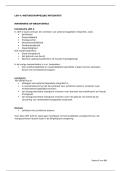
Week 1………………………………………………………………………………………...2
Arango et al. (2018): Preventive strategies for mental health…………………………………2
McDaid et al. (2019): The economic case for the prevention of mental illness……………….4
Muñoz et al. (2010): Prevention of major depression…………………………………………..5
Cuijpers et al. (2021): Psychological interventions to prevent the onset of depressive
disorders ……………………………………………………………………………………….8
Cuijpers (2021): Indirect prevention and treatment of depression……………………………8
Stockings et al. (2016): Preventing depression and anxiety in young people…………………8
Toth et al. (2013): Relational interventions for child maltreatment………………………….10
Week 2……………………………………………………………………………………….12
Krabbendam et al. (2021): Understanding urbanicity………………………………………12
Moser & Uzzell (2003): Environmental psychology…………………………………………14
Markevych et al. (2017): Exploring pathways linking greenspace to health………………….16
Platt & Niederkrotenthaler (2020): Suicide prevention programs…………………………….17
O’Connor & Kirtley (2018): The integrated motivational volitional model of suicidal
behaviour …………………………………………………….………………………………21
Van der Gaag et al. (2019): CBT in the prevention of psychosis and other severe mental
disorders in patients with an at risk mental state………………………………………………23
Ising et al. (2016): Development of a stage-dependent prognostic model to predict psychosis
in ultra-high-risk patients seeking treatment for co-morbid psychiatric disorders……………24
Yung et al. (2016): Mapping the onset of psychosis…………………………………………..25
Week 3……………………………………………………………………………………….25
Solmi et al. (2021): Risk and protective factors for alcohol and tobacco related disorders……25
Posser et al. (2018): A meta-analysis of effectiveness of E-interventions to reduce alcohol
consumption in college and university students………………………………………………27
Sander et al. (2020): Help for trauma from the app stores?........................................................27
Tortella-Feliu et al. (2019): Risk factors for posttraumatic stress disorder……………………28
1
, Week 1
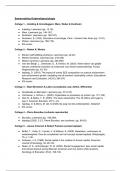
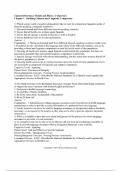
Arango et al. (2018): Preventive strategies for mental health
The cumulative effect of risk factors with small effect sizes progressively increases one’s
vulnerability to mental health disorders during their lifetime. Knowledge about this process
helps to develop different levels and stages of tailored interventions to lessen risk factors or
increase protective factors and resilience. These preventive interventions may reduce the
incidence, prevalence, and recurrence of mental health disorders by modifying risk exposure
and strengthening coping mechanisms.
Primary preventive interventions are intended to target risk factors and promote mental
health in individuals without a clinically diagnosable mental disorder. Three types of primary
preventive interventions exist:
• Universal prevention. These interventions target a whole population regardless of
individual risk (effectiveness unclear).
o Advantages: low stigma (everyone gets the same intervention) and the
possibility to conduct prevention in specific settings such as school and
integrate it into existing broader programmes.
o Disadvantages: difficulty to show effectiveness in trials and overall small
effects.
• Selective prevention. These interventions target a subpopulation known to be at
increased risk for mental disorders (promising, but it is possible that it just indirectly
‘treats’ people with existing problems).
• Indicated prevention. These interventions target individuals who are already
showing subthreshold clinical manifestations (effective, but the uptake is too low to
make an impact).
Secondary preventive interventions are targeted at individuals who meet diagnostic
criteria in the early stages of mental illness. Finally, tertiary preventive interventions are
targeted at preventing relapse in individuals with an established mental illness.
People with mental health disorders or disabilities as well as people who have already been
exposed to risk factors are often less able to defend themselves. Therefore, once an individual
becomes vulnerable, they are more likely to increase further risk factors. This leads to a
vicious cycle called the facilitation effect. The concept of a facilitation effect is supported by
epigenetic changes found in the serotonin transporter genes and the glucocorticoid receptor
genes of victims of childhood trauma. These changes, in turn, lead to neuroendocrine
alterations and changes in brain structure and function.
Resilience is a multidimensional construct. It is the ability to adapt well after experiencing
adversity, trauma, or other stressors. Many effective interventions promote resilience. The
effect of multiple risk factors can be reduced by promoting resilience.
2
Week 1………………………………………………………………………………………...2
Arango et al. (2018): Preventive strategies for mental health…………………………………2
McDaid et al. (2019): The economic case for the prevention of mental illness……………….4
Muñoz et al. (2010): Prevention of major depression…………………………………………..5
Cuijpers et al. (2021): Psychological interventions to prevent the onset of depressive
disorders ……………………………………………………………………………………….8
Cuijpers (2021): Indirect prevention and treatment of depression……………………………8
Stockings et al. (2016): Preventing depression and anxiety in young people…………………8
Toth et al. (2013): Relational interventions for child maltreatment………………………….10
Week 2……………………………………………………………………………………….12
Krabbendam et al. (2021): Understanding urbanicity………………………………………12
Moser & Uzzell (2003): Environmental psychology…………………………………………14
Markevych et al. (2017): Exploring pathways linking greenspace to health………………….16
Platt & Niederkrotenthaler (2020): Suicide prevention programs…………………………….17
O’Connor & Kirtley (2018): The integrated motivational volitional model of suicidal
behaviour …………………………………………………….………………………………21
Van der Gaag et al. (2019): CBT in the prevention of psychosis and other severe mental
disorders in patients with an at risk mental state………………………………………………23
Ising et al. (2016): Development of a stage-dependent prognostic model to predict psychosis
in ultra-high-risk patients seeking treatment for co-morbid psychiatric disorders……………24
Yung et al. (2016): Mapping the onset of psychosis…………………………………………..25
Week 3……………………………………………………………………………………….25
Solmi et al. (2021): Risk and protective factors for alcohol and tobacco related disorders……25
Posser et al. (2018): A meta-analysis of effectiveness of E-interventions to reduce alcohol
consumption in college and university students………………………………………………27
Sander et al. (2020): Help for trauma from the app stores?........................................................27
Tortella-Feliu et al. (2019): Risk factors for posttraumatic stress disorder……………………28
1
, Week 1
Arango et al. (2018): Preventive strategies for mental health
The cumulative effect of risk factors with small effect sizes progressively increases one’s
vulnerability to mental health disorders during their lifetime. Knowledge about this process
helps to develop different levels and stages of tailored interventions to lessen risk factors or
increase protective factors and resilience. These preventive interventions may reduce the
incidence, prevalence, and recurrence of mental health disorders by modifying risk exposure
and strengthening coping mechanisms.
Primary preventive interventions are intended to target risk factors and promote mental
health in individuals without a clinically diagnosable mental disorder. Three types of primary
preventive interventions exist:
• Universal prevention. These interventions target a whole population regardless of
individual risk (effectiveness unclear).
o Advantages: low stigma (everyone gets the same intervention) and the
possibility to conduct prevention in specific settings such as school and
integrate it into existing broader programmes.
o Disadvantages: difficulty to show effectiveness in trials and overall small
effects.
• Selective prevention. These interventions target a subpopulation known to be at
increased risk for mental disorders (promising, but it is possible that it just indirectly
‘treats’ people with existing problems).
• Indicated prevention. These interventions target individuals who are already
showing subthreshold clinical manifestations (effective, but the uptake is too low to
make an impact).
Secondary preventive interventions are targeted at individuals who meet diagnostic
criteria in the early stages of mental illness. Finally, tertiary preventive interventions are
targeted at preventing relapse in individuals with an established mental illness.
People with mental health disorders or disabilities as well as people who have already been
exposed to risk factors are often less able to defend themselves. Therefore, once an individual
becomes vulnerable, they are more likely to increase further risk factors. This leads to a
vicious cycle called the facilitation effect. The concept of a facilitation effect is supported by
epigenetic changes found in the serotonin transporter genes and the glucocorticoid receptor
genes of victims of childhood trauma. These changes, in turn, lead to neuroendocrine
alterations and changes in brain structure and function.
Resilience is a multidimensional construct. It is the ability to adapt well after experiencing
adversity, trauma, or other stressors. Many effective interventions promote resilience. The
effect of multiple risk factors can be reduced by promoting resilience.
2