Democracy and Participation Notes
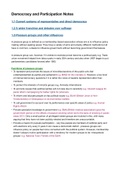
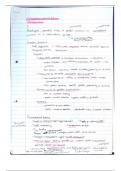
1.1 Current systems of representative and direct democracy
1.2 A wider franchise and debates over su rage
1.3 Pressure groups and other in uences
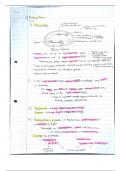
A pressure group is de ned as a membership-based association whose aim is to in uence policy
making without seeking power. They have a variety of aims and employ di erent methods but all
have in common, a desire to in uence government without becoming government themselves.
A pressure group can, however, if it wishes to exercise power become a political party e.g. Trade
union movement helped form labour party in early 20th century and also when UKIP began to put
parliamentary candidates forward after 1993.
Functions of pressure groups
• To represent and promote the issues of minorities/sections of the public who feel
underrepresented by parties and parliament e.g. MIND for the mentally ill. However, a low level
of internal democracy questions if it is rather the views of leaders represented rather than
members.
• To protect the interests of minority groups e.g. Amnesty international
• To promote causes that political parties will not raise due to sensitivity e.g. Howard League for
penal reform campaigning for better rights for prisoners.
• To inform and educate people on key political issues e.g. BUAV (British Union of Anti-
Vivisectionists) or Greenpeace on environmental matters
• To call government to account over its performance over speci c areas of policy e.g. Human
Rights Watch
• Provide specialist knowledge to government e.g. BMA (British medical association) gave the
government advice on the e ects of passive smoking which led to the bans of smoking in public
areas 2013. Only a small portion of privileged insider groups are involved in this, with many
arguing that they have not been publicly elected and therefore are unaccountable.
• Provide a means for popular participation - very few people are members of political party and
with elections only every 5 years it can cause a democratic de cit - pressure groups can
in uence policy so people feel more connected with the political system. However, membership
doesn’t always involve participation with a tendency for modern groups to be ‘chequebook
groups’ e.g. National Trust, Friends of the Earth
fl fi ff fl fl ff fi ff fl
,Classifying pressure groups
Interest/sectional groups:
- They represent a speci c section of society and are concerned to protect or advance the
shared attitudes and values among it members
- They are self-interested groups who seek to enhance their own interests of the members they
represent
- Some sectional groups are hybrid and believe that in serving the interests of their own
members, the wider society will bene t.
- e.g. National union of Teachers (NUT), British Medical Association (BMA) argue that in their own
interests, are the interests of many - better treated doctors and teachers = better healthcare
and education.
Examples of sectional groups:
- Age UK
- BMA
- Muslim council of Britain
- Taxpayers’ alliance
- Confederation of British industry (CBI)
- The MS society
Promotional/cause groups:
Based on shared attitudes or values rather than the common interests of members. They are
casual groups that seek to promote a particular cause into government action or parliamentary
legislation.
This can be broad (HR) or narrow (local issues - protection of green spaces, supermarket opening
opposition etc)
Examples of promotional groups:
- Greenpeace
- Friends of the earth
- Liberty
- Unlock democracy
- PETA
- Campaign for Nuclear. Disarmament
Promotional/cause groups Interest/sectional groups
They are altruistic in that they serve the whole They are large (not always) self-interested in the
community, not just their members and supporters. sense that they serve the interests of their members
They tend to concentrate on mobilising public Although they seek public support, they tend to
opinion and putting pressure on government in that seek direct links with decision makers (insider
way. status)
fi fi
, Promotional/cause groups Interest/sectional groups
They often use direct action in the form of public Their methods tend to be more ‘responsible’ and
demonstrations, internet campaigns and sometimes they often take the parliamentary route to in uence.
civil disobedience.
They seek widespread support They usually have formal membership.
Similarities
- some pressure groups have both sectional and promotional characteristics as all PG’s have
sectional concerns based on their professional sta and the property/capital they own.
- A single pressure group may include members with both sectional and promotional motivations
e.g. Campaign against 3rd runway at Heathrow - protesters were both concerned with sectional
issues such as the demolition of homes and schools, and promotional concerns such as
climate change and economic stability.
- Some pressure groups aim to mask sectional motivations by adopting the language and
arguments of a promotional group as moral and altruistic concerns carry greater weight with
public opinion e.g. BMA advancing the rights of doctors but the spokesperson talking in terms
of public health, patient welfare and the NHS.
Insiders and outsiders
This distinction tells us a lot about methods and status.
Insider groups: have close links with decision-makers at high levels. The main way they operate is
through the following;
- They seek to become involved in early stages of policy and law making. This means they are
often consulted by decision-makers and sometimes can o er expert advice and information.
- Some such groups employ professional lobbyists whose job it is to gain access to decision-
makers and make high-quality presentations of their case.
- Government at di erent levels uses special committees to make decisions about policy, some
groups are represented in bodies so have a very privileged position e.g. The national farmers
union (NFU) and the institute of directors (IOD) have advised government in these committees,
as have trade unions and professional bodies representing groups of workers and members of
the professions
- Sectional groups may be called to testify before parliamentary committees, both select and
legislative. Although they attend mainly to give advice and information, it is also an opportunity
for long term in uence.
Outsider groups: those who do not have the specialist position within governing circles.
This may be because government do not wish to appear close to these groups, or because a
group wants to maintain its independence from gov e.g. More radicals such as Animal Liberation
Front who have used illegal and violent protests to raise awareness of their aims. Typical
characteristics include;
- Usually promotional groups, sectional groups with identi able membership and support groups
are a useful ally in policy-making but promotional groups have less certain legitimacy.
fl ff fl ff fi ff
1.1 Current systems of representative and direct democracy
1.2 A wider franchise and debates over su rage
1.3 Pressure groups and other in uences
A pressure group is de ned as a membership-based association whose aim is to in uence policy
making without seeking power. They have a variety of aims and employ di erent methods but all
have in common, a desire to in uence government without becoming government themselves.
A pressure group can, however, if it wishes to exercise power become a political party e.g. Trade
union movement helped form labour party in early 20th century and also when UKIP began to put
parliamentary candidates forward after 1993.
Functions of pressure groups
• To represent and promote the issues of minorities/sections of the public who feel
underrepresented by parties and parliament e.g. MIND for the mentally ill. However, a low level
of internal democracy questions if it is rather the views of leaders represented rather than
members.
• To protect the interests of minority groups e.g. Amnesty international
• To promote causes that political parties will not raise due to sensitivity e.g. Howard League for
penal reform campaigning for better rights for prisoners.
• To inform and educate people on key political issues e.g. BUAV (British Union of Anti-
Vivisectionists) or Greenpeace on environmental matters
• To call government to account over its performance over speci c areas of policy e.g. Human
Rights Watch
• Provide specialist knowledge to government e.g. BMA (British medical association) gave the
government advice on the e ects of passive smoking which led to the bans of smoking in public
areas 2013. Only a small portion of privileged insider groups are involved in this, with many
arguing that they have not been publicly elected and therefore are unaccountable.
• Provide a means for popular participation - very few people are members of political party and
with elections only every 5 years it can cause a democratic de cit - pressure groups can
in uence policy so people feel more connected with the political system. However, membership
doesn’t always involve participation with a tendency for modern groups to be ‘chequebook
groups’ e.g. National Trust, Friends of the Earth
fl fi ff fl fl ff fi ff fl
,Classifying pressure groups
Interest/sectional groups:
- They represent a speci c section of society and are concerned to protect or advance the
shared attitudes and values among it members
- They are self-interested groups who seek to enhance their own interests of the members they
represent
- Some sectional groups are hybrid and believe that in serving the interests of their own
members, the wider society will bene t.
- e.g. National union of Teachers (NUT), British Medical Association (BMA) argue that in their own
interests, are the interests of many - better treated doctors and teachers = better healthcare
and education.
Examples of sectional groups:
- Age UK
- BMA
- Muslim council of Britain
- Taxpayers’ alliance
- Confederation of British industry (CBI)
- The MS society
Promotional/cause groups:
Based on shared attitudes or values rather than the common interests of members. They are
casual groups that seek to promote a particular cause into government action or parliamentary
legislation.
This can be broad (HR) or narrow (local issues - protection of green spaces, supermarket opening
opposition etc)
Examples of promotional groups:
- Greenpeace
- Friends of the earth
- Liberty
- Unlock democracy
- PETA
- Campaign for Nuclear. Disarmament
Promotional/cause groups Interest/sectional groups
They are altruistic in that they serve the whole They are large (not always) self-interested in the
community, not just their members and supporters. sense that they serve the interests of their members
They tend to concentrate on mobilising public Although they seek public support, they tend to
opinion and putting pressure on government in that seek direct links with decision makers (insider
way. status)
fi fi
, Promotional/cause groups Interest/sectional groups
They often use direct action in the form of public Their methods tend to be more ‘responsible’ and
demonstrations, internet campaigns and sometimes they often take the parliamentary route to in uence.
civil disobedience.
They seek widespread support They usually have formal membership.
Similarities
- some pressure groups have both sectional and promotional characteristics as all PG’s have
sectional concerns based on their professional sta and the property/capital they own.
- A single pressure group may include members with both sectional and promotional motivations
e.g. Campaign against 3rd runway at Heathrow - protesters were both concerned with sectional
issues such as the demolition of homes and schools, and promotional concerns such as
climate change and economic stability.
- Some pressure groups aim to mask sectional motivations by adopting the language and
arguments of a promotional group as moral and altruistic concerns carry greater weight with
public opinion e.g. BMA advancing the rights of doctors but the spokesperson talking in terms
of public health, patient welfare and the NHS.
Insiders and outsiders
This distinction tells us a lot about methods and status.
Insider groups: have close links with decision-makers at high levels. The main way they operate is
through the following;
- They seek to become involved in early stages of policy and law making. This means they are
often consulted by decision-makers and sometimes can o er expert advice and information.
- Some such groups employ professional lobbyists whose job it is to gain access to decision-
makers and make high-quality presentations of their case.
- Government at di erent levels uses special committees to make decisions about policy, some
groups are represented in bodies so have a very privileged position e.g. The national farmers
union (NFU) and the institute of directors (IOD) have advised government in these committees,
as have trade unions and professional bodies representing groups of workers and members of
the professions
- Sectional groups may be called to testify before parliamentary committees, both select and
legislative. Although they attend mainly to give advice and information, it is also an opportunity
for long term in uence.
Outsider groups: those who do not have the specialist position within governing circles.
This may be because government do not wish to appear close to these groups, or because a
group wants to maintain its independence from gov e.g. More radicals such as Animal Liberation
Front who have used illegal and violent protests to raise awareness of their aims. Typical
characteristics include;
- Usually promotional groups, sectional groups with identi able membership and support groups
are a useful ally in policy-making but promotional groups have less certain legitimacy.
fl ff fl ff fi ff