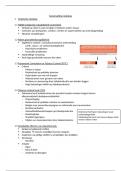
Electoral Systems Notes
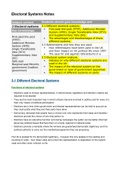
Subject content Students should gain knowledge and
understanding of: systems.
3.1 Different electoral
3 Electoral systems
• First-past-the-post (FPTP), Additional Member
Key terminology
System (AMS), Single Transferable Vote (STV),
and Supplementary Vote (SV).
First-past-the-post
• The advantages and disadvantages of these
(FPTP)
different systems.
Additional Member
•
3.2 Comparisonand
Referendums of first-past-the-post
how they are used.(FPTP) to a
System (AMS)
Single Transferable • How referendums have been used in the UK
Vote (STV) and their impact on UK political life since 1997.
Supplementary Vote • The case for and against referendums in a
(SV) 3.3 representative
Electoral democracy.
system analysis.
Safe seat • Debates on why different electoral systems are
Marginal seat Minority used in the UK.
government Coalition • The impact of the electoral system on the
government government or type of government appointed.
• The impact of different systems on party
representation and of electoral systems on
3.1 Di erent Electoral Systems
Functions of electoral systems
- Elections used to choose representatives. In democracies, legislators and decision makers are
required to be elected
- They are the most important way in which citizens become involved in politics and for many it is
their only means of political participation
- Elections are a time when government and elected representatives can be held to account as
they must justify what they and their party have done
- Democracy demands that people have a choice over who represents their ideas and interests -
elections provide the choice of who that person is.
- Elections have an educative function and during campaigns the public can be better informed
about key political issues that face them on a local, regional or national scale.
- Elections provide a mandate where the winners are guaranteed democratic legitimacy and the
political authority to carry out the manifesto/programme they are proposing
The UK is praised for it’s democratic legitimacy - however this only applies to the casting and
counting of votes - how these votes are turned into representation is dependent on the system
used and often when criticism is rife.
ff
, Positive aspects of UK elections
1. Freedom of information and of the media
2. Virtually all adults are permitted to vote
3. Any citizen can register to become an MP - the £500 deposit means many can a ord it
4. Elections are held on a regular basis by law
5. The counting of votes is carefully and thoroughly regulated
6. The constituency system ensures clear representation of citizens
7. The conduct of elections is safeguarded by the electoral commission which is independent of
government
8. There is little corruption and malpractice is punishable by law
9. The secrecy of the ballot is a key principle in UK elections, though not guaranteed
Criticisms of the doctrine of mandate
Mandate = the authority to carry out a policy by the candidate/party who wins the election
Doctrine of mandate = MP under a party banner is subscribed to their policies and ideals and
expected to have a consensus on possessing them, this undermines the local politics of
mandates by MPs.
- People don't vote rationally: people tend to vote for opposition parities just because they are
disenchanted by the failings of the current government
- Never complete policy agreement: a vote for a party doesn’t indicate agreement with all their
policies.
- There is no way of forcing government to carry out its policies in its manifesto: e.g. Labour went
to iraq although promising not to, Labour pledged to change the electoral system but did not.
- It is impossible for parties to foresee emergency events: therefore they may need to shift to
di erent policies in later years bringing the extreme need for pragmatism.
Types of electoral systems
• FPTP - The person with the highest number of votes, they need one vote more than other
contenders so it doesn’t require a majority.
• AMS - A hybrid electoral system that uses a mixture of FPTP and Party List
• STV - A system that allows voters to rank their preferences in numerical order rather than simply
having one voter choice. To obtain a seat, a candidate must obtain a quota, after votes are cast,
those with the fewest are eliminated and their votes transferred. Candidates with excess votes
above their quota also have their votes transferred.
• SV - Majoritarian system where the voter casts 2 votes, if one candidate obtains over 50% vote
the contest is complete, but if no candidate obtains this level, all but the top 2 candidates are
removed and the supplementary voices redistributed - whoever from the remaining two gets the
most votes, wins the seat.
Plurality - FPTP - Used in general election and local council elections in England and Wales
Majoritarian - SV - Used in London mayor elections, other metro mayors and by-elections for STV
ff
ff
Subject content Students should gain knowledge and
understanding of: systems.
3.1 Different electoral
3 Electoral systems
• First-past-the-post (FPTP), Additional Member
Key terminology
System (AMS), Single Transferable Vote (STV),
and Supplementary Vote (SV).
First-past-the-post
• The advantages and disadvantages of these
(FPTP)
different systems.
Additional Member
•
3.2 Comparisonand
Referendums of first-past-the-post
how they are used.(FPTP) to a
System (AMS)
Single Transferable • How referendums have been used in the UK
Vote (STV) and their impact on UK political life since 1997.
Supplementary Vote • The case for and against referendums in a
(SV) 3.3 representative
Electoral democracy.
system analysis.
Safe seat • Debates on why different electoral systems are
Marginal seat Minority used in the UK.
government Coalition • The impact of the electoral system on the
government government or type of government appointed.
• The impact of different systems on party
representation and of electoral systems on
3.1 Di erent Electoral Systems
Functions of electoral systems
- Elections used to choose representatives. In democracies, legislators and decision makers are
required to be elected
- They are the most important way in which citizens become involved in politics and for many it is
their only means of political participation
- Elections are a time when government and elected representatives can be held to account as
they must justify what they and their party have done
- Democracy demands that people have a choice over who represents their ideas and interests -
elections provide the choice of who that person is.
- Elections have an educative function and during campaigns the public can be better informed
about key political issues that face them on a local, regional or national scale.
- Elections provide a mandate where the winners are guaranteed democratic legitimacy and the
political authority to carry out the manifesto/programme they are proposing
The UK is praised for it’s democratic legitimacy - however this only applies to the casting and
counting of votes - how these votes are turned into representation is dependent on the system
used and often when criticism is rife.
ff
, Positive aspects of UK elections
1. Freedom of information and of the media
2. Virtually all adults are permitted to vote
3. Any citizen can register to become an MP - the £500 deposit means many can a ord it
4. Elections are held on a regular basis by law
5. The counting of votes is carefully and thoroughly regulated
6. The constituency system ensures clear representation of citizens
7. The conduct of elections is safeguarded by the electoral commission which is independent of
government
8. There is little corruption and malpractice is punishable by law
9. The secrecy of the ballot is a key principle in UK elections, though not guaranteed
Criticisms of the doctrine of mandate
Mandate = the authority to carry out a policy by the candidate/party who wins the election
Doctrine of mandate = MP under a party banner is subscribed to their policies and ideals and
expected to have a consensus on possessing them, this undermines the local politics of
mandates by MPs.
- People don't vote rationally: people tend to vote for opposition parities just because they are
disenchanted by the failings of the current government
- Never complete policy agreement: a vote for a party doesn’t indicate agreement with all their
policies.
- There is no way of forcing government to carry out its policies in its manifesto: e.g. Labour went
to iraq although promising not to, Labour pledged to change the electoral system but did not.
- It is impossible for parties to foresee emergency events: therefore they may need to shift to
di erent policies in later years bringing the extreme need for pragmatism.
Types of electoral systems
• FPTP - The person with the highest number of votes, they need one vote more than other
contenders so it doesn’t require a majority.
• AMS - A hybrid electoral system that uses a mixture of FPTP and Party List
• STV - A system that allows voters to rank their preferences in numerical order rather than simply
having one voter choice. To obtain a seat, a candidate must obtain a quota, after votes are cast,
those with the fewest are eliminated and their votes transferred. Candidates with excess votes
above their quota also have their votes transferred.
• SV - Majoritarian system where the voter casts 2 votes, if one candidate obtains over 50% vote
the contest is complete, but if no candidate obtains this level, all but the top 2 candidates are
removed and the supplementary voices redistributed - whoever from the remaining two gets the
most votes, wins the seat.
Plurality - FPTP - Used in general election and local council elections in England and Wales
Majoritarian - SV - Used in London mayor elections, other metro mayors and by-elections for STV
ff
ff