Philosophy of Science Summary
Contents
Chapter 8 The Challenge from Sociology of Science ............................................................................... 2
Chapter 9 Feminism and Science Studies................................................................................................ 4
Chapter 10 Naturalistic Philosophy in Theory and Practice .................................................................... 6
Chapter 11 Naturalism and the Social Structure of Science ................................................................... 8
Chapter 12 Scientific Realism ................................................................................................................ 10
Chapter 13 Explanation ......................................................................................................................... 12
Chapter 14 Bayesianism and Modern Theories of Evidence................................................................. 14
Chapter 15 Empiricism, Naturalism, and Scientific Realism? ................................................................ 16
Glossary ................................................................................................................................................. 18
By Paul Porteners
Back to Contents
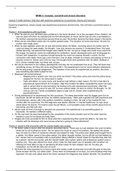
, Chapter 8 The Challenge from Sociology of Science
The founder of sociology of science, and the central figure for many years, was Robert Merton.
Merton isolated what he called the “norms” of science: a set of basic values that govern scientific
communities. These norms are
Universalism: idea that the personal attributes and social background of a person are
irrelevant to the scientific value of the person’s ideas
Communism: common ownership of scientific ideas and results
Disinterestedness: scientists are supposed to act for the benefit of a common scientific
enterprise, rather than personal gain. (made questionable by Merton’s later ideas)
Organized skepticism: community-wide pattern of challenging and testing ideas instead of
taking them on trust. (Kuhn: balance between skepticism and trust, between open-
mindedness and dogmatism)
Merton claimed that the basic currency for scientific reward is recognition, especially recognition for
being the first person to come up with an idea.
Encourage original thinking
Desire for reward results in “deviant” behaviors
o Fraud is rare largely because of a rigorous internal policing by scientists
o Plagiarism does happen
o The most usual outlet is libel and slander of competitors: accusation of plagiarism
Mania to publish. Recognition even in a tiny community of colleagues can be a significant
source of motivation.
Merton’s sociology is often seen as the “old” style of sociology of science, a style that was overruled
nearly thirty years ago.
**********************************************************************************
The older work wanted to describe the social structure and social placement of science as a whole
but did not try to explain particular scientific beliefs in sociological terms. The newer approach has
tried to use sociological methods to explain why scientists believe what they do, why they behave as
they do, and how scientific thinking and practice change over time.
The most famous project in this new form of sociology of science is the strong program in the
sociology of scientific knowledge. Symmetry principle: scientific beliefs are products of the same
general kinds of forces as other kinds of belief. Scientists are people who work in an unusual kind of
local community. But it is still a community in which beliefs are established and defended via local
norms that are human creations, maintained by social interaction. The norms themselves vary
between the tribal community and the community of scientists, but the same general principles
apply in both cases. Most importantly, we should not give the Real World a special role in the
explanation of scientific belief that it does not have in the explanation of other beliefs that pass local
community norms. The strong program is also often associated with relativism (there is no single set
of standards entitled to govern the justification of beliefs). A famous problem for relativists is the
application of relativism to itself. The problem does have various solutions, but it can definitely lead
to tangles. Unfortunately, that is what happened in sociology of science. The application of the field’s
principles to itself led to interminable discussions that have weighed down the field.
**********************************************************************************
Just as the strong program elbowed aside earlier social accounts of science in the 1970s, it was to be
partially elbowed aside in turn, in the 1980s.
Back to Contents
Contents
Chapter 8 The Challenge from Sociology of Science ............................................................................... 2
Chapter 9 Feminism and Science Studies................................................................................................ 4
Chapter 10 Naturalistic Philosophy in Theory and Practice .................................................................... 6
Chapter 11 Naturalism and the Social Structure of Science ................................................................... 8
Chapter 12 Scientific Realism ................................................................................................................ 10
Chapter 13 Explanation ......................................................................................................................... 12
Chapter 14 Bayesianism and Modern Theories of Evidence................................................................. 14
Chapter 15 Empiricism, Naturalism, and Scientific Realism? ................................................................ 16
Glossary ................................................................................................................................................. 18
By Paul Porteners
Back to Contents
, Chapter 8 The Challenge from Sociology of Science
The founder of sociology of science, and the central figure for many years, was Robert Merton.
Merton isolated what he called the “norms” of science: a set of basic values that govern scientific
communities. These norms are
Universalism: idea that the personal attributes and social background of a person are
irrelevant to the scientific value of the person’s ideas
Communism: common ownership of scientific ideas and results
Disinterestedness: scientists are supposed to act for the benefit of a common scientific
enterprise, rather than personal gain. (made questionable by Merton’s later ideas)
Organized skepticism: community-wide pattern of challenging and testing ideas instead of
taking them on trust. (Kuhn: balance between skepticism and trust, between open-
mindedness and dogmatism)
Merton claimed that the basic currency for scientific reward is recognition, especially recognition for
being the first person to come up with an idea.
Encourage original thinking
Desire for reward results in “deviant” behaviors
o Fraud is rare largely because of a rigorous internal policing by scientists
o Plagiarism does happen
o The most usual outlet is libel and slander of competitors: accusation of plagiarism
Mania to publish. Recognition even in a tiny community of colleagues can be a significant
source of motivation.
Merton’s sociology is often seen as the “old” style of sociology of science, a style that was overruled
nearly thirty years ago.
**********************************************************************************
The older work wanted to describe the social structure and social placement of science as a whole
but did not try to explain particular scientific beliefs in sociological terms. The newer approach has
tried to use sociological methods to explain why scientists believe what they do, why they behave as
they do, and how scientific thinking and practice change over time.
The most famous project in this new form of sociology of science is the strong program in the
sociology of scientific knowledge. Symmetry principle: scientific beliefs are products of the same
general kinds of forces as other kinds of belief. Scientists are people who work in an unusual kind of
local community. But it is still a community in which beliefs are established and defended via local
norms that are human creations, maintained by social interaction. The norms themselves vary
between the tribal community and the community of scientists, but the same general principles
apply in both cases. Most importantly, we should not give the Real World a special role in the
explanation of scientific belief that it does not have in the explanation of other beliefs that pass local
community norms. The strong program is also often associated with relativism (there is no single set
of standards entitled to govern the justification of beliefs). A famous problem for relativists is the
application of relativism to itself. The problem does have various solutions, but it can definitely lead
to tangles. Unfortunately, that is what happened in sociology of science. The application of the field’s
principles to itself led to interminable discussions that have weighed down the field.
**********************************************************************************
Just as the strong program elbowed aside earlier social accounts of science in the 1970s, it was to be
partially elbowed aside in turn, in the 1980s.
Back to Contents