100% satisfaction guarantee Immediately available after payment Both online and in PDF No strings attached 4.2 TrustPilot
logo-home
Exam (elaborations)

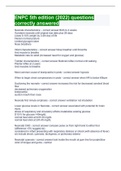
ENPC 5th edition (2022) questions correctly answered

Rating
-
Sold
-
Pages
4
Grade
A+
Uploaded on
21-12-2022
Written in
2022/2023

ENPC 5th edition (2022) questions correctly answeredNeonate characteristics: Birth to 4 weeks If preterm neonate until original due date plus 28 days Loses 5-10% weight by 3-4th day of life Flexion normal posture Limited glycogen store Nose breathers Infant characteristics: Nose breather until 6months And muscle to breathe Metabolic rate 2x adult (increased need for oxygen and glucose) Toddler characteristics: Babinski réflex normal until walking Plantar réflex at 2 years And muscles to breathe Most common cause of bradycardia in peds hypoxia When to begin chest compressions in peds when HR is below 60bpm Suctioning the neonate increases the risk for decreased cerebral blood flow decreased pulmonary oxygenation bradycardia suction mouth then nose Neonate first minute emphasis ventilation not intubation Lower glucose levels in Neonate associated with potential for brain injury stress of respiratory and circulatory efforts metabolize existing glucose D10 IV for glucose <40mg/dL normal heel stick at birth 30 mg/dL normal heel stick at 24h 45 mg/dL Neonatal CHD compare pulse ox from right hand to either foot (difference >3% suggest dx) considered in infant presenting with respiratory distress or shock (with absence of fever) s/s include shock, cyanosis, tachypnea, or pulmonary edema Neonatal cyanosis look inside the mouth at gum line for purple/blue color of tongue and gums - central look for hands and feet to change color - peripheral Respiratory Distress in peds patient characterized by increased respiratory rate increased heart rate skin color changes increased WOB (grunting, nasal flaring, head bobbing, accessory muscle use) wheezing diaphoresis abnormal upper airway (sounds such as stridor) change in mentation (irritable or agitated) Laryngotracheobronchitis (Croup) viral illness that account 90% peds stridor inflammation, exudates and edema of larynx l/d narrowing of upper airway tx with dexamethasone and racemic epi (nebulized epinephrine) tx with antipyretics for fever Pertussis (whooping cough) acute bacterial infection of the respiratory tract that is highly contagious characterized by spasmodic, hacking cough followed by whooping noise upon breath intake tx with erythromycin, azithromycin, clarithromycin or trimethoprim-sulfamethoxazole cystic fibrosis (CF) genetic condition r/t exocrine dysfunction result in thick mucous production persistent productive cough, hyperinflated lungs, diminished pulmonary function and increased susceptibility to ch. bacterial resp infections tx with abx, steroids for asthma-like s/s, brochodilator followed by nebulized hypertonic saline and dornase alfa Pneumothorax simple - when air enters pleural space (monitor) large - s/s hypotension, distended neck veins, pale and diaphoretic skin, decreased or absence BS on affected side, hyper-resonance to percussion (Chest tube) spontaneous - no known trauma or injury (most cases is ruptured bleb) Heart Failure in peds inadequate CO r/t ventricle unable to either fill with blood or eject blood can be result of sepsis, renal dx, inflammatory conditions, dysrythmias, muscular dystrophy, chemotherapy or blunt chest traumas tx by position of comfort, record weight daily, BB, avoid vasodilators and caution of diuretics Cardiomyopathy in peds left ventricular hypertrophy (thickened muscle wall) dilated cardiomyopathy (left ventricular enlarged and weakened) cause include coronary artery dx, HTN, obesity, drug tox and kawasaki dx tx by position of comfort, record weight daily, BB, avoid vasodilators and caution of diuretics Myocarditis inflammation of the heart muscle that has significant mortality and morbidity in peds viral, bacterial, toxic and autoimmune etiologies s/s include fever, malaise (general unwell) and myalgia (soreness/achiness in muscles); SHOB at rest and crackles on auscultation; dysrhytmias; HF; elevated enxymes; syncope Percarditis inflammation of pericardial sac of heart infectious (viral/bacterial) or dug (PCN, phenytoin), post cardiac surg, metabolic or immune mediated tx NSAIDS and possible pericardiocentesi

Show more Read less
Institution
Course


Whoops! We can’t load your doc right now. Try again or contact support.

Written for

Course

Document information

Uploaded on
December 21, 2022
Number of pages
4
Written in
2022/2023
Type
Exam (elaborations)
Contains
Questions & answers

Subjects

Content preview

ENPC 5th edition (2022) questions
correctly answered
Neonate characteristics: - correct answer Birth to 4 weeks
If preterm neonate until original due date plus 28 days
Loses 5-10% weight by 3-4th day of life
Flexion normal posture
Limited glycogen store
Nose breathers

Infant characteristics: - correct answer Nose breather until 6months
And muscle to breathe
Metabolic rate 2x adult (increased need for oxygen and glucose)

Toddler characteristics: - correct answer Babinski réflex normal until walking
Plantar réflex at 2 years
And muscles to breathe

Most common cause of bradycardia in peds - correct answer hypoxia

When to begin chest compressions in peds - correct answer when HR is below 60bpm

Suctioning the neonate - correct answer increases the risk for decreased cerebral blood
flow
decreased pulmonary oxygenation
bradycardia
suction mouth then nose

Neonate first minute emphasis - correct answer ventilation not intubation

Lower glucose levels in Neonate - correct answer associated with potential for brain
injury
stress of respiratory and circulatory efforts metabolize existing glucose
D10 IV for glucose <40mg/dL
normal heel stick at birth 30 mg/dL
normal heel stick at 24h 45 mg/dL

Neonatal CHD - correct answer compare pulse ox from right hand to either foot
(difference >3% suggest dx)
considered in infant presenting with respiratory distress or shock (with absence of fever)
s/s include shock, cyanosis, tachypnea, or pulmonary edema

Neonatal cyanosis - correct answer look inside the mouth at gum line for purple/blue
color of tongue and gums - central
$8.99
Get access to the full document:

100% satisfaction guarantee
Immediately available after payment
Both online and in PDF
No strings attached


Also available in package deal

Get to know the seller

Seller avatar
Reputation scores are based on the amount of documents a seller has sold for a fee and the reviews they have received for those documents. There are three levels: Bronze, Silver and Gold. The better the reputation, the more your can rely on the quality of the sellers work.
StuviaExamHub Havard School
Follow You need to be logged in order to follow users or courses
Sold
458
Member since
3 year
Number of followers
355
Documents
17014
Last sold
2 weeks ago
EXAM HUB (LATEST UPDATE)

QUALITY WORK OF ALL KIND OF QUIZ or EXAM WITH GUARANTEE OF AN A+ latest updates Im an expert on major courses especially; psychology,Nursing, Human resource Management &amp; Project writing. Assisting students with quality work is my first priority. I ensure scholarly standards in my documents . I assure a GOOD GRADE if you will use my work. Feel free to purchase n recommend others for 100% pass EXAMS!

3.7

85 reviews

5
39
4
10
3
17
2
6
1
13

Recently viewed by you

Why students choose Stuvia

Created by fellow students, verified by reviews

Quality you can trust: written by students who passed their tests and reviewed by others who've used these notes.

Didn't get what you expected? Choose another document

No worries! You can instantly pick a different document that better fits what you're looking for.

Pay as you like, start learning right away

No subscription, no commitments. Pay the way you're used to via credit card and download your PDF document instantly.

Student with book image

“Bought, downloaded, and aced it. It really can be that simple.”

Alisha Student

Frequently asked questions