Geography
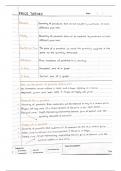
Week 1 GLOBALIZATION
Technology:
Development of ICT (the c for communication): invention of telegraph, telephone,
computers etc
ICT great impact leaded to→ the Information revolution:
Outsourcing firm → uitbesteden van bedrijven
‘’the world is flat’’ → By Thomas L.Friedman→ he meant flatness in the form of =
the same for everyone → distance doesn’t matter anymore (Death of distance),
everyone is online and connected to the internet
→ leaded to Isotropic landscape/space →
- Same features everywhere
- Often supposed for modelling purposes
Death of Distance argument:
This means that production and consumption are
nog longer bound to specific locations due to the
information revolution
Negative about ‘world is flat’:
- jobs are created and destroyed
Why those fast changes during the information revolution?
- information can be shared easilier
- adoption technology easier
- good for innovation
- keeping secrets becomes more difficult
- Easier to work far away from office
- or perhaps you don't even need an office
- need for other meeting places with customers, clients
- Easier to live far away from office
ICT revolution important because:
The new technologies made geography less critical → a-spatial because now you
have telephones to communicate instead of travelling
PANDEMIC
- shows the importance of ‘space’
,Space became important due to:
- Lockdowns
INDIA BPO
= BPO (Business process outsourcing)
→ started in India
Attractive due to
- labour costs and english language
- cultural proximity to the western world
- american prefer the philippines accent
BPO Leaved india:
due to boom in 2004-2006
- india invested in BPO outsourcing in other countries
Potential threats to jobs in BPO
- Robotic Process automation
- Political climate
David Harvey article
- Spatial fix
- Temporary ‘fixed’ in one place
- They are hungry for their next shot
- He is marxist
- → stated that this mobility of sectors is only natural in a capitalist world
- he is a materialist
- example: (drug) abuse is on purpose: he believes that the locations are
abused, drained of their resources particularly cheap labour
Solution:
expanding geographically to reduce abusement
- → dynamics of the capitalist system are bound to generate inequality (middle
class and high class)
- Overaccumulation at a local level → capitalist expansion over space , the
rich becoming richer and richer
- Tension;
- there are fix capital investments, be in one place
- geographical expansion of capital
Example: airport and jet planes = capital is used for infrastructure + easy to
move
Results: More monopolies/oligopolies and spatial inequality.
,FRIEDMAN → World is flat which means that the world is a level playing field where
every region gets the same chances to grow and prosper
Sees globalization in three phases:
- countries globalizing
- companies globalizing
- individuals globalizing
The world is not flat → Friedmans IT hotspots are very much localized, in specific
places (people who produce laptops are in a specific area) → A SPIKY WORLD
The world is spiky rather the flat → takes into account the importance of location
instead of assuming that you never have to migrate.
WHO IS RIGHT?
Depends on the crucial problem of Scale
- Globally, everyone → every continent could join
- within a continent → you have losers and winners
- within a country → cities from ‘spikes’ of production
EXAMPLE IT HOTSPOTS (HUBS)
- 1492 to 1800 → Countries globalizing, Trade oriented
- 1800 to 2000 → Companies, Falling transportation costs, falling
communication costs, hardware driven → leads to a global economy
- Now → individuals globalize, software-driven
GLOBAL ENTITIES/FIRMS
= Multinational Enterprises (MNEs) = a company that operates across several
countries, by owning subsidiaries or production structures in other countries.
Example: VOC, Medici banks
Example: EU is a regional collaboration of the government
Hanseatic league:
Confederation of merchant guilds and towns that cooperated on trade.
Aim: To remove trade restrictions and to cooperate on securing and protecting
trading routes (both in political and military sense)
Provided: a own legal system and helped establishing and securing trade routes
(overseas but also between land and sea)
Positive things of having MNEs on local basis:
- Bring employment
- tax revenue
- knowledge (technology transfer)
- could support local development
, - Productivity mostly higher because it is a foreign-owned firm instead of a
domestic firm → possible spillover effect
- Workers own more money in foreign firms then in domestic firms
Negative things of having MNEs:
- They take away profits (by buying a national company)
- They have lack of local embednesses → meaning that they will close factories
without consider the region
- Operate with less environmental concerns (go to populate in the third world
countries)
Problem:
- They take mostly the form of mergers & acquisitions rather than being a
greenfield investment
- find ways to reduce the tax burden
EXAMPLE GLOBAL FIRMS → Apple, Google, Dell but also Phillips or small firms
such as KeyTec
BOOK
DYNAMICS OF CAPITALIST PRODUCTION
- division of labour important in the industrial revolution
- best dynamic of capital is seen in innovation
CAPITAL
= money that is invested in production or financial markets
- captial accumulation: reininvestment of their capital to expand their capital
more
- firms are owned by capitalists
- most mobile of the factors of production
- capital switching due to new industrial spaces creating
LABOUR PROCESS
- it is a social reproduction → daily processes of feeding, clothing.
- increased division of labour → results in deskilling of labour
CAPITAL
- Capital = it can simply be defined as money that is invested in production or financial
markets.
- Capitalists = Capitalists are those people who have acquired capital, allowing them to
own the means of production: land, materials, factories, offices and machines
- Organization of capital: a firm → in order to grow and expand, firms need capital for
investment
Week 1 GLOBALIZATION
Technology:
Development of ICT (the c for communication): invention of telegraph, telephone,
computers etc
ICT great impact leaded to→ the Information revolution:
Outsourcing firm → uitbesteden van bedrijven
‘’the world is flat’’ → By Thomas L.Friedman→ he meant flatness in the form of =
the same for everyone → distance doesn’t matter anymore (Death of distance),
everyone is online and connected to the internet
→ leaded to Isotropic landscape/space →
- Same features everywhere
- Often supposed for modelling purposes
Death of Distance argument:
This means that production and consumption are
nog longer bound to specific locations due to the
information revolution
Negative about ‘world is flat’:
- jobs are created and destroyed
Why those fast changes during the information revolution?
- information can be shared easilier
- adoption technology easier
- good for innovation
- keeping secrets becomes more difficult
- Easier to work far away from office
- or perhaps you don't even need an office
- need for other meeting places with customers, clients
- Easier to live far away from office
ICT revolution important because:
The new technologies made geography less critical → a-spatial because now you
have telephones to communicate instead of travelling
PANDEMIC
- shows the importance of ‘space’
,Space became important due to:
- Lockdowns
INDIA BPO
= BPO (Business process outsourcing)
→ started in India
Attractive due to
- labour costs and english language
- cultural proximity to the western world
- american prefer the philippines accent
BPO Leaved india:
due to boom in 2004-2006
- india invested in BPO outsourcing in other countries
Potential threats to jobs in BPO
- Robotic Process automation
- Political climate
David Harvey article
- Spatial fix
- Temporary ‘fixed’ in one place
- They are hungry for their next shot
- He is marxist
- → stated that this mobility of sectors is only natural in a capitalist world
- he is a materialist
- example: (drug) abuse is on purpose: he believes that the locations are
abused, drained of their resources particularly cheap labour
Solution:
expanding geographically to reduce abusement
- → dynamics of the capitalist system are bound to generate inequality (middle
class and high class)
- Overaccumulation at a local level → capitalist expansion over space , the
rich becoming richer and richer
- Tension;
- there are fix capital investments, be in one place
- geographical expansion of capital
Example: airport and jet planes = capital is used for infrastructure + easy to
move
Results: More monopolies/oligopolies and spatial inequality.
,FRIEDMAN → World is flat which means that the world is a level playing field where
every region gets the same chances to grow and prosper
Sees globalization in three phases:
- countries globalizing
- companies globalizing
- individuals globalizing
The world is not flat → Friedmans IT hotspots are very much localized, in specific
places (people who produce laptops are in a specific area) → A SPIKY WORLD
The world is spiky rather the flat → takes into account the importance of location
instead of assuming that you never have to migrate.
WHO IS RIGHT?
Depends on the crucial problem of Scale
- Globally, everyone → every continent could join
- within a continent → you have losers and winners
- within a country → cities from ‘spikes’ of production
EXAMPLE IT HOTSPOTS (HUBS)
- 1492 to 1800 → Countries globalizing, Trade oriented
- 1800 to 2000 → Companies, Falling transportation costs, falling
communication costs, hardware driven → leads to a global economy
- Now → individuals globalize, software-driven
GLOBAL ENTITIES/FIRMS
= Multinational Enterprises (MNEs) = a company that operates across several
countries, by owning subsidiaries or production structures in other countries.
Example: VOC, Medici banks
Example: EU is a regional collaboration of the government
Hanseatic league:
Confederation of merchant guilds and towns that cooperated on trade.
Aim: To remove trade restrictions and to cooperate on securing and protecting
trading routes (both in political and military sense)
Provided: a own legal system and helped establishing and securing trade routes
(overseas but also between land and sea)
Positive things of having MNEs on local basis:
- Bring employment
- tax revenue
- knowledge (technology transfer)
- could support local development
, - Productivity mostly higher because it is a foreign-owned firm instead of a
domestic firm → possible spillover effect
- Workers own more money in foreign firms then in domestic firms
Negative things of having MNEs:
- They take away profits (by buying a national company)
- They have lack of local embednesses → meaning that they will close factories
without consider the region
- Operate with less environmental concerns (go to populate in the third world
countries)
Problem:
- They take mostly the form of mergers & acquisitions rather than being a
greenfield investment
- find ways to reduce the tax burden
EXAMPLE GLOBAL FIRMS → Apple, Google, Dell but also Phillips or small firms
such as KeyTec
BOOK
DYNAMICS OF CAPITALIST PRODUCTION
- division of labour important in the industrial revolution
- best dynamic of capital is seen in innovation
CAPITAL
= money that is invested in production or financial markets
- captial accumulation: reininvestment of their capital to expand their capital
more
- firms are owned by capitalists
- most mobile of the factors of production
- capital switching due to new industrial spaces creating
LABOUR PROCESS
- it is a social reproduction → daily processes of feeding, clothing.
- increased division of labour → results in deskilling of labour
CAPITAL
- Capital = it can simply be defined as money that is invested in production or financial
markets.
- Capitalists = Capitalists are those people who have acquired capital, allowing them to
own the means of production: land, materials, factories, offices and machines
- Organization of capital: a firm → in order to grow and expand, firms need capital for
investment