FDI Summary
Week 1 part 1:
(introduction course)
Week 1 Part 2
1. FDI vs. Multinational activity (MNE)
2. Types of FDI; FDI and trade
3. History and key patterns
1. FDI vs. Multinational activity (MNE)
FDI= flow of financial capital from one country to another. The investor has a significant
degree of control of and influence on the foreign management.
Foreign Portfolio Investment= foreign investment without a controlling stake.
10 percent ownership rule= investment that gives investor 10% or more ownership of the
foreign firm (FDI). If not, it is FPI.
FDI flows vs FDI stocks
FDI flow= the amount of FDI moving in a certain direction during a given time interval.
- FDI inflow= the volume of FDI moving into a country
- FDI outflow= the volume of FDI originating from a country.
FDI stock = the total cumulative value of all FDI flows.
- Inward FDI stock= a snapshot of the total
amount/cumulative value of all foreign direct
investments in an economy at a given point in
time
- Outward FDI stock= a snapshot of the total
cumulative value of all foreign direct
investments held abroad by resident firms from
a given country at a given point in time.
Multinational enterprise (MNE)= a firm that owns and controls operations in more than 1
country= a firm that undertakes FDI. 1 parent firm, with 1 or more foreign affiliates.
MNE vs FDI
An MNE is more than just FDI flow.
- Parent firm transfers more than just financial capital
- Not all funds used for multinational financing are included in the FDI data
- Not all FDI is used to finance real economic activity (example: mailbox firms, simply
to avoid taxes)
- But correlation between FDI and other measures of MNE generally high.
Multinationals finance a substantial amount of their activities by borrowing in the host
country. Why?
- Exchange rate risk (more in week 4)= take on liabilities and assets denominated in
foreign currencies to reduce fluctuations in the value of net assets.
, - Risk of expropriation= possibility to default in foreign liabilities if foreign government
expropriates firm assets (vaste active).
2 types of MNE’s
- Horizontal (market seeking)= serving foreign markets directly (producing and selling
to customers abroad); replication of home activities in host country (example: VW
production plan in China)
- Vertical (efficiency-seeking)= sourcing from abroad; locating activities from a
different stage of the value chain to the host country (example: US oil company
getting raw oil in Russia)
- Most MNE’s do both
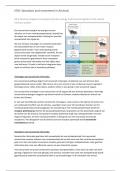
Value chains horizontal FDI
Value chains vertical FDI
FDI and trade
- FDI substitutes for trade if the firm is market seeking and trying to get around tariffs
or transportation costs. Horizontal FDI attempts to substitute trade.
o Producing locally avoids costs of importing
- FDI complements trade in situations where FDI is efficiency or strategic asset seeking.
Vertical FDI complements international trade
o Overseas production generates exports back to the home country.
, History and current patterns
- Since 1960 FDI really increased.
- 1970’s: FDI dominated by investments of US firms in developing countries.
- 1980’s: rise of FDI by European and South- and East-Asian firms. Orientation towards
developed countries.
- 1990’s: rising FDI into developing countries (driven by low labor costs and economic
reforms)
- Nowadays: most FDI flows between industrializes countries.
- Rising role of FDI in services sector, declining role of manufacturing and primary
sector.
Summary:
- Foreign investment that leads to control over foreign operations is considered FDI
- FDI is the main indicator of multinational activity
- FDI can be a substitute or a complement to trade
- Most FDI flows between rich countries.
Week 1 part 3
1. Why MNE’s exist
a. Eclectic paradigm (OLI model)
b. Transfer pricing
2. Cost and benefits of FDI for countries
Why MNE’s exist
- Multinational activity is more than just shifting financial capital across borders,
otherwise firms could just use FPI without establishing managerial control.
- Implies that there must be additional advantages of owning/controlling foreign
operations.
Firm-specific advantages= valuable firm-specific tangible and intangible resources and
capabilities. Resources and capabilities generate a firm-specific advantage if they are:
- Valuable
- Rare
- Inimitable
- Non-substitutable
Firm-specific advantages allow the firm to overcome the inherent disadvantages of being
foreign. For example:
- Overcoming institutional, cultural and language barriers in the foreign country.
- Travel and communication costs.
- Other costs of doing business that native firms are not facing.
FDI vs alternative strategies
- FDI is not the only means to exploit firm-specific advantages.
- Alternative ways to leverage the firm-specific assets:
o Exporting to foreign markets
o Licensing to foreign firms
Week 1 part 1:
(introduction course)
Week 1 Part 2
1. FDI vs. Multinational activity (MNE)
2. Types of FDI; FDI and trade
3. History and key patterns
1. FDI vs. Multinational activity (MNE)
FDI= flow of financial capital from one country to another. The investor has a significant
degree of control of and influence on the foreign management.
Foreign Portfolio Investment= foreign investment without a controlling stake.
10 percent ownership rule= investment that gives investor 10% or more ownership of the
foreign firm (FDI). If not, it is FPI.
FDI flows vs FDI stocks
FDI flow= the amount of FDI moving in a certain direction during a given time interval.
- FDI inflow= the volume of FDI moving into a country
- FDI outflow= the volume of FDI originating from a country.
FDI stock = the total cumulative value of all FDI flows.
- Inward FDI stock= a snapshot of the total
amount/cumulative value of all foreign direct
investments in an economy at a given point in
time
- Outward FDI stock= a snapshot of the total
cumulative value of all foreign direct
investments held abroad by resident firms from
a given country at a given point in time.
Multinational enterprise (MNE)= a firm that owns and controls operations in more than 1
country= a firm that undertakes FDI. 1 parent firm, with 1 or more foreign affiliates.
MNE vs FDI
An MNE is more than just FDI flow.
- Parent firm transfers more than just financial capital
- Not all funds used for multinational financing are included in the FDI data
- Not all FDI is used to finance real economic activity (example: mailbox firms, simply
to avoid taxes)
- But correlation between FDI and other measures of MNE generally high.
Multinationals finance a substantial amount of their activities by borrowing in the host
country. Why?
- Exchange rate risk (more in week 4)= take on liabilities and assets denominated in
foreign currencies to reduce fluctuations in the value of net assets.
, - Risk of expropriation= possibility to default in foreign liabilities if foreign government
expropriates firm assets (vaste active).
2 types of MNE’s
- Horizontal (market seeking)= serving foreign markets directly (producing and selling
to customers abroad); replication of home activities in host country (example: VW
production plan in China)
- Vertical (efficiency-seeking)= sourcing from abroad; locating activities from a
different stage of the value chain to the host country (example: US oil company
getting raw oil in Russia)
- Most MNE’s do both
Value chains horizontal FDI
Value chains vertical FDI
FDI and trade
- FDI substitutes for trade if the firm is market seeking and trying to get around tariffs
or transportation costs. Horizontal FDI attempts to substitute trade.
o Producing locally avoids costs of importing
- FDI complements trade in situations where FDI is efficiency or strategic asset seeking.
Vertical FDI complements international trade
o Overseas production generates exports back to the home country.
, History and current patterns
- Since 1960 FDI really increased.
- 1970’s: FDI dominated by investments of US firms in developing countries.
- 1980’s: rise of FDI by European and South- and East-Asian firms. Orientation towards
developed countries.
- 1990’s: rising FDI into developing countries (driven by low labor costs and economic
reforms)
- Nowadays: most FDI flows between industrializes countries.
- Rising role of FDI in services sector, declining role of manufacturing and primary
sector.
Summary:
- Foreign investment that leads to control over foreign operations is considered FDI
- FDI is the main indicator of multinational activity
- FDI can be a substitute or a complement to trade
- Most FDI flows between rich countries.
Week 1 part 3
1. Why MNE’s exist
a. Eclectic paradigm (OLI model)
b. Transfer pricing
2. Cost and benefits of FDI for countries
Why MNE’s exist
- Multinational activity is more than just shifting financial capital across borders,
otherwise firms could just use FPI without establishing managerial control.
- Implies that there must be additional advantages of owning/controlling foreign
operations.
Firm-specific advantages= valuable firm-specific tangible and intangible resources and
capabilities. Resources and capabilities generate a firm-specific advantage if they are:
- Valuable
- Rare
- Inimitable
- Non-substitutable
Firm-specific advantages allow the firm to overcome the inherent disadvantages of being
foreign. For example:
- Overcoming institutional, cultural and language barriers in the foreign country.
- Travel and communication costs.
- Other costs of doing business that native firms are not facing.
FDI vs alternative strategies
- FDI is not the only means to exploit firm-specific advantages.
- Alternative ways to leverage the firm-specific assets:
o Exporting to foreign markets
o Licensing to foreign firms