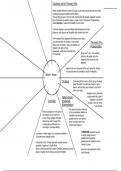
When? What? Extra Detail
1914 Russia enters First
World War
February 1917 The February revolution Led to the downfall of the Tzar
overthrows the Tzar
March 1917 Provisional Government
established
October 1917 The October Revolution: Led to the creation of a radical new Communist government led by
Bolsheviks overthrow Lenin
the provisional Handed power to the All-Russian Congress of Soviets
government Workers/ sailors captured gov buildings and Winter Palace. Took over
Moscow
The Congress created Sovnarkom (new gov to replace provisional gov)
Lenin elected as head of it
Committed the new gov from withdrawing from WW1
Sovnarkom publishes
decree of Peace:
November 1917 Sovnarkom publishes Gave peasants the right to seize land from nobility and the church
decree of Land: Establishes 8-hour max working day + minimum wage
Sovnarkom publishes
Worker’s Decree:
1918 Lenin disbands
Constituent Assembly
Beginning of the Russian
Civil War
Lenin introduces state
capitalism and war
communism
Komsomol founded
1918-21 Russian Civil War Resulted in communist victory
Groups:
- The Reds: Communist forces
- The Whites: liberals, Tzarists, those who wanted to establish a
military dictatorship
- The Greens: associated with Left Socialist Revolutionaries,
fought for the autonomy of local groups of peasants
How did Lenin ensure victory:
1. Political Centralisation: Power passed from Sovnarkom (accountable
to the soviets) to the Politburo (powerful committee of the highly
centralised Communist Party)
2. Bureaucracy: gov relied on skills of administrators to run the
economy/ army during civil War, so communist nomenklatura who
dominated gov were educated members who had worked for Tzar’s gov
3. Authoritarianism: Lenin promised democracy but used terror/
repression against opponents, Feb 1921: authorised Cheka to destroy
remaining political opponents
1921 Party Congress Addressed crisis created by Civil War:
- War Communism created famine
- Red Terror led to backlash against communist repression
- EG: 1920 Tambov rebellion. By 1921 a rebel force of 50,000
1914 Russia enters First
World War
February 1917 The February revolution Led to the downfall of the Tzar
overthrows the Tzar
March 1917 Provisional Government
established
October 1917 The October Revolution: Led to the creation of a radical new Communist government led by
Bolsheviks overthrow Lenin
the provisional Handed power to the All-Russian Congress of Soviets
government Workers/ sailors captured gov buildings and Winter Palace. Took over
Moscow
The Congress created Sovnarkom (new gov to replace provisional gov)
Lenin elected as head of it
Committed the new gov from withdrawing from WW1
Sovnarkom publishes
decree of Peace:
November 1917 Sovnarkom publishes Gave peasants the right to seize land from nobility and the church
decree of Land: Establishes 8-hour max working day + minimum wage
Sovnarkom publishes
Worker’s Decree:
1918 Lenin disbands
Constituent Assembly
Beginning of the Russian
Civil War
Lenin introduces state
capitalism and war
communism
Komsomol founded
1918-21 Russian Civil War Resulted in communist victory
Groups:
- The Reds: Communist forces
- The Whites: liberals, Tzarists, those who wanted to establish a
military dictatorship
- The Greens: associated with Left Socialist Revolutionaries,
fought for the autonomy of local groups of peasants
How did Lenin ensure victory:
1. Political Centralisation: Power passed from Sovnarkom (accountable
to the soviets) to the Politburo (powerful committee of the highly
centralised Communist Party)
2. Bureaucracy: gov relied on skills of administrators to run the
economy/ army during civil War, so communist nomenklatura who
dominated gov were educated members who had worked for Tzar’s gov
3. Authoritarianism: Lenin promised democracy but used terror/
repression against opponents, Feb 1921: authorised Cheka to destroy
remaining political opponents
1921 Party Congress Addressed crisis created by Civil War:
- War Communism created famine
- Red Terror led to backlash against communist repression
- EG: 1920 Tambov rebellion. By 1921 a rebel force of 50,000