What explains the fall of the UUSR 1985-91?
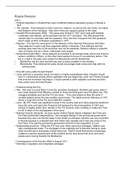
Long-term economic problems
1. Centralization: inefficient (gov administers couldn’t coordinate economy)
- Fertilisers arrived at the wrong time, hampering crop growth
- Factories received wrong grade of products (steel)
2. Problems in industry
- No incentives for hard work, workers were less productive than Western
workers.
- Gosplan set targets for production quantity, not quality -> Soviet economy
produced useless goods
3. Problems in soviet infrastructure (inadequate)
- Transport system never been fully modernised -> transporting food difficult
- Lack of modern storage facilities -> wasted (grain rotted)
4. Military expenditure
- Economic modernisation halted by Soviet military spending.
- 1965-85: GDP spent on defence increased from 12%-17%.
- Impact:could not invest in modern infrastructure/ farming
Significance:
- 1985: Soviet economy stopped growing.
- However, some historians argue no real crisis. Soviet economy functioned
inefficiently for decades
- Not the primary cause of collapse.
, Failure of economic reform
Why did they fail?
1. Undermined the existing system
2. Constantly changed his approach
3. Inherent weakness
Gorbachev’s policy: designed to address problems with Soviet economy
1. Rationalization: 1985-86
Aim: improve command economy
Policy Consequence
Continued Andropov's FAILED:
anti-alcohol campaign, Citizen’s bough alcohol illegally
cut state production of Gov made less money in vodka sales
alcohol by 50% Revenue dropped by 9% GDP
ABANDONED IN 1988
Introduced uskorenie/ Funded by borrowing money from Western
acceleration: programme governments. Debt rose from $18.1 billion in
of investment designed 1981 to $27.2 billion 1988 -> inflation
to modernise the Gorbachev invested in energy production,
economy ignored advice to invest high-tech machines -> no
growth
2. Reform 1987-90
Aim: introduce market measures into command economy
- Nov 1986: Law on Individual Economic Activity: legal to make money doing small-scale jobs
(repairs)
- June 1987: Law on State Enterprises: allowed factory managers to set prices for goods they
produced
- May 1988: Law on co-operatives legal to set up large co-operatives/ private companies.
1990: 20,000 co-operatives
Consequence:
- Failed to create effective market alternative, undermined central planning system
- Ineffective distribution system -> shortage of goods
Political Consequences
- 1986-90: GDP shrunk by 4% + prices rose
- Senior party members seized economic assets -> rich -> strikes increased
3. Transformation 1990-91
Aim: abandon command economy, introduce market economy
- August 1990 (500 Day Program): Shatalin/ Tavlinksy commissioned to devise plan for
economic transformation, promised complete marketisation in 2 years
- Jan 1991: Supreme Soviet introduced private property (people could own land)
- Impact: economy declined (oil production fell by 9%)
- 1991: Gov bankrupt
- Oct 1991: Yeltsin announces full marketisation
Long-term economic problems
1. Centralization: inefficient (gov administers couldn’t coordinate economy)
- Fertilisers arrived at the wrong time, hampering crop growth
- Factories received wrong grade of products (steel)
2. Problems in industry
- No incentives for hard work, workers were less productive than Western
workers.
- Gosplan set targets for production quantity, not quality -> Soviet economy
produced useless goods
3. Problems in soviet infrastructure (inadequate)
- Transport system never been fully modernised -> transporting food difficult
- Lack of modern storage facilities -> wasted (grain rotted)
4. Military expenditure
- Economic modernisation halted by Soviet military spending.
- 1965-85: GDP spent on defence increased from 12%-17%.
- Impact:could not invest in modern infrastructure/ farming
Significance:
- 1985: Soviet economy stopped growing.
- However, some historians argue no real crisis. Soviet economy functioned
inefficiently for decades
- Not the primary cause of collapse.
, Failure of economic reform
Why did they fail?
1. Undermined the existing system
2. Constantly changed his approach
3. Inherent weakness
Gorbachev’s policy: designed to address problems with Soviet economy
1. Rationalization: 1985-86
Aim: improve command economy
Policy Consequence
Continued Andropov's FAILED:
anti-alcohol campaign, Citizen’s bough alcohol illegally
cut state production of Gov made less money in vodka sales
alcohol by 50% Revenue dropped by 9% GDP
ABANDONED IN 1988
Introduced uskorenie/ Funded by borrowing money from Western
acceleration: programme governments. Debt rose from $18.1 billion in
of investment designed 1981 to $27.2 billion 1988 -> inflation
to modernise the Gorbachev invested in energy production,
economy ignored advice to invest high-tech machines -> no
growth
2. Reform 1987-90
Aim: introduce market measures into command economy
- Nov 1986: Law on Individual Economic Activity: legal to make money doing small-scale jobs
(repairs)
- June 1987: Law on State Enterprises: allowed factory managers to set prices for goods they
produced
- May 1988: Law on co-operatives legal to set up large co-operatives/ private companies.
1990: 20,000 co-operatives
Consequence:
- Failed to create effective market alternative, undermined central planning system
- Ineffective distribution system -> shortage of goods
Political Consequences
- 1986-90: GDP shrunk by 4% + prices rose
- Senior party members seized economic assets -> rich -> strikes increased
3. Transformation 1990-91
Aim: abandon command economy, introduce market economy
- August 1990 (500 Day Program): Shatalin/ Tavlinksy commissioned to devise plan for
economic transformation, promised complete marketisation in 2 years
- Jan 1991: Supreme Soviet introduced private property (people could own land)
- Impact: economy declined (oil production fell by 9%)
- 1991: Gov bankrupt
- Oct 1991: Yeltsin announces full marketisation