Anxiety and depression
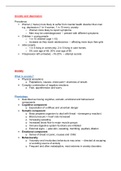
Prevalence
Women (~twice) more likely to suffer from mental health disorder than men
e.g. depression (1 in 4 women, 1 in 10 men), anxiety
o Women more likely to report symptoms
o Men may be underdiagnosed present with different symptoms
Children + young people
o 1 in 10 children (age 1-15)
o increase as they reach adolescence affecting more boys than girls
older people
o 1 in 5 living in community, 2 in 5 living in care homes
o 5% over age of 65, 20% over age of 80
if depression left untreated, ~16-20% attempt suicide
Anxiety
What is anxiety?
Physical sensations
o Palpitations, nausea, chest pain/+ shortness of breath
Complex combination of negative emotions
o Fear, apprehension and worry
Physiology
Described as having cognitive, somatic, emotional and behavioural
components
Cognitive component
o Expectation of a diffuse and uncertain danger
Somatic component
o Body prepares organism to deal with threat (emergency reaction)
o Blood pressure + heart rate increased
o Increasing sweating
o Increased blood flow to major muscle groups
o Immune digestive system functions are inhibited
o External signs pale skin, sweating, trembling, pupillary dilation
Emotional component
o Sense of dread or panic, nausea and ‘chills’
Behaviourally
o Voluntary and involuntary behaviours may arise directed at escaping
or avoiding source of anxiety
o Frequent and often maladaptive, most extreme in anxiety disorders
, Anxiety is not always pathological or maladaptive
o It is a common emotion along with fear, anger, sadness, and
happiness, and it has a very important function in relation to survival.
Neural circuitry
Involves amygdala and hippocampus underlie anxiety
Confrontation with unpleasant and potentially harmful stimuli e.g. foul odours
or tastes (PET scans show) increased blood flow to amygdala
Participants also reported moderate anxiety
Might indicated anxiety is protective mechanismprevent organism from
engaging in potentially harmful behaviours e.g. eating rotten food
Neurochemical causes
Not clear
Important role for noradrenaline, 5-HT and GABA
o Increased noradrenaline activity increased anxiety
o Increased GABAA receptor activity decreased anxiety
o 5-HT very complex many subtypes of 5-HT receptors in CNS
o 5-HT actions at postsynaptic 5-HT1A decreased anxiety
o 5-HT actions at 5-HT2C increased anxiety
Types of anxiety disorders
Generalised anxiety disorder
o Common chronic disorder
o Affects 2x women as men
o Can lead to considerable impairment
o Long-lasting anxiety, not focused on any object/situation
(unspecific/free-floating)
o People feel afraid of something unable to articulate specific fear
o Fret constantly + hard time controlling their worries
o May develop headaches, heart palpitations, dizziness and insomnia
due to persistent muscle tension and autonomic fear reactions
o Difficult to cope with normal daily activities
Panic disorder
o Brief attacks of intense terror and apprehension trembling, shaking,
dizziness and difficulty breathing
o Fear/discomfort arises abruptly + peaks in 10 mins or less
o May develop intense anxiety between episodes, worrying when/where
next episode will strike
o Generally, happen after frightening experiences, prolonged stress or
exercise
o Can be mistaken for heart attack
Prevalence
Women (~twice) more likely to suffer from mental health disorder than men
e.g. depression (1 in 4 women, 1 in 10 men), anxiety
o Women more likely to report symptoms
o Men may be underdiagnosed present with different symptoms
Children + young people
o 1 in 10 children (age 1-15)
o increase as they reach adolescence affecting more boys than girls
older people
o 1 in 5 living in community, 2 in 5 living in care homes
o 5% over age of 65, 20% over age of 80
if depression left untreated, ~16-20% attempt suicide
Anxiety
What is anxiety?
Physical sensations
o Palpitations, nausea, chest pain/+ shortness of breath
Complex combination of negative emotions
o Fear, apprehension and worry
Physiology
Described as having cognitive, somatic, emotional and behavioural
components
Cognitive component
o Expectation of a diffuse and uncertain danger
Somatic component
o Body prepares organism to deal with threat (emergency reaction)
o Blood pressure + heart rate increased
o Increasing sweating
o Increased blood flow to major muscle groups
o Immune digestive system functions are inhibited
o External signs pale skin, sweating, trembling, pupillary dilation
Emotional component
o Sense of dread or panic, nausea and ‘chills’
Behaviourally
o Voluntary and involuntary behaviours may arise directed at escaping
or avoiding source of anxiety
o Frequent and often maladaptive, most extreme in anxiety disorders
, Anxiety is not always pathological or maladaptive
o It is a common emotion along with fear, anger, sadness, and
happiness, and it has a very important function in relation to survival.
Neural circuitry
Involves amygdala and hippocampus underlie anxiety
Confrontation with unpleasant and potentially harmful stimuli e.g. foul odours
or tastes (PET scans show) increased blood flow to amygdala
Participants also reported moderate anxiety
Might indicated anxiety is protective mechanismprevent organism from
engaging in potentially harmful behaviours e.g. eating rotten food
Neurochemical causes
Not clear
Important role for noradrenaline, 5-HT and GABA
o Increased noradrenaline activity increased anxiety
o Increased GABAA receptor activity decreased anxiety
o 5-HT very complex many subtypes of 5-HT receptors in CNS
o 5-HT actions at postsynaptic 5-HT1A decreased anxiety
o 5-HT actions at 5-HT2C increased anxiety
Types of anxiety disorders
Generalised anxiety disorder
o Common chronic disorder
o Affects 2x women as men
o Can lead to considerable impairment
o Long-lasting anxiety, not focused on any object/situation
(unspecific/free-floating)
o People feel afraid of something unable to articulate specific fear
o Fret constantly + hard time controlling their worries
o May develop headaches, heart palpitations, dizziness and insomnia
due to persistent muscle tension and autonomic fear reactions
o Difficult to cope with normal daily activities
Panic disorder
o Brief attacks of intense terror and apprehension trembling, shaking,
dizziness and difficulty breathing
o Fear/discomfort arises abruptly + peaks in 10 mins or less
o May develop intense anxiety between episodes, worrying when/where
next episode will strike
o Generally, happen after frightening experiences, prolonged stress or
exercise
o Can be mistaken for heart attack