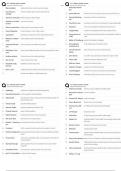
SAP Procure-to-pay process
https://s3-us-west-2.amazonaws.com/secure.notion-static.com/b029372f-c93b-410f-aef8-fee0d279
1633/WK04_ES_Procure.pdf
Procure-to-Pay
TEST AND EXAM QUESTIONS:
Given a business/organisation scenario, identify and describe the organisational structure and master
data required to support a procure to pay business process.
Describe a typical procure to pay process including sequence of steps, inputs and outputs of each
step, data in the various documents as well as risks and controls
Perform the procure to pay transaction processing on SAP S/4HANA
Display master data and create a purchasing info record
Create a purchase order
Create a goods receipt for purchase order
Enter invoice receipt from vendor and post payment to vendor
Display purchase order history
Analyze a business/organisation scenario and determine how its procurement activities/process can
be improved taking into consideration inputs and outputs of each step, data in the various documents,
risks and controls, reporting requirements, as well as automation.
Recommend appropriate operational and strategic reports necessary to support the procure to pay
process
The blueprint of how Enterprise Systems work: THIS DIAGRAM IS NB
SAP Procure-to-pay process 1
, Design of systems are built on organisational data. THEN you load master data. THEN configure and
execute processes.
After executing these processes you accumulate data that you can write reports on.
Organisational Structure
→ In a SAP system, the organizational levels are structures that represent the legal or organizational
views of an organization.
Need at least one code for each of the following:
Client: highest hierarchical unit in the SAP system
Independent business entity, represents a corporate group
Data specifications entered at this level apply to all organizational units
Company code: independent unit with own balance sheet
Can define a number of company codes in a client
Plant: organizational unit within logistics. Will need at least 1 plant. They get broken down into
storage locations where different kinds of inventory are stored.
Facility for manufacturing, distribution, storage, or rendering services
Storage location: organizational unit that facilitates the differentiation of stock of materials in a plant
Location where inventory is stored
SAP Procure-to-pay process 2
, Purchasing organization
Need to define at least one. A purchasing organisation is responsible and accountable for
procuring services and materials.
Selects vendors, negotiates conditions and contracts, sets pricing conditions, strategic purchasing
planning
Purchasing group
Represents the buyer or a group of buyers that are responsible for certain purchasing activities
Internally: responsible for execution of purchasing transactions
Tasks: creating purchase requisitions, getting supplier quotes, creating purchase orders
(POs), monitoring POs
Externally: main point of contact with supplier
Left diagram: hierarchical relationship of organisational data that is used for procurement. A
company code can only belong to one client but a client can have one or more company codes. If
you operate in more than one country you might have more than one company code but the
multiple company codes will all be linked to one client. Can never have one company code that is
linked to multiple clients. When you define a plant, it belongs to a certain company code. A
company code can have many plants though. A purchasing organisation might be purchasing for
many plants within a company code. Would need to specify which plant they are buying for. A
plant can have multiple storage locations, but only one plant.
Right diagram: Contextualising this right image in a real life scenario. Mungwi and Lusaka are two
separate plants. For each of the plants they have their own storage locations.
Master Data for Procurement
SAP Procure-to-pay process 3
, Master data supports the everyday purchasing process by being used across software
applications, organisational functions and business processes. Central data backbone. Centralise
data management. Master data is data that is shared across systems and business processes
and is used repeatedly by and may be affected by several business processes. Aim is to centralise
data so there are no duplicates across regions etc.
To enable that multiple views and multiple records per view is needed. Each view has separate
authorisations.
For purchasing includes
Material master data (details on material to be purchased)
Supplier master data (details on the supplier)
Purchasing info record (details for combining the two above)
Conditions (extra pricing, tax and discounts)
In SAP, an organisation is defined as a BUSINESS PARTNER. Then you define the partnership/ relationship (are
they a supplier, a customer etc). Business partners have different roles.
Master data for procurement:
(Comes on after organisational structure is set up). No matter hat unit you are in, you should all
see the same details. This data needs to be solid and consistent.
Supplier Roles (NB)
SAP Procure-to-pay process 4
https://s3-us-west-2.amazonaws.com/secure.notion-static.com/b029372f-c93b-410f-aef8-fee0d279
1633/WK04_ES_Procure.pdf
Procure-to-Pay
TEST AND EXAM QUESTIONS:
Given a business/organisation scenario, identify and describe the organisational structure and master
data required to support a procure to pay business process.
Describe a typical procure to pay process including sequence of steps, inputs and outputs of each
step, data in the various documents as well as risks and controls
Perform the procure to pay transaction processing on SAP S/4HANA
Display master data and create a purchasing info record
Create a purchase order
Create a goods receipt for purchase order
Enter invoice receipt from vendor and post payment to vendor
Display purchase order history
Analyze a business/organisation scenario and determine how its procurement activities/process can
be improved taking into consideration inputs and outputs of each step, data in the various documents,
risks and controls, reporting requirements, as well as automation.
Recommend appropriate operational and strategic reports necessary to support the procure to pay
process
The blueprint of how Enterprise Systems work: THIS DIAGRAM IS NB
SAP Procure-to-pay process 1
, Design of systems are built on organisational data. THEN you load master data. THEN configure and
execute processes.
After executing these processes you accumulate data that you can write reports on.
Organisational Structure
→ In a SAP system, the organizational levels are structures that represent the legal or organizational
views of an organization.
Need at least one code for each of the following:
Client: highest hierarchical unit in the SAP system
Independent business entity, represents a corporate group
Data specifications entered at this level apply to all organizational units
Company code: independent unit with own balance sheet
Can define a number of company codes in a client
Plant: organizational unit within logistics. Will need at least 1 plant. They get broken down into
storage locations where different kinds of inventory are stored.
Facility for manufacturing, distribution, storage, or rendering services
Storage location: organizational unit that facilitates the differentiation of stock of materials in a plant
Location where inventory is stored
SAP Procure-to-pay process 2
, Purchasing organization
Need to define at least one. A purchasing organisation is responsible and accountable for
procuring services and materials.
Selects vendors, negotiates conditions and contracts, sets pricing conditions, strategic purchasing
planning
Purchasing group
Represents the buyer or a group of buyers that are responsible for certain purchasing activities
Internally: responsible for execution of purchasing transactions
Tasks: creating purchase requisitions, getting supplier quotes, creating purchase orders
(POs), monitoring POs
Externally: main point of contact with supplier
Left diagram: hierarchical relationship of organisational data that is used for procurement. A
company code can only belong to one client but a client can have one or more company codes. If
you operate in more than one country you might have more than one company code but the
multiple company codes will all be linked to one client. Can never have one company code that is
linked to multiple clients. When you define a plant, it belongs to a certain company code. A
company code can have many plants though. A purchasing organisation might be purchasing for
many plants within a company code. Would need to specify which plant they are buying for. A
plant can have multiple storage locations, but only one plant.
Right diagram: Contextualising this right image in a real life scenario. Mungwi and Lusaka are two
separate plants. For each of the plants they have their own storage locations.
Master Data for Procurement
SAP Procure-to-pay process 3
, Master data supports the everyday purchasing process by being used across software
applications, organisational functions and business processes. Central data backbone. Centralise
data management. Master data is data that is shared across systems and business processes
and is used repeatedly by and may be affected by several business processes. Aim is to centralise
data so there are no duplicates across regions etc.
To enable that multiple views and multiple records per view is needed. Each view has separate
authorisations.
For purchasing includes
Material master data (details on material to be purchased)
Supplier master data (details on the supplier)
Purchasing info record (details for combining the two above)
Conditions (extra pricing, tax and discounts)
In SAP, an organisation is defined as a BUSINESS PARTNER. Then you define the partnership/ relationship (are
they a supplier, a customer etc). Business partners have different roles.
Master data for procurement:
(Comes on after organisational structure is set up). No matter hat unit you are in, you should all
see the same details. This data needs to be solid and consistent.
Supplier Roles (NB)
SAP Procure-to-pay process 4