☘
ES Implementation
Know:
1. 6 Phases and deliverables
2. Avoiding ERP Implementations risk
3. BP Focus when implementing ERP
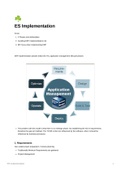
ERP implementation phases follow the ITIL application management lifecycle phases
The problem with this model is that there is no redesign phase. No establishing the AS IS requirements,
therefore the gap isn’t defined. The TO BE is then too influenced by the software, when it should be
influenced by business processes.
1. Requirements
Also called project preparation. Involves planning
Traditionally Minimum Requirements are gathered
Project Management
ES Implementation 1
, Organize the project team
Prepare the Project Charter / Scope
Define schedule, budget, and resources
Determine IT & System Architecture
At this stage the ERP software has been selected
Select hardware and database vendors
Define system landscape
2. Design
Output: The business blueprint (the organisational data, master data, processes, reports). As well as
interfaces, authorisations, enhancements.
Training project team
Get access to development system (DEV)
Produce business blueprint of to-be system based on customer’s requirements
Determine data migration strategy
3. Build and test
→ Cant just buy the package and expect it to work perfectly for you - you have to customise it.
Customizing (Table configuration)
Customize the "Baseline" system, which covers 100 % of organizational data and 60% of business
processes
Programming (include modifications & enhancements)
Special ABAP programs
Connections to legacy systems
Integration with 3rd party software packages
Test
Test business processes
Test interfaces, reports, and Master DATA conversions
4. Deploy/ Transition
“Go live”
The 4 Ts:
Training the end user
Testing: integration, volume, and stress
→ When scope creep results in projects going over time and budget, testing and training is all that is left to be
cut
ES Implementation 2
ES Implementation
Know:
1. 6 Phases and deliverables
2. Avoiding ERP Implementations risk
3. BP Focus when implementing ERP
ERP implementation phases follow the ITIL application management lifecycle phases
The problem with this model is that there is no redesign phase. No establishing the AS IS requirements,
therefore the gap isn’t defined. The TO BE is then too influenced by the software, when it should be
influenced by business processes.
1. Requirements
Also called project preparation. Involves planning
Traditionally Minimum Requirements are gathered
Project Management
ES Implementation 1
, Organize the project team
Prepare the Project Charter / Scope
Define schedule, budget, and resources
Determine IT & System Architecture
At this stage the ERP software has been selected
Select hardware and database vendors
Define system landscape
2. Design
Output: The business blueprint (the organisational data, master data, processes, reports). As well as
interfaces, authorisations, enhancements.
Training project team
Get access to development system (DEV)
Produce business blueprint of to-be system based on customer’s requirements
Determine data migration strategy
3. Build and test
→ Cant just buy the package and expect it to work perfectly for you - you have to customise it.
Customizing (Table configuration)
Customize the "Baseline" system, which covers 100 % of organizational data and 60% of business
processes
Programming (include modifications & enhancements)
Special ABAP programs
Connections to legacy systems
Integration with 3rd party software packages
Test
Test business processes
Test interfaces, reports, and Master DATA conversions
4. Deploy/ Transition
“Go live”
The 4 Ts:
Training the end user
Testing: integration, volume, and stress
→ When scope creep results in projects going over time and budget, testing and training is all that is left to be
cut
ES Implementation 2