DNA replication
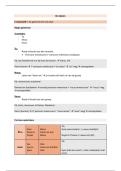
semi-conservative replication
What does semi-conservative replication mean?
It means that every double helix in a new
generation is composed of one ‘old’ strand and one
‘new’ strand
What does semi-conservative replication ensure?
Genetic continuity between generations of cells
the process of semi-conservative replication
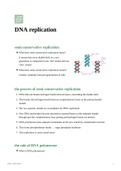
1. DNA helicase breaks hydrogen bonds between bases, unwinding the double helix
2. This breaks the hydrogen bonds between complementary bases in the polynucleotide
strands
3. The two separate strands act as templates for DNA replication
4. New DNA nucleotides become attracted to exposed bases on the template strands
through specific complementary base pairing and hydrogen bonds are formed
5. DNA polymerase joins adjacent nucleotides on the new strand by condensation reaction
6. This forms phosphodiester bonds → sugar phosphate backbone
7. This replication is semi-conservative
the role of DNA polymerase
What is DNA polymerase?
DNA replication 1
semi-conservative replication
What does semi-conservative replication mean?
It means that every double helix in a new
generation is composed of one ‘old’ strand and one
‘new’ strand
What does semi-conservative replication ensure?
Genetic continuity between generations of cells
the process of semi-conservative replication
1. DNA helicase breaks hydrogen bonds between bases, unwinding the double helix
2. This breaks the hydrogen bonds between complementary bases in the polynucleotide
strands
3. The two separate strands act as templates for DNA replication
4. New DNA nucleotides become attracted to exposed bases on the template strands
through specific complementary base pairing and hydrogen bonds are formed
5. DNA polymerase joins adjacent nucleotides on the new strand by condensation reaction
6. This forms phosphodiester bonds → sugar phosphate backbone
7. This replication is semi-conservative
the role of DNA polymerase
What is DNA polymerase?
DNA replication 1