BIodIversIty
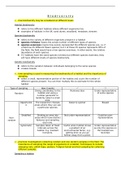
how biodiversity may be considered at different levels
Habitat biodiversity
refers to the different habitats where different organisms live
examples of habitats in the UK: sand dunes, woodland, meadows, streams
Species biodiversity
refers to the variety of different organisms present in a habitat
species richness means the actual number of different types of species.
species evenness means how evenly represented the different species are, i.e. if
a field has 25 different flower species, but 1 of those 25 species represents 95% of
the field, the field would have a low species evenness. In other words, the relative
abundance of each species.
If 2 habitats have the same species richness but different species evenness, they
will have different levels of species biodiversity.
Genetic biodiversity
refers to the variation between individuals belonging to the same species.
creates breeds
how sampling is used in measuring the biodiversity of a habitat and the importance of
sampling
select a small, representative portion of the habitat and count the number of
different species present. You can then multiply this to estimate for the whole
habitat.
Type of sampling How it works ✔ ❌
Giving coordinates to the Removes bias Under-representative
Random habitat and using a of some species
number generator to
randomly select a small
area.
Opportunist The researcher chooses Easier & quicker Biased
ic areas where they can see
a particular species.
Stratified Dividing an area into Not under-representative Could be over-
Non- areas which have distinct representative
random features and sampling
each one.
Systematic Samples taken at fixed Useful when habitat shows Under-representative
intervals across the a gradient of an as only the species on
habitat. E.g. line/belt environmental factor, e.g. the line/belt are
transects. getting drier as you go recorded.
further away from a pond.
practical investigations collecting random and non-random samples in the field. The
importance of sampling the range of organisms in a habitat. Techniques to include:
sweeping nets, pitfall traps, pooters, Tullgren funnel and kick sampling for collecting
different samples.
Sampling a habitat
, Preparation: suitable clothing, clipboard with paper and pen, apparatus required, keys
to identify plants.
At the site: if the habitat is not homogeneous (even), then ensure sampling is fair by
incorporating a range of sampling techniques, e.g. choosing areas which appear different
(which would incorporate both opportunistic and stratified sampling) as well as random
sampling. Sampling could cause disturbances to the habitat, e.g. picking flowers, and
these just be minimised as much as possible.
Sampling plants: large plants can be counted, but smaller plants may need a quadrat
and are worked out as a rough percentage.
Using quadrats: a quadrat is a square frame used to define the size of a sample
area. A tape measure can be use as coordinates when deciding where to place the
quadrats. The quadrat is split into smaller squares to make estimating percentage
cover more accurate. Alternatively, percentage cover can be measured using a
point frame, which is a frame with several long needles. You lower the point frame
into the quadrat and record any plants touching the needles. Each time a plant
touches a needle, it counts as 1% coverage. As a result, percentages could even
be 300%! To avoid bias, the point frame should be used at regular intervals across
the quadrat (systematic sampling within the quadrat).
Using transects: a transect is a line taken across a habitat. It can be used in two
ways:
o line transect: simply count plants touching the line at regular intervals along
it. If you use a quadrat to record plants at regular intervals along the line, it’s
called an ‘interrupted belt transect’ and provides quantitative data.
o belt transect: a quadrat is placed beside the line so you can study a belt in
detail, providing quantitative data in a belt across the habitat.
Sampling animals:
By observation: animals are hard to count as they hide and move
around. You can instead observe signs they have left behind, e.g.
footprints/droppings, burrows, etc. This can be used to estimate
population sizes by using DNA sequences to identify the droppings of
different animals.
Collecting samples of live animals: once prepared at the site (described
above), there are a number of ways you can sample living animals:
o sweeping net: a net is swept through vegetation in wide arcs, and
any trapped organisms are emptied onto a white sheet to be
identified. To prevent organisms crawling away, you can use a pooter which
can collect the animals before they escape, or just be really quick. Sweep nets
are useful for low vegetation which isn’t too woody and can also be used in
water.
stick: this can be used for trees. a white sheet is spread under a branch,
and a stick is knocked on branch to dislodge any small animals. Again, be
quick before the animals crawl or fly away.
kick sampling: To catch aquatic organisms, nets are often held
downstream of an area in river bed which is gently disturbed by the
person. The small animals float into the net.
o pitfall trap: a container buried in the soil with the rim just below the surface.
The trap should contain some water/scrunched up paper to stop the animals
crawling out. To prevent it overflowing with water in the rain, it must be
sheltered.
o a Tullgren funnel: a device for collecting small animals from leaf litter. A leaf
litter is placed in a funnel, and a light drives the animals downwards as the
how biodiversity may be considered at different levels
Habitat biodiversity
refers to the different habitats where different organisms live
examples of habitats in the UK: sand dunes, woodland, meadows, streams
Species biodiversity
refers to the variety of different organisms present in a habitat
species richness means the actual number of different types of species.
species evenness means how evenly represented the different species are, i.e. if
a field has 25 different flower species, but 1 of those 25 species represents 95% of
the field, the field would have a low species evenness. In other words, the relative
abundance of each species.
If 2 habitats have the same species richness but different species evenness, they
will have different levels of species biodiversity.
Genetic biodiversity
refers to the variation between individuals belonging to the same species.
creates breeds
how sampling is used in measuring the biodiversity of a habitat and the importance of
sampling
select a small, representative portion of the habitat and count the number of
different species present. You can then multiply this to estimate for the whole
habitat.
Type of sampling How it works ✔ ❌
Giving coordinates to the Removes bias Under-representative
Random habitat and using a of some species
number generator to
randomly select a small
area.
Opportunist The researcher chooses Easier & quicker Biased
ic areas where they can see
a particular species.
Stratified Dividing an area into Not under-representative Could be over-
Non- areas which have distinct representative
random features and sampling
each one.
Systematic Samples taken at fixed Useful when habitat shows Under-representative
intervals across the a gradient of an as only the species on
habitat. E.g. line/belt environmental factor, e.g. the line/belt are
transects. getting drier as you go recorded.
further away from a pond.
practical investigations collecting random and non-random samples in the field. The
importance of sampling the range of organisms in a habitat. Techniques to include:
sweeping nets, pitfall traps, pooters, Tullgren funnel and kick sampling for collecting
different samples.
Sampling a habitat
, Preparation: suitable clothing, clipboard with paper and pen, apparatus required, keys
to identify plants.
At the site: if the habitat is not homogeneous (even), then ensure sampling is fair by
incorporating a range of sampling techniques, e.g. choosing areas which appear different
(which would incorporate both opportunistic and stratified sampling) as well as random
sampling. Sampling could cause disturbances to the habitat, e.g. picking flowers, and
these just be minimised as much as possible.
Sampling plants: large plants can be counted, but smaller plants may need a quadrat
and are worked out as a rough percentage.
Using quadrats: a quadrat is a square frame used to define the size of a sample
area. A tape measure can be use as coordinates when deciding where to place the
quadrats. The quadrat is split into smaller squares to make estimating percentage
cover more accurate. Alternatively, percentage cover can be measured using a
point frame, which is a frame with several long needles. You lower the point frame
into the quadrat and record any plants touching the needles. Each time a plant
touches a needle, it counts as 1% coverage. As a result, percentages could even
be 300%! To avoid bias, the point frame should be used at regular intervals across
the quadrat (systematic sampling within the quadrat).
Using transects: a transect is a line taken across a habitat. It can be used in two
ways:
o line transect: simply count plants touching the line at regular intervals along
it. If you use a quadrat to record plants at regular intervals along the line, it’s
called an ‘interrupted belt transect’ and provides quantitative data.
o belt transect: a quadrat is placed beside the line so you can study a belt in
detail, providing quantitative data in a belt across the habitat.
Sampling animals:
By observation: animals are hard to count as they hide and move
around. You can instead observe signs they have left behind, e.g.
footprints/droppings, burrows, etc. This can be used to estimate
population sizes by using DNA sequences to identify the droppings of
different animals.
Collecting samples of live animals: once prepared at the site (described
above), there are a number of ways you can sample living animals:
o sweeping net: a net is swept through vegetation in wide arcs, and
any trapped organisms are emptied onto a white sheet to be
identified. To prevent organisms crawling away, you can use a pooter which
can collect the animals before they escape, or just be really quick. Sweep nets
are useful for low vegetation which isn’t too woody and can also be used in
water.
stick: this can be used for trees. a white sheet is spread under a branch,
and a stick is knocked on branch to dislodge any small animals. Again, be
quick before the animals crawl or fly away.
kick sampling: To catch aquatic organisms, nets are often held
downstream of an area in river bed which is gently disturbed by the
person. The small animals float into the net.
o pitfall trap: a container buried in the soil with the rim just below the surface.
The trap should contain some water/scrunched up paper to stop the animals
crawling out. To prevent it overflowing with water in the rain, it must be
sheltered.
o a Tullgren funnel: a device for collecting small animals from leaf litter. A leaf
litter is placed in a funnel, and a light drives the animals downwards as the