Anatomy and Physiology 1 Exam 1 questions and answers 2022
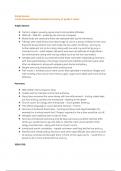
Anatomy and Physiology 1 Exam 1 questions and answers 2022anatomy study of structure and form; derived from Greek word Anatome which means to cut apart or dissect; Anatomists study structure and form of organims studying the relationships among parts of the body and the structure of individual organs physiology the study of function of the body parts; physiologists examine how organs and body systems function under normal circumstances as well as how their functions are altered with medication or disease 00:21 01:08 branches of anatomy microscopic- structures that cannot be observed to the unaided eye (cytology- study of body cells and their internal structure; histology- study of tissues) gross anatomy- structures that can be observed to the unaided eye,; macroscopic (systemic anatomy- anatomy of each body system; regional anatomy- examines all of the structures in a particular region of the body as a complete unit) embryology discipline concerned with developmental changes occuring from conception to birth comparative A&P examines similarities and differences of anatomy and physiology of different species pathophysiology relationship between the functioning of an organ system and disease or injury to that organ system basic qualities of life organization- each organism has a complex structure and order metabolism- the sum of all chemical reactions to occur within a body; anabolism (smaller molecules form larger) and catabolism (larger molecules are broken down to smaller) growth and development- each organism assimilates materials from its environment and often grows and develops responsiveness- ability to sense and react to stimuli regulation- ability to adjust or direct internal bodily function in the face of environmental changes- homeostasis- ability of an organism to maintain a consistent internal environment organization of the human body chemical level- consists of atoms, molecules, macromolecules, and organelles cell level- consists of cells, made up of structures and molecules from chemical level tissue level- made up of tissues which are made of cells organ level- made up of organs made up of 2-3 tissue types that work together for specific, complex functions organ system level- organs that work together to coordinate activities and acheive a common function anterior in front of posterior in back of dorsal on the backside of the human body ventral on the belly side of the human body 00:02 01:08 superior closer to the head inferior closer to the feet deep on the inside superficial on the outside homeostasis refers to the ability of an organism to maintain a consistent internal environment or "steady state"; for example if the body gets hot due to external temperature, the body maintains a steady state by circulating more blood toward the surface to facilitate heat loss; nervous system regulating blood pressure when you get out of bed in the morning receptor- detects changes in variable; either substance or process stimulus control center - interprets input from the receptor and initiates change through the effector; parathyroid hormone monitors calcium levels effector- structure that brings about the change to alter the stimulus; muscles in the lungs that bring air flow positive feedback set point-- what is normal action occurs that reinforces the response; mother breast feeds baby: suckling causes receptors to signal to hypothalamus to release oxytocin causing breast tissue to produce milk negative feedback detecting a change and then initiating the opposite response to return to the set point (if it's hot, bringing heat to the surface of the skin so the body loses heat, if cold withdrawing blood to vessels, skeletal muscles shiver, no sweat, withdraw foot when stepping on glass) atoms protons (+1 charge), nuetrons, and electrons (very little weight) atomic number is based on protons amu is based on protons and nuetrons types of chemical bonds ionic bond- bond that transfers electrons, stronger; form salts covalent bond- bond that shares electrons, weaker, can be single, double, triple; form molecular compounds major elements of the human body Oxygen (65%), Carbon(18), Hydrogen (10), Nitrogen (3), Calcium, Phosphorous, cation positively charged ion anion negatively charged ion electrolyte substances that both dissolve and dissociate in water that create electric currents organic molecules molecules that contain carbon lipids type of organic molecule made up of fatty acids and steroids; water insoluble triglycerides- (H2CO)3 (3 glycerol and fatty acid chains (H2C)n ) phospholipids- phosphate, various organic molecules, glycerol, and fatty acids steroids- like cholesterol, 4 hydrocarbon rings eicosanoids- 20 carbons, arachidonic acid carbohydrate hydrated carbon--nearly every carbon is attached to a water molecule monosaccharides carbohydrate simple sugars with between 3 and 7 carbon atoms, ex: glucose C6H12O6, galactose, fructose, ribose and deoxyribose (5 carbon sugars) disaccharides carbohydrates made with two monosaccharides (sucrose (table sugar), lactose (milk sugar), maltose (malt sugar) trisaccharides carbohydrates made of three or more monosaccharides (glycon in humans, and starch and cellulose in animals) sucrose made up of glucose and fructose maltose glucose and glucose lactose galactose and glucose nucleic acids macromolecules that store or transfer genetic and heriditary information in cells; ex) RNA and DNA, both made up of nucleotide monomers, bonded together covalently in phosphodiester bonds nucelotides made up of phosphate group (attached to carbon 3), 5 carbon sugar, and a nitrogenous base (attached to carbon 1) pyrimidines single ring nitrogenous base: cytosine, uricil, thymine purines double ring nitrogenous base: adenine, guanine C6H12O6 + 6O2 -> 6 CO2 +6H2O equation for respiration, CO2 is exhaled, H2O mostly used in the body proteins polymers that are made of amino acid monomers with an amine and carboxylic acid functional group, amino acids bond together with peptide bonds (dehydration reaction OH- from carboxylic acid, H from amine group glycoproteins proteins with a carbohydrate attached primary structure linear sequence of amino acids in a protein secondary structure shows beta pleated sheets and alpha helices tertiary structure 3d shape, globular or fibrous protein quaternary structure shown in some complex proteins; two or more proteins associate to form a final protein acid donates H+ base donates OH- kinetic energy energy of motion potential energy energy of the position role of enzymes lower activation energy in chemical reactions, subtrate enters active site, induced fit occurs, enzyme stressed substrate bonds, lowering activation energy and facilitating the chemical reaction to occur plasma membrae forms the outer limiting barrier separating the internal contents of the cell from the external environment; made up of phospholipid bilayer, nucleus largest structure within the cell and is enclosed by a nuclear envelope. Contains genetic material, DNA, the fluid within the nucleus is called the nucleoplasm, nucleolos is dark staining body cytoplasm all cellular contents between the nucleus and cell membrane cytosol intracellular fluid, high water content organelles little organs- complex organized structures within cells; unique charecteristic shapes and functions diffusion net movement of substance from where it is more concentrated to where it is less concentrated facilitated diffusion assists small solutes that are charge or polar into the cell past the phospholipid bilayer; occurs through channel mediated diffusion- water filled protein channels; carrier diffusion- assisted by carrier proteins osmosis the passive movement of water through a selectively permeable membrane; occurs to even out concentrations in and out of cell active transport opposes the movement of solutes by diffusion and prevents the distribution of dissolved substances from reaching equilibrium; moves a substance against a concentration gradient Ex) sodium potassium pump- ion pump concentration gradients- moves Na+ continuously out the cell and K+ into the cell; must expend ATP to do this; maintains electrochemical gradient which gives cell potential energy isotonic the cytosol and the solution have the same relative concentration hypotonic the solution has a lower concentration of solutes and there is a higher concentration of water then in the cytosol--- entry of water into the cell occurs lysis can occur hypertonic higher concentration of solutes and thus a lower concentration of water than in the cytosol-- water will leave the cell; crenation- cell shrinkage secondary active transport synport- same direction, antiport- different direction; mvement of Na+ or K+ with its gradient provides enough energy to move substance in either direction endocytosis the cellular uptake of large substances or large amounts of substances from the external environment into the cell; used for digestion; pocket in cell membrane occurs to take in vessible that forms on cell surfuce- this is called invagination exocytosis the means by which either large substances are secreted from the cell; macromolecules like proteins and polysaccharides are too large to be moved across the membrane even with the assistance of transport protieins; intracellular transport vessicles; vessicle fuses with plasma membrane to release contents pinocytosis cellular drinking; occurs when the cell internalizes droplets of interstital fluid that contain dissolved solutes; multiple small vesicles are formed to come into the interstital fluid; nonspecific-- all solutes in the droplet are taken into the cell phagocytosis cellular eating-- occurs when a cell engulfs or captures a large particle external to the cell by forming pseudopodia (false feet) to surround the particle simple diffusion movement of small, nonpolar particles through the plasma membrane; little energy needed endoplasmic reticulum extensive interconnected membrane network that varies in shape and separates fluid within the membrane structure from the cytosol; serves as a place for ribosomes to attach (Rough Er) or not (smooth ER) golgi apparatus modifies, packages and sorts materials that arrive from the ER in transport vesicles, forms secretory vesicles and lysosomes; made up of cisternae vesicles spherical shaped membrane bound sacs that transport cellular matterial lysosomes spherical shaped organelles bound by membrranes that contain digestive enzymes; digest damaged organelles (autophagy); when a cell is damaged or dies, the lysosomes digest the molecular components of the cell itself-- called autolysis mitochondria double membrane bound organelles containing a circular strand of DNA that has genes for producing mitochondrial proteins: synthesize most ATP during aerobic cellular respiration by digestion of fuel molecules (glucose, fatty acids) in presence of oxygen; powerhouse of the cell ribosomes organelles composed of both ribosomal RNA and proteins ; bound to a membrane or free in the cytosol; engage in protein synthesis--- bound ribosomes produce proteins that are secreted into cytosol and free ribosomes produce all other proteins cytoskeleton maintains cell interstructural suppost; made up of filaments centrosome amorphous region adjacent to nucleus; contains a pair of centrioles; organizes microtubules within the cytoskeleton proteosomes barrel shaped proteins that digest other proteins that are damaged or no longer needed; signaled by ubiquitin: use ATP inclusions aggregates of specific molecules-- temporary storage
Written for
- Institution
- Anatomy and Physiology 1
- Course
- Anatomy and Physiology 1
Document information
- Uploaded on
- November 22, 2022
- Number of pages
- 9
- Written in
- 2022/2023
- Type
- Exam (elaborations)
- Contains
- Questions & answers
Subjects
-
anatomy and physiology 1 exam 1 questions and answers 2022
-
physiology the study of function of the body parts physiologists examine how organs and body systems function under normal circumstances as

Also available in package deal