1619/22
Prokaryotes
A in the
prokaryote is any organism usually single-celled whose DNA is suspended freely cytoplasm
-
-
the word means
'before nucleus
Prokaryotes are bacteria and archaea.
·simpler structure than enkaryotes, lacking organelles e.gnudeus, ER and
golgi.
similar structures for
photosynthesis in other
prokaryotes
&
oT
smaller 70s ribosomes
O
mesosome
->
site of aerobic
respiration
Cell wall
↳
peptidoglycan polysaccharide
-
Strengthening the cell wall
cytoplasm
BNA
↳ Circular
cell membrane ↳ Naked DNA-not wound
round histone proteins
Bacterial
capsules: ↳ Not in a nucleus
called a
Many pathogenetic bacteria are surrounded by a mucus-line protective layer capsule
capsule bacteria from viruses, from organism's immune by hiding antigens the cell surface.
protects or attack a host
system, on
-
usually composed and also contains water to protect against desiccation
(drying e
ofpolysaccharides,
out
·minerating
i
cell wall
flagella and
pili
flappy flagella pointy pili
long helical tubes
extending out of the cell wall, which rotate to provide locomotion
powered
by protein motors and can
propel bacteria at a rate of more than 50
lengths/second
Plasmids
·small continuous
loops of DNA
Replicated independantly of a bacteriums genophore leg during bacterial conjunction) and
may confer
an
advantage e.g antibiotic resistance
.
used in genetic engineering.
, STRUCTURES
STRUCTURES ALWAYS
PRESENT SOMETIMES PRESENT
Fla gella
for locomotion,
very simple structure,
one or more may be present
pill
one to several hundred for
attachment to other cells or surfaces,
involved in 'sexual reproduction'
cell wall
rigid; strengthening material is murein capsule
cell membrane for additional protection
surface
- photosynthetic
membranes
ribosomes
possess pigments,
Mitochondria
food reserve e.g. lipid, glycogen spread throughout cell
(not shown)
DNA
circular molecule usually referred to as a chromosome, intensely folded, associated
although it is not associated with protein, unlike with DNA during cell division
eukaryotic chromosomes; often the cytoplasm around and helps with formation
it is clear, forming an area called the nucleoid of new cell walls
cytoplasm membranes for
few organelles nitrogen fixation
plasmid
small circle of DNA,
several may be present
infoldings of cell surface membrane
structure
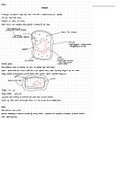
Fig 2.5 Structure of a generalised rod-shaped bacterium (a typical prokaryote cell). The cell contains little
compared with a eukaryotic cell.
Table 2.2 Major differences between prokaryotes and eukaryotes.
Eukaryote
Feature •Prokaryote
Animal, plant, fungi
bacterial archaea
Organisms
Cell size Most 0.5mm-5 rum commonly 10-100mm indiameter up to 40mm (up to 10000 x volume of probangote
Mainly unicellular Mainly multicellular (except Protoctista, many of which
Form
are unicellular)
Evolutionary origin 3.5 billion
years ago 1.5-2 billion years ago
but sometimes by conjugation;
no spindle formation
Cell division usually binary fission
in chromosomes but is a single,
Mitosis and meiosis and
budding (asexual)
DNA is naked in it is
not incorporated DNA is:
Genetic material Most
circular strand lying
free in the cytoplasm; there is
pieces of
no nucleus. Some
DNA called
plasmids.
Linear and incorperated in
proteins and RNA in chromosomes, nucleus -
double
bacteria have additional small circular
envelope
80s ribosomes and ER
ER
Protein synthesis FOS ribosomes, no
Organelles Few organelles; no
organelles are bounded by a double membrane
Many organelles, bound by double membrane
any internal membranes are rare
Rigid, cellulose strengthens it (plants) Chitin in fungi
Cell walls Rigid, made of a
protein and polysaccharides Animal cells have no cell wall
microtubules
complex, with mitochondria and
Flagella simple locomotory structures
Cristae mitochondria acts as main surface for aerobic respiration
respiratory surface on
acts as
Respiration memosomes
membranes with chloroplasts,some stacked with
grand
in
plants and algae.
chromosomes in plants
Intracellular membranes not organised into stacks no chloroplasts
Photosynthesis
but some can photosynthesise
Prokaryotes
A in the
prokaryote is any organism usually single-celled whose DNA is suspended freely cytoplasm
-
-
the word means
'before nucleus
Prokaryotes are bacteria and archaea.
·simpler structure than enkaryotes, lacking organelles e.gnudeus, ER and
golgi.
similar structures for
photosynthesis in other
prokaryotes
&
oT
smaller 70s ribosomes
O
mesosome
->
site of aerobic
respiration
Cell wall
↳
peptidoglycan polysaccharide
-
Strengthening the cell wall
cytoplasm
BNA
↳ Circular
cell membrane ↳ Naked DNA-not wound
round histone proteins
Bacterial
capsules: ↳ Not in a nucleus
called a
Many pathogenetic bacteria are surrounded by a mucus-line protective layer capsule
capsule bacteria from viruses, from organism's immune by hiding antigens the cell surface.
protects or attack a host
system, on
-
usually composed and also contains water to protect against desiccation
(drying e
ofpolysaccharides,
out
·minerating
i
cell wall
flagella and
pili
flappy flagella pointy pili
long helical tubes
extending out of the cell wall, which rotate to provide locomotion
powered
by protein motors and can
propel bacteria at a rate of more than 50
lengths/second
Plasmids
·small continuous
loops of DNA
Replicated independantly of a bacteriums genophore leg during bacterial conjunction) and
may confer
an
advantage e.g antibiotic resistance
.
used in genetic engineering.
, STRUCTURES
STRUCTURES ALWAYS
PRESENT SOMETIMES PRESENT
Fla gella
for locomotion,
very simple structure,
one or more may be present
pill
one to several hundred for
attachment to other cells or surfaces,
involved in 'sexual reproduction'
cell wall
rigid; strengthening material is murein capsule
cell membrane for additional protection
surface
- photosynthetic
membranes
ribosomes
possess pigments,
Mitochondria
food reserve e.g. lipid, glycogen spread throughout cell
(not shown)
DNA
circular molecule usually referred to as a chromosome, intensely folded, associated
although it is not associated with protein, unlike with DNA during cell division
eukaryotic chromosomes; often the cytoplasm around and helps with formation
it is clear, forming an area called the nucleoid of new cell walls
cytoplasm membranes for
few organelles nitrogen fixation
plasmid
small circle of DNA,
several may be present
infoldings of cell surface membrane
structure
Fig 2.5 Structure of a generalised rod-shaped bacterium (a typical prokaryote cell). The cell contains little
compared with a eukaryotic cell.
Table 2.2 Major differences between prokaryotes and eukaryotes.
Eukaryote
Feature •Prokaryote
Animal, plant, fungi
bacterial archaea
Organisms
Cell size Most 0.5mm-5 rum commonly 10-100mm indiameter up to 40mm (up to 10000 x volume of probangote
Mainly unicellular Mainly multicellular (except Protoctista, many of which
Form
are unicellular)
Evolutionary origin 3.5 billion
years ago 1.5-2 billion years ago
but sometimes by conjugation;
no spindle formation
Cell division usually binary fission
in chromosomes but is a single,
Mitosis and meiosis and
budding (asexual)
DNA is naked in it is
not incorporated DNA is:
Genetic material Most
circular strand lying
free in the cytoplasm; there is
pieces of
no nucleus. Some
DNA called
plasmids.
Linear and incorperated in
proteins and RNA in chromosomes, nucleus -
double
bacteria have additional small circular
envelope
80s ribosomes and ER
ER
Protein synthesis FOS ribosomes, no
Organelles Few organelles; no
organelles are bounded by a double membrane
Many organelles, bound by double membrane
any internal membranes are rare
Rigid, cellulose strengthens it (plants) Chitin in fungi
Cell walls Rigid, made of a
protein and polysaccharides Animal cells have no cell wall
microtubules
complex, with mitochondria and
Flagella simple locomotory structures
Cristae mitochondria acts as main surface for aerobic respiration
respiratory surface on
acts as
Respiration memosomes
membranes with chloroplasts,some stacked with
grand
in
plants and algae.
chromosomes in plants
Intracellular membranes not organised into stacks no chloroplasts
Photosynthesis
but some can photosynthesise