ERIK ERIKSON
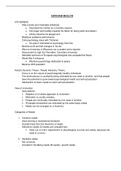
Life Highlights
- Brought up by his biological mother and stepfather
• Biological father became his lifetime concern
• Identity crisis because of longing to find out his father
- Travelled as an artist and wanderer when he was 18
• He was dynamic → continued until adulthood
• Continued to change addresses even after retirement
- Trained in psychoanalysis and was analyzed by Anna Freud
• He asked for Anna’s blessing when he was about to get married
• Anna impacted his life greatly
- Relationship with wife and children
• Son had down syndrome
- Focused on research
• Research on American Indians where he saw symptoms related
to a sense of alienation which cannot be explained by
psychoanalysis. The sense of alienation observed seem to result
to a lack of clear self-image.
Identity Theory
- Extended Freud’s theory in 3 ways:
• Elaborated Freud’s stages by suggesting that personality
develops over the entire lifespan
• Placed greater emphasis on the ego (than the id) which he
believed to be an independent part of personality
• Recognized the impact of cultural and historical forces to
personality
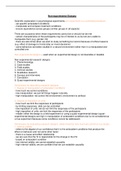
Ego
- For Erikson, it is a positive force that created a self-identity (sense of
“I”)
, - Center of personality that helps us adapt to the various conflicts and
crises of life and keeps us from losing our individuality to the levelling
force of society
- Partially unconscious organizing agency that synthesizes the past,
present and future
- Unifies personality and guards against indivisibility
- Person’s ability to unify experiences and actions in an adaptive manner
Childhood → weak, pliable, fragile
Adolescence → the ego beings to take form and gain strength
3 aspects of the Ego (change rapidly during adolescence)
1. Body ego – way of seeing our physical self as different from other
people (satisfaction)
2. Ego ideal – image of ourselves in comparison with an established ideal
(satisfaction of personal identity)
3. Ego identity – image that we have of ourselves in the variety of social
roles we play
Society’s influence on development
- Society shapes the ego
• Child-rearing practices of every culture and family shape
personalities of individuals depending on the needs and values
of their culture
Sioux hunters: prolonged and permissive nursing
→ oral personality: mouth activities, optimistic, generous, aggressive,
selfish, ambitious
→ Oral personality is undesirable to Euro-Americans
Yurok nation: strict toilet training → anal personality: rigid, orderly
Basic Points of the Psychosocial Stages
Life Highlights
- Brought up by his biological mother and stepfather
• Biological father became his lifetime concern
• Identity crisis because of longing to find out his father
- Travelled as an artist and wanderer when he was 18
• He was dynamic → continued until adulthood
• Continued to change addresses even after retirement
- Trained in psychoanalysis and was analyzed by Anna Freud
• He asked for Anna’s blessing when he was about to get married
• Anna impacted his life greatly
- Relationship with wife and children
• Son had down syndrome
- Focused on research
• Research on American Indians where he saw symptoms related
to a sense of alienation which cannot be explained by
psychoanalysis. The sense of alienation observed seem to result
to a lack of clear self-image.
Identity Theory
- Extended Freud’s theory in 3 ways:
• Elaborated Freud’s stages by suggesting that personality
develops over the entire lifespan
• Placed greater emphasis on the ego (than the id) which he
believed to be an independent part of personality
• Recognized the impact of cultural and historical forces to
personality
Ego
- For Erikson, it is a positive force that created a self-identity (sense of
“I”)
, - Center of personality that helps us adapt to the various conflicts and
crises of life and keeps us from losing our individuality to the levelling
force of society
- Partially unconscious organizing agency that synthesizes the past,
present and future
- Unifies personality and guards against indivisibility
- Person’s ability to unify experiences and actions in an adaptive manner
Childhood → weak, pliable, fragile
Adolescence → the ego beings to take form and gain strength
3 aspects of the Ego (change rapidly during adolescence)
1. Body ego – way of seeing our physical self as different from other
people (satisfaction)
2. Ego ideal – image of ourselves in comparison with an established ideal
(satisfaction of personal identity)
3. Ego identity – image that we have of ourselves in the variety of social
roles we play
Society’s influence on development
- Society shapes the ego
• Child-rearing practices of every culture and family shape
personalities of individuals depending on the needs and values
of their culture
Sioux hunters: prolonged and permissive nursing
→ oral personality: mouth activities, optimistic, generous, aggressive,
selfish, ambitious
→ Oral personality is undesirable to Euro-Americans
Yurok nation: strict toilet training → anal personality: rigid, orderly
Basic Points of the Psychosocial Stages